

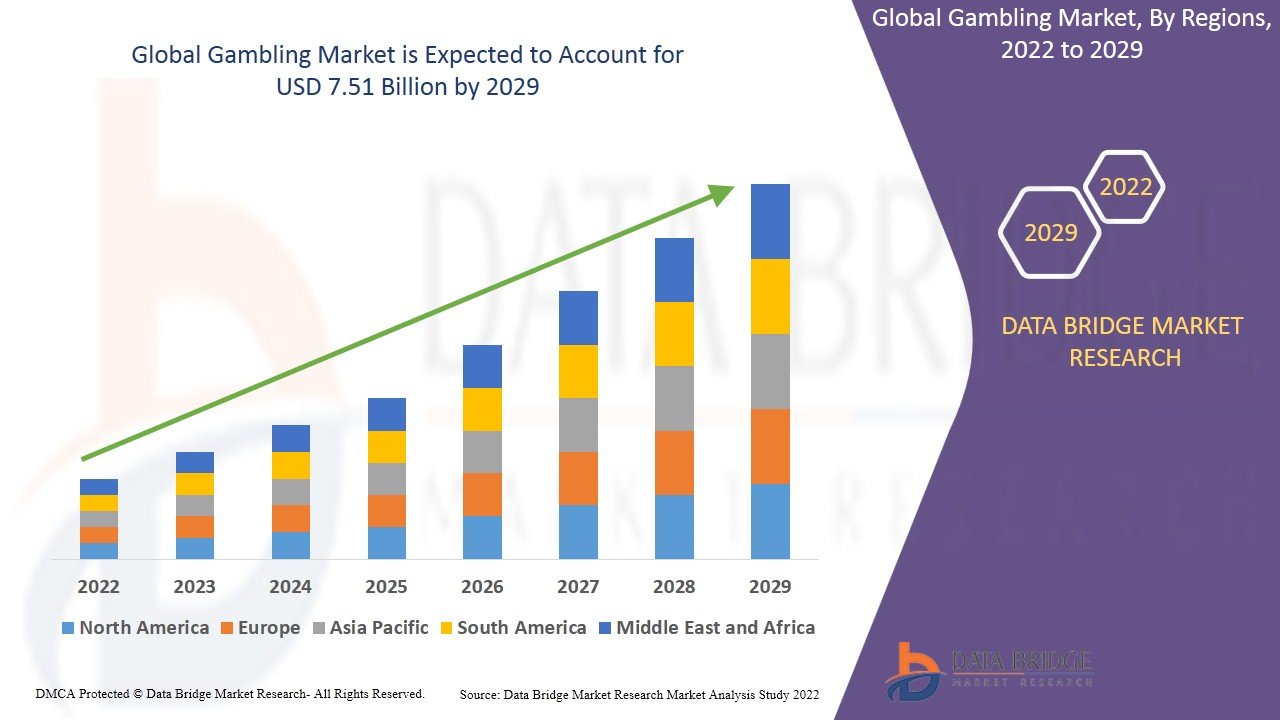
The gambling market continues to evolve as a structured global industry supported by digital platforms, regulatory frameworks, and changing consumer preferences. Once limited to physical locations, gambling services now operate across digital channels, offering wider access, improved transparency, and enhanced user experiences. This transformation has positioned the gambling market as a significant contributor to entertainment-related economic activity worldwide.
Growing internet penetration, mobile device usage, and secure digital payment systems have reshaped how users interact with gambling platforms. As a result, the market demonstrates steady expansion across developed and emerging economies. Businesses within the gambling market focus on technology adoption, compliance, and responsible participation to ensure sustainable growth.
Market Overview
The gambling market includes land-based venues, online platforms, and mobile applications that offer structured wagering activities. These services operate under established rules and regulated environments in many regions. The industry also includes software providers, payment solution vendors, analytics firms, and compliance service providers.
Digital platforms account for a growing share of market revenue. They offer convenience, faster access, and broader service availability. Meanwhile, land-based gambling facilities continue to attract users seeking in-person experiences and social engagement. The coexistence of physical and digital formats strengthens the overall market structure.
The global gambling market benefits from improved transparency, advanced monitoring systems, and standardized operational models. These elements enhance user trust and support long-term participation.
Key Growth Drivers
Increasing digital adoption remains one of the strongest drivers of the gambling market. Consumers prefer platforms that offer ease of access and flexible participation. Mobile applications enable users to engage anytime and anywhere, which directly supports market growth.
Another important driver is the availability of secure digital payment systems. Fast and reliable transactions improve confidence and encourage repeat usage. Payment integration also supports cross-border participation, expanding the global reach of gambling platforms.
Regulatory clarity plays a vital role in market expansion. Clear guidelines help businesses operate responsibly and attract investment. Regions with defined regulatory frameworks often experience higher market stability and consistent growth.
Rising demand for interactive entertainment further supports the gambling market. Users increasingly seek engaging digital experiences that combine technology, data, and real-time interaction.
Market Segmentation
The gambling market can be segmented based on platform type, service format, and end user.
By platform type, the market includes land-based facilities, online platforms, and mobile applications. Online and mobile platforms represent the fastest-growing segments due to convenience and accessibility. Land-based facilities maintain relevance through physical experiences and customer loyalty programs.
By service format, the market includes skill-based activities and chance-based activities. Both formats attract different user groups, allowing providers to diversify offerings and expand their customer base.
By end user, the market serves individual participants and organized operators. Individual users contribute the largest share of revenue, while operators focus on scaling platforms, enhancing user experience, and ensuring compliance.
Regional Analysis
North America holds a significant share of the gambling market due to established infrastructure and regulatory acceptance in several regions. Advanced digital systems and strong consumer spending support market maturity.
Europe represents a stable and regulated market with a strong focus on responsible participation. Clear policies and consumer protection measures strengthen market confidence and long-term growth.
Asia-Pacific shows rapid expansion driven by population size, increasing smartphone usage, and growing digital awareness. Emerging economies within the region present new opportunities for market players.
Latin America demonstrates gradual growth as digital infrastructure improves and consumer awareness increases. Market participants focus on localized strategies to address regional preferences.
The Middle East and Africa region shows emerging potential. Digital transformation initiatives and improving internet access support future market development.
Competitive Landscape
The gambling market features a mix of global enterprises and regional players. Companies compete based on platform reliability, user experience, service variety, and compliance standards. Technological innovation remains a key competitive factor.
Market leaders invest in artificial intelligence, data analytics, and cloud infrastructure to enhance performance and scalability. Smaller players focus on niche offerings and regional specialization to maintain competitiveness.
Strategic partnerships and mergers help companies expand market reach and strengthen operational capabilities. These collaborations also support technology sharing and regulatory compliance.
Technology Trends
Technology continues to reshape the gambling market. Artificial intelligence improves user personalization, risk management, and fraud detection. Data analytics supports better decision-making and operational efficiency.
Cloud-based infrastructure allows platforms to scale efficiently and manage high traffic volumes. It also improves system reliability and reduces operational costs.
User interface design remains a priority. Platforms aim to deliver intuitive navigation, faster loading times, and consistent performance across devices.
Cybersecurity investments protect user data and financial transactions. Strong security measures enhance trust and support long-term user retention.
Regulatory Environment
Regulation plays a critical role in shaping the gambling market. Governments and regulatory bodies establish rules to ensure fairness, transparency, and responsible participation. Compliance requirements vary by region, influencing market entry and expansion strategies.
Well-regulated markets often attract higher investment and demonstrate stable growth patterns. Clear guidelines also help protect consumers and maintain industry credibility.
Market participants increasingly adopt internal compliance systems to align with regulatory expectations. This proactive approach reduces risk and supports sustainable operations.
Consumer Behavior Trends
Consumer behavior within the gambling market continues to evolve. Users prefer platforms that offer transparency, easy access, and responsive support services. Convenience remains a primary decision factor.
Personalization influences user engagement. Platforms that adapt offerings based on user preferences experience higher retention rates.
Responsible participation tools are gaining importance. Users value features that support controlled engagement and informed decision-making.
Mobile usage dominates consumer access patterns. Platforms optimized for mobile devices attract larger audiences and higher activity levels.
Challenges in the Gambling Market
Despite growth opportunities, the gambling market faces several challenges. Regulatory complexity across regions increases compliance costs. Market players must continuously adapt to changing policies.
Competition remains intense, particularly in digital segments. New entrants must differentiate offerings and build trust quickly.
Technology risks, including cybersecurity threats and system downtime, require ongoing investment. Maintaining platform reliability is essential for user satisfaction.
Public perception and ethical considerations also influence market operations. Companies must balance growth objectives with responsible business practices.
Future Outlook
The future of the gambling market appears steady, supported by digital innovation and expanding global access. Continued investment in technology will improve efficiency and user experience.
Emerging markets will contribute significantly to growth as digital infrastructure improves. Market participants that adapt to regional preferences and regulatory environments will gain competitive advantages.
Responsible participation frameworks will shape long-term market sustainability. Platforms that prioritize transparency and user protection will build stronger brand trust.
Overall, the gambling market is expected to maintain consistent growth, driven by technology, consumer demand, and structured regulatory support.
Source: https://www.databridgemarketresearch.com/reports/global-gambling-market
Conclusion
The gambling market has transformed into a modern, technology-driven industry with global reach. Digital platforms, secure payment systems, and data-driven strategies have reshaped how services are delivered and consumed. While challenges remain, clear regulations and responsible practices support long-term stability.
As consumer expectations evolve, market players must focus on innovation, compliance, and user experience. These factors will define success in an increasingly competitive environment. With continued digital expansion and strategic investment, the gambling market is positioned for sustained growth in the coming years.
