

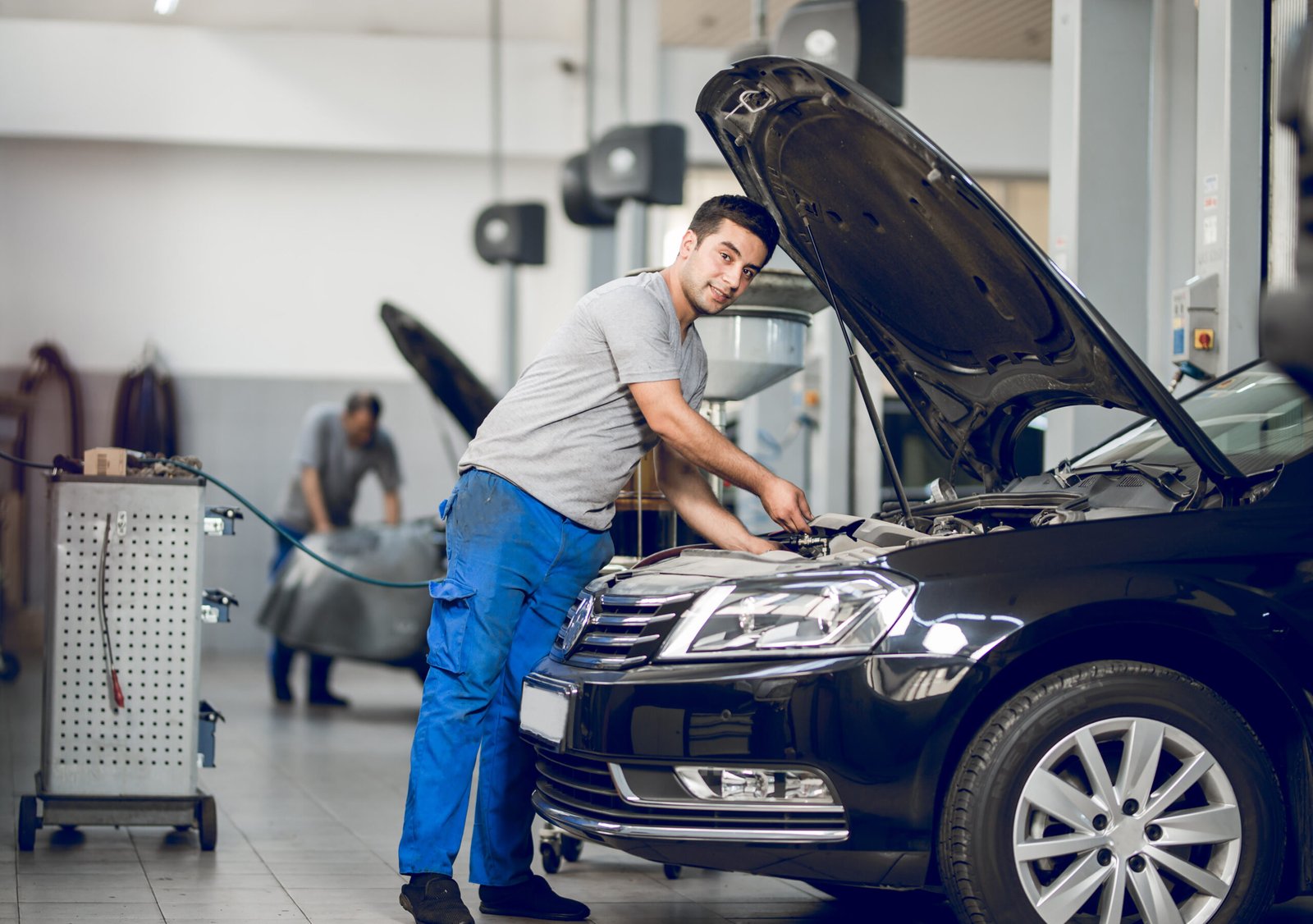
When your car is damaged in an accident or a collision, you need to make choices that affect its safety how it runs, and its resale value. One key decision is choosing between OEM (Original Equipment Manufacturer) parts and cheaper aftermarket parts.
Most people don’t consider the details of the repair process until they’re sitting in the waiting room with the papers in front of them. That’s when questions come up. The autobody repair technician may mention OEM parts, and you are wondering if it’s really worth the extra cost. This is a reasonable question, but the reply carries more significance than you think.
How Are Original Equipment Manufacturer Parts Unique?
The parts that are marked as OEM are supplied directly by the manufacturer of your car. These parts are the identical ones that were installed in your vehicle when it was first produced. Aftermarket parts however, are made by other companies trying to mimic the original design. Sometimes they get it right. Other times, they miss the mark.
You might spot the difference, or you might not. An OEM bumper will fit because it’s crafted for your specific car model. An aftermarket bumper though, could need tweaks extra drilling, or even some out-of-the-box thinking to fit . That means spending more time and money on labor.
Safety Isn’t Something You Can Compromise On
Let’s take a serious approach for a second. The body of your car has an essential role that goes beyond merely being aesthetically pleasing. It has been designed as a part of a more extensive safety system. Crumple zones, airbag sensors, and reinforcement all function in unison. The manufacturer put a lot of resources into testing and developing these features to make sure their performance.
By selecting a trustworthy garage that employs OEM parts for your vehicle’s repairs, you are contributing to the preservation of the safety levels. Components made by different producers may not be tested the same way as the original ones in case of a crash. They could use different materials or have off measurements, which can change how your car reacts in a crash. That’s not a chance you want to take when safety matters the most.
Car Warranty and Coverage
Many car warranties demand OEM parts for any repairs. If you use aftermarket parts, your warranty might get voided, which could leave you with no protection if problems pop up later. Insurance companies handle this , but good insurers often see the importance of brand-specific parts and pay for them.
When leasing a car, you have no choice but to use original parts because lease agreements often require it. Talk to your car repair shop to understand what applies to your situation instead of assuming you know.
Long-Term Worth
Think about whoever buys your car next. Cars fixed with OEM parts tend to keep their worth better. Service records show these parts were used, and smart buyers pay attention to this. They’ll know the repairs were done with parts that match the original specs.
Factory-made parts match your car’s original paint color better. Aftermarket parts might look alright when installed, but over time, their color differences stand out more in different kinds of light.
The Truth About Costs
Sure, buying authentic parts costs more upfront. But inexpensive parts that don’t fit can make repairs take longer fail to last, or cause more problems later. You could save $200 now then end up spending $800 down the road fixing issues. That’s not saving money—it’s just delaying bigger expenses.
Good-quality autobody repairs aren’t about hunting for the cheapest choice. They’re about restoring your car to how it was before an accident keeping it safe, and safeguarding your investment.
Stick With the Process
At Spectrum Auto Inc., we understand the difference between repairs done and repairs where shortcuts are taken. Your vehicle is a big investment, and our technicians believe you deserve repairs that bring it back to its best condition. We don’t use OEM parts to upsell you—it’s the right thing to do.
When you visit us, our team will explain what parts your vehicle needs and the reasons behind it. No pressure. No tricky language. Just straightforward info to help you make the best choice for your needs.
FAQs
Q1. Are OEM parts a lot more expensive than aftermarket ones?
The cost of Original Equipment Manufacturer (OEM) parts is about 20-60% higher than that of aftermarket parts depending on the properties of the specific part. The reason for the higher price is the quality control at every stage, the guarantee of perfect compatibility, and the support provided by the manufacturer. If shorter labor times are part of the process and fitting problems are no good, then the actual price gap may not be as large as it looks.
Q2. Will my insurance pay for OEM parts?
Many insurance plans do pay for manufacturer-approved parts if your car is new or it is mentioned in your policy. Sometimes, insurers might offer aftermarket parts first to keep costs low. However, you can ask for factory parts instead. It’s a good idea to talk to both your insurer and the autobody repair shop to find out what choices are available to you.
Q3. Can I combine OEM and aftermarket parts to cut costs?
Mixed parts, though not impossible, might cause issues with compatibility, aesthetics, or even the overall strength of the vehicle. It is best to always use OEM for crucial safety or structural parts. If cost is a concern, get your car repair shop’s assistance in identifying the essential parts for your repair. They can guide you in making wise compromises without jeopardizing safety.
