

Building and preserving wealth in today’s complex financial landscape requires more than just smart investments. Traditional savings and retirement accounts often come with tax implications that can erode your gains over time. That’s why high-net-worth individuals and savvy investors increasingly turn to Indexed Universal Life Insurance (IUL) as a tool for tax-efficient wealth growth. By combining life insurance protection with flexible cash value accumulation, an IUL policy offers unique advantages that go beyond conventional investment strategies.
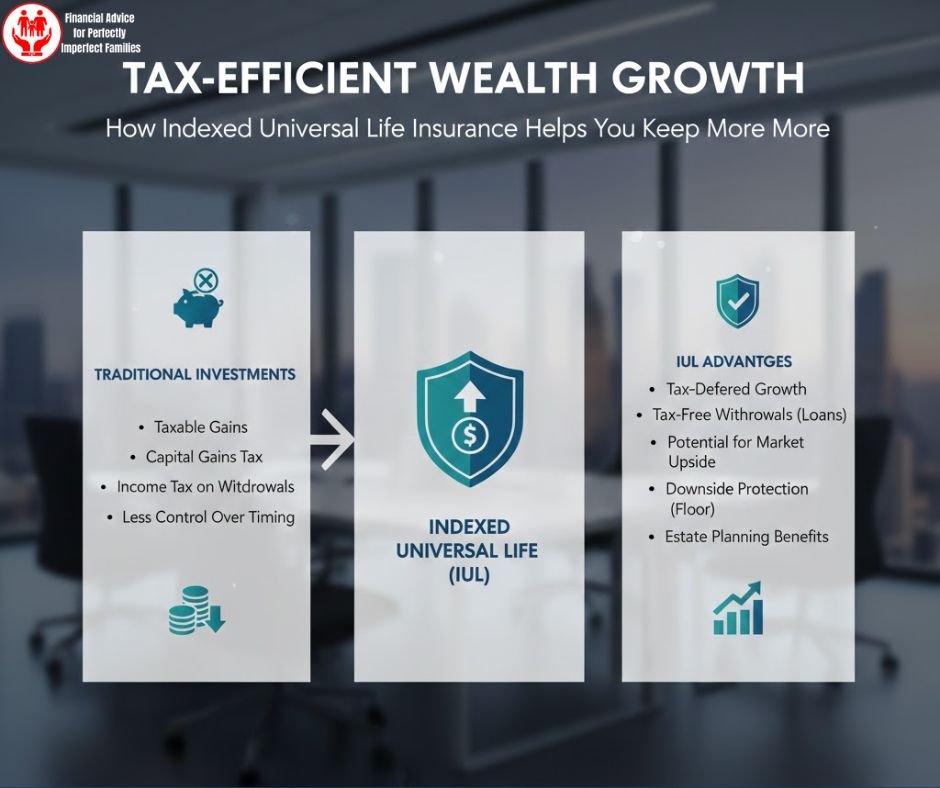
The Power of Tax-Efficient Wealth Growth
The ultimate goal of wealth management is not only to accumulate assets but also to retain as much of that wealth as possible. Taxes can significantly reduce the real returns of traditional investment vehicles like stocks, mutual funds, and retirement accounts. An Indexed Universal Life Insurance policy addresses this by offering tax-deferred growth on your cash value.
Unlike standard investment accounts, the cash value in an IUL policy grows based on the performance of an external market index, such as the S&P 500, without exposing you directly to market losses. This means that even if the index dips, your principal remains protected. More importantly, withdrawals or loans from the cash value can often be structured to be tax-free, giving you greater control over your wealth.
How IUL Works?
At its core, Indexed Universal Life Insurance is a permanent life insurance policy. It differs from term life insurance because it provides lifelong coverage and builds cash value over time. Here’s a breakdown of how it functions:
- Premium Flexibility: You can adjust your premium payments within certain limits, making it easier to accommodate changes in your financial situation.
- Cash Value Growth: Your policy’s cash value grows based on a chosen index’s performance, giving you potential upside without market risk.
- Death Benefit Protection: The policy ensures your beneficiaries receive a tax-free death benefit, adding a layer of financial security.
This combination of flexible growth and protective coverage creates a dual-purpose financial vehicle—offering both wealth accumulation and risk management.
Strategic Advantages Over Traditional Investments
Investors often ask why they should consider an IUL policy when they already have retirement accounts or brokerage portfolios. The answer lies in tax efficiency and asset protection.
- Tax-Deferred Growth: The cash value grows without current income tax, unlike taxable brokerage accounts where capital gains are taxed annually.
- Potential for Tax-Free Withdrawals: Through policy loans and withdrawals structured correctly, you can access your funds without triggering income tax, unlike traditional retirement accounts.
- Protection from Market Volatility: While indexed accounts track market performance, an IUL typically has a floor (often 0%) that prevents the cash value from losing money during market downturns.
- Estate Planning Benefits: The death benefit is generally received tax-free by beneficiaries, making it a powerful estate planning tool.
By combining these advantages, Indexed Universal Life Insurance helps investors preserve more of their wealth, while still participating in market gains.
Complementing IUL with Long Term Care Planning
Wealth growth is only part of the equation—protecting that wealth is equally important. Many investors overlook the potential costs of healthcare in retirement. Integrating Long Term Care Insurance with your IUL policy can provide a comprehensive financial safety net.
Some IUL policies allow for riders that cover long-term care expenses. This means that, in the event of a chronic illness or extended care need, you can access a portion of your policy’s cash value or death benefit to cover medical costs. By doing so, you protect other assets from being liquidated for healthcare expenses, keeping your overall financial plan intact.
Building a Tax-Efficient Wealth Strategy
Creating a tax-efficient wealth growth strategy with IUL involves more than simply purchasing a policy. Here are key considerations for maximizing benefits:
- Assess Your Financial Goals: Understand your short-term and long-term objectives. Are you prioritizing retirement income, estate planning, or healthcare security?
- Work with a Financial Advisor: A knowledgeable advisor can help structure premium payments, withdrawals, and loans to optimize tax efficiency.
- Review Index Options: Not all indices are the same. Select the one that aligns with your risk tolerance and expected returns.
- Consider Riders: Riders like Long Term Care Insurance can enhance your policy by addressing potential future healthcare costs without compromising your wealth growth.
By integrating these strategies, an IUL policy can become a central component of a well-rounded financial plan, offering growth, protection, and flexibility.
Common Misconceptions About IUL
Despite their advantages, many investors remain hesitant due to misconceptions about Indexed Universal Life Insurance:
- It’s just life insurance. While IUL provides life coverage, its cash value growth and tax advantages make it a powerful financial tool.
- It’s too complicated. Working with an experienced advisor can simplify the process, helping you leverage the policy effectively.
- Returns are too low compared to stocks. IULs provide conservative growth, with the trade-off being protection from market losses and tax-free benefits.
Understanding these nuances is essential to making an informed decision that aligns with your financial strategy.
Case Example: Maximizing Wealth with IUL
Consider a professional in their 40s seeking retirement security and long-term care protection. By allocating a portion of their income to an Indexed Universal Life Insurance policy:
- Their cash value grows tax-deferred and can be accessed tax-free for retirement expenses.
- A rider provides coverage for potential long-term care needs, avoiding the need to liquidate other investments.
- The death benefit ensures financial security for their heirs.
Over decades, this combination can significantly reduce tax exposure, preserve wealth, and create a predictable financial future—even amid market fluctuations.
Conclusion
In a financial world where taxes, market volatility, and unexpected expenses can erode wealth, Indexed Universal Life Insurance stands out as a versatile and tax-efficient solution. Its ability to combine growth, protection, and long-term planning makes it an indispensable tool for serious investors.
Coupled with Long Term Care Insurance, an IUL policy not only preserves wealth but also protects it from future healthcare costs. For individuals seeking to maximize their financial potential while mitigating risks, Indexed Universal Life Insurance offers a strategic pathway to keeping more of what they earn—today and in the future.
By understanding the mechanics, advantages, and potential applications of an IUL policy, investors can design a wealth strategy that grows efficiently, protects effectively, and adapts seamlessly to their evolving life circumstances.
