

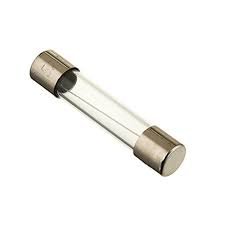
Electricity moves quietly through walls, panels, and machines. Most of the time it behaves exactly as expected. Lights stay on. Equipment runs steadily. There is no visible sign of strain. In the background of all this sits the Fuse Link. Small. Unremarkable. Yet deeply important.
A Fuse Link does one simple job. It breaks the circuit when current rises beyond a safe level. That single action protects wiring, connected devices, and sometimes entire systems. It does not negotiate or delay. It responds when limits are crossed.
The Quiet Responsibility of a Fuse Link
The purpose of a Fuse Link is straightforward. It creates a controlled point within a circuit that will give way under excessive current. When a fault occurs, the Fuse Link melts internally and stops the flow of electricity. The interruption prevents heat build up and further damage.
This response may feel inconvenient in the moment. A section of equipment stops working. A production line pauses. A room loses power. Yet the alternative could be far more serious. Without a Fuse Link, excessive current would continue to travel through cables and components not designed to carry it.
That is where the value becomes clear. The Fuse Link limits the problem. It keeps damage contained.
Reliable Protection in Working Environments
In commercial and industrial settings, electrical systems carry significant load. Motors start and stop. Machines operate for long hours. Power demand fluctuates. Within these conditions, the Fuse Link acts as a steady safeguard.
There is no drama in its presence. It simply sits in place, prepared to respond. When a short circuit develops or equipment fails internally, the Fuse Link interrupts the current before the situation escalates.
Correct selection matters. A Fuse Link must match the system rating. Too sensitive and it interrupts normal operation. Not sensitive enough and it may respond too late. When chosen properly, it blends into the system and supports reliable performance day after day.
Where High Speed Fuse Protection Fits
Protecting Sensitive Systems
Some equipment requires faster response than standard circuits. Power electronics, converters, and drives contain components that cannot tolerate even brief overcurrent. In these cases, a High Speed Fuse is often used.
A High Speed Fuse reacts extremely quickly. It protects delicate semiconductor devices from internal damage. While the Fuse Link manages broader circuit protection, the High Speed Fuse focuses on precision and rapid interruption.
In many installations, both work together. The Fuse Link provides general protection across the distribution path. The High Speed Fuse addresses specific electronic sections. This layered protection supports both infrastructure and sensitive technology.
It is a quiet partnership. One does not replace the other. Instead, each serves a defined purpose within the same system.
The Growing Role in Renewable Energy
Electrical protection has taken on new importance as renewable energy systems expand. Solar installations introduce direct current circuits and variable generation patterns. Within these systems, a Photovoltaic Fuse is commonly used to protect panels and inverters.
A Photovoltaic Fuse is designed to interrupt direct current safely and reliably. It responds to fault conditions that may arise from shading, wiring faults, or equipment malfunction. Alongside this, the Fuse Link continues to support the overall distribution network.
The combination of Fuse Link and Photovoltaic Fuse strengthens the reliability of solar installations. One protects the wider circuit. The other addresses the unique behaviour of solar power systems. Together, they create stability in an environment that can shift with weather and load conditions.
Everyday Impact That Often Goes Unnoticed
In smaller buildings or workshops, the Fuse Link still plays the same role. When a tool draws too much current or a fault develops in wiring, the Fuse Link interrupts the supply. Power may drop in one area while the rest of the building remains active.
That limited interruption prevents overheating and potential fire risk. It also makes troubleshooting more manageable. Instead of widespread failure, attention focuses on a specific circuit.
Most people only think about a Fuse Link after it has operated. The moment feels abrupt. Equipment stops. There is a pause. Yet that pause represents protection in action.
Replacing a Fuse Link is usually straightforward. The larger benefit lies in what did not happen. Wires did not burn. Equipment did not suffer extensive damage.
Enduring Importance in Modern Systems
Electrical systems continue to evolve. Demand increases. Equipment becomes more advanced. Even so, the basic need for overcurrent protection remains unchanged. The Fuse Link continues to provide that protection through simple and direct operation.
Whether working alongside a High Speed Fuse in electronic equipment or complementing a Photovoltaic Fuse in solar systems, the Fuse Link holds its place. It offers reliability without complexity.
There is something steady about that design. No software updates. No calibration screens. Just a component designed to respond when limits are exceeded.
In the broader picture of circuit protection, the Fuse Link remains essential because it performs its task consistently. It limits risk. It protects investment. It supports safe operation across environments that vary in scale and demand. Its presence may be quiet, but its contribution to reliable circuit protection remains significant.
