

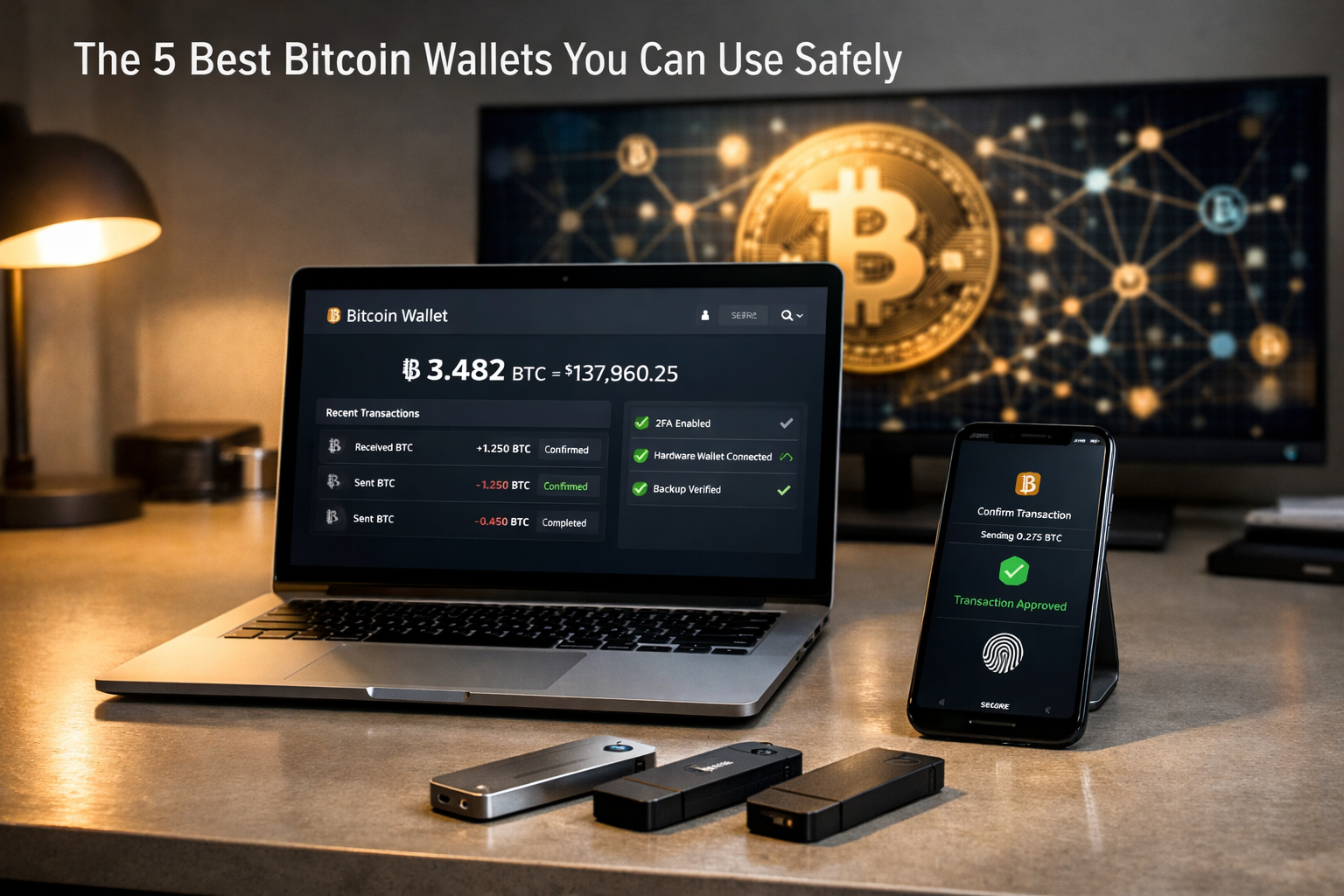
Bitcoin has become one of the most popular digital assets in the world. Millions of people buy, sell, and store Bitcoin every day. However, keeping your Bitcoin safe is extremely important. Unlike traditional banks, cryptocurrency transactions are irreversible and there is no central authority to recover lost funds.
This is why choosing the right Bitcoin wallet is essential. A secure wallet protects your private keys and gives you full control over your cryptocurrency. In this guide, we will explore the best Bitcoin wallets you can use safely, how they work, and how you can set up your first wallet.
Understanding Bitcoin Wallets
Before choosing a wallet, it is important to understand what a Bitcoin wallet actually does.
A Bitcoin wallet does not technically store Bitcoin. Instead, it stores the private keys that allow you to access your Bitcoin on the blockchain. These keys prove ownership of your funds and allow you to send or receive Bitcoin.
There are two main types of wallets:
- Hot Wallets
- Cold Wallets
Hot wallets are connected to the internet, while cold wallets store your keys offline for better security.
Popular examples include wallets from companies like Ledger, Trezor, and Exodus.
Each wallet type has advantages and disadvantages depending on your needs.
Types of Bitcoin Wallets
1. Hardware Wallets (Most Secure)
Hardware wallets are physical devices that store your private keys offline. Because they remain disconnected from the internet most of the time, they are extremely difficult for hackers to access.
Two of the most popular hardware wallets are:
- Ledger Nano X
- Trezor Model T
These wallets connect to your computer or smartphone when you need to send transactions.
Advantages
- Highest level of security
- Private keys remain offline
- Protection from malware and hackers
Disadvantages
- Costs money to purchase
- Slightly more complex to set up
Hardware wallets are ideal for long-term Bitcoin storage.
2. Software Wallets
Software wallets are applications that run on your phone or computer. They are easy to use and ideal for beginners.
Examples include:
- Exodus Wallet
- Electrum
These wallets allow you to send and receive Bitcoin quickly while maintaining control over your private keys.
Advantages
- Free to use
- Beginner-friendly
- Quick access to funds
Disadvantages
- Connected to the internet
- Slightly more vulnerable to hacking
Software wallets are good for everyday Bitcoin transactions.
3. Mobile Wallets
Mobile wallets are designed specifically for smartphones. They are perfect for people who want to make payments or manage their crypto on the go.
Popular mobile wallets include:
- Trust Wallet
- BlueWallet
These wallets allow you to scan QR codes, send payments instantly, and manage your Bitcoin easily.
Advantages
- Easy to use
- Ideal for small payments
- Convenient mobile access
Disadvantages
- Phones can be hacked or lost
- Less secure than hardware wallets
4. Web Wallets
Web wallets operate through a browser and are usually provided by cryptocurrency exchanges.
Examples include wallets offered by companies like:
- Coinbase
- Binance
While convenient, web wallets are considered less secure because the exchange often controls the private keys.
Advantages
- Very easy to access
- No installation required
- Great for beginners
Disadvantages
- Lower security
- Risk if exchange gets hacked
For long-term storage, it is generally better to use a non-custodial wallet.
Best Bitcoin Wallets You Can Use Safely
Let’s look at some of the safest and most trusted Bitcoin wallets available today.
1. Ledger Nano X
The Ledger Nano X is one of the most widely used hardware wallets in the world. It offers strong security and supports many cryptocurrencies besides Bitcoin.
Key Features
- Bluetooth connectivity
- Secure chip technology
- Mobile app support
This wallet is ideal for investors who want maximum protection for their digital assets.
2. Trezor Model T
Another excellent hardware wallet is the Trezor Model T from Trezor.
It includes a touchscreen interface and strong encryption for protecting private keys.
Key Features
- Touchscreen interface
- Advanced security features
- Open-source software
It is a popular choice among serious Bitcoin investors.
3. Exodus Wallet
The Exodus Wallet is a popular software wallet known for its beautiful interface and ease of use.
Key Features
- Built-in crypto exchange
- Desktop and mobile versions
- Supports multiple cryptocurrencies
Exodus is perfect for beginners entering the crypto world.
4. Electrum Wallet
The Electrum wallet has been around since 2011 and is considered one of the most reliable Bitcoin wallets.
Key Features
- Fast transactions
- Advanced security settings
- Lightweight software
Electrum is ideal for more experienced Bitcoin users.
5. Trust Wallet
The Trust Wallet is a mobile wallet owned by Binance and is widely used by crypto traders.
Key Features
- Supports thousands of cryptocurrencies
- Built-in decentralized apps
- Easy mobile access
It is a great option for users who want flexibility and convenience.
How You Can Set Up Your First Bitcoin Wallet
Setting up your first Bitcoin wallet is easier than you might think. Follow these steps to get started safely
Step 1: Choose the Right Wallet
Decide which wallet type fits your needs.
- Long-term investors → Hardware wallet
- Daily transactions → Mobile wallet
- Beginners → Software wallet
Make sure you download wallets only from official sources.
Step 2: Install the Wallet
Once you choose your wallet, install the application or set up your hardware device.
For example, if you choose Exodus Wallet, you simply download the app and follow the setup instructions.
Step 3: Create Your Wallet
During setup, the wallet will generate a seed phrase, usually 12 or 24 words.
This phrase is extremely important.
It allows you to recover your wallet if you lose your device.
Never share your seed phrase with anyone.
Step 4: Backup Your Recovery Phrase
Write your seed phrase on paper and store it in a secure location.
Avoid:
- Saving it on your computer
- Taking screenshots
- Storing it online
Anyone with this phrase can access your Bitcoin
Step 5: Add Bitcoin to Your Wallet
After setup, your wallet will generate a Bitcoin address.
You can now:
- Buy Bitcoin on exchanges
- Transfer Bitcoin to your wallet
- Receive payments from others
Once the transaction is confirmed on the blockchain, your Bitcoin will appear in the wallet.
Security Tips for Protecting Your Bitcoin
Keeping your Bitcoin secure requires good security practices.
Here are some important tips.
Use Hardware Wallets for Large Holdings
If you plan to hold a large amount of Bitcoin, hardware wallets from companies like Ledger and Trezor are highly recommended.
They provide offline protection against hackers
Enable Two-Factor Authentication
If you use exchange wallets from platforms like Coinbase, always enable two-factor authentication (2FA).
This adds an extra layer of security.
Keep Your Software Updated
Wallet developers regularly release security updates. Make sure your wallet software is always updated to protect against vulnerabilities.
Avoid Phishing Attacks
Hackers often create fake websites or apps that look like real wallets.
Always verify:
- Official website URLs
- App developers
- Security certificates
Use Strong Passwords
Your wallet password should be unique and difficult to guess.
A strong password typically includes:
- Uppercase and lowercase letters
- Numbers
- Special characters
Hot Wallet vs Cold Wallet: Which Is Better?
Both hot and cold wallets serve different purposes.
Hot Wallet
- Connected to the internet
- Convenient for daily transactions
- Lower security
Cold Wallet
- Offline storage
- Best for long-term holdings
- Maximum security
Many experienced investors use a combination of both.
For example:
- Hardware wallet for savings
- Mobile wallet for spending
This strategy balances convenience and security.
Common Mistakes to Avoid
Many beginners make mistakes that can lead to lost funds.
Here are some common ones to avoid.
Not Backing Up the Seed Phrase
If you lose your seed phrase and device, your Bitcoin is permanently lost.
Always keep backups.
Leaving Large Funds on Exchanges
Exchanges can be hacked or frozen.
Move your Bitcoin to a personal wallet whenever possible.
Downloading Fake Wallet Apps
Only install wallets from official websites or trusted app stores.
Fake apps are a common method used by hackers.
The Future of Bitcoin Wallets
Bitcoin wallets continue to evolve as the cryptocurrency industry grows.
New innovations include:
- Multi-signature security
- Biometric authentication
- Lightning Network integration
Companies such as Ledger and Trezor are constantly developing better security technologies.
As adoption increases, wallets will become easier to use while maintaining strong security.
Conclusion
Bitcoin wallets are essential tools for anyone who wants to own and manage cryptocurrency safely. Choosing the right wallet can protect your funds and give you full control over your digital assets.
Hardware wallets like the Ledger Nano X and Trezor Model T provide the highest level of security, while software wallets such as Exodus Wallet and Electrum offer convenience and accessibility. How to Transfer Crypto Between Exchanges
If you are just getting started, focus on learning how wallets work, protecting your recovery phrase, and following strong security practices.
