

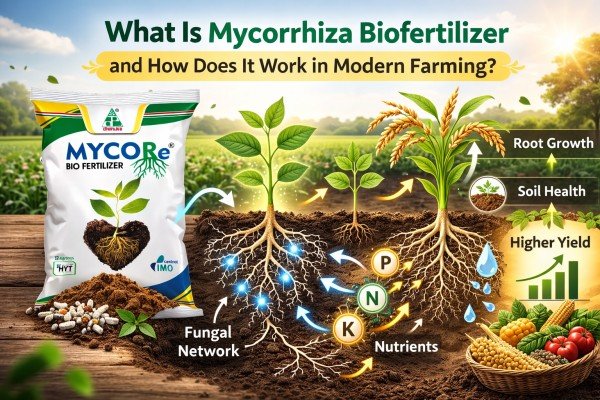
Modern agriculture is changing fast. Farmers today want higher yield, better soil health, and lower fertilizer cost. Because of this, many growers are moving toward biofertilizers, especially mycorrhiza biofertilizer, which helps plants grow naturally by improving root strength and nutrient absorption.
Unlike chemical fertilizers that only provide nutrients, mycorrhiza works inside the soil with plant roots. It forms a natural partnership with plants and helps them absorb more water and minerals. This is why mycorrhiza is considered one of the most effective solutions for sustainable farming.
In this guide, we will explain what mycorrhiza biofertilizer is, how it works, its benefits, and why modern farmers use it for better crop productivity.
What Is Mycorrhiza Biofertilizer?
Mycorrhiza biofertilizer is a natural fertilizer that contains beneficial fungi. These fungi live in the soil and attach to plant roots. Once connected, they help plants absorb nutrients more efficiently.
The word mycorrhiza means:
- Myco = fungus
- Rhiza = root
This means a fungus-root relationship.
This relationship is natural and exists in most plants in nature. Mycorrhiza biofertilizer simply increases these helpful fungi in the soil to improve plant growth.
Because of this, mycorrhiza is also called:
- microbial fertilizer
- root growth biofertilizer
- organic biofertilizer
- soil health booster
- plant growth biofertilizer
How Mycorrhiza Works in Soil?
Mycorrhiza fungi grow around plant roots and spread into the soil. These fungal threads act like extra roots.
This helps plants in many ways.
1. Increases Root Area
Fungal threads grow deeper and wider than plant roots.
This allows plants to reach more nutrients.
2. Improves Nutrient Absorption
Mycorrhiza helps absorb:
- phosphorus
- nitrogen
- zinc
- potassium
- micronutrients
Plants get more nutrition even with less fertilizer.
3. Improves Water Absorption
Mycorrhiza fungi hold water in soil and help roots absorb it.
This helps during:
- drought
- heat
- low irrigation
4. Protects Roots
Mycorrhiza creates a protective layer around roots.
This helps against:
- disease
- stress
- soil problems
5. Improves Soil Structure
Fungi help bind soil particles.
Soil becomes:
- soft
- fertile
- well aerated
This is why mycorrhiza is called a soil health booster.
Why Farmers Use Mycorrhiza Biofertilizer?
Today, farmers face many problems:
- poor soil fertility
- high fertilizer cost
- low yield
- climate stress
- weak roots
Using biofertilizer for crops helps solve these problems naturally.
Benefits include:
- stronger roots
- better nutrient use
- less chemical fertilizer
- higher yield
- better plant health
Many modern crop programs recommended by companies like Dhanuka include biofertilizers along with crop protection products to maintain soil health and crop productivity.
Types of Mycorrhiza Used in Agriculture
Different crops use different mycorrhiza types.
1. Endomycorrhiza
Most common type.
Used for:
- wheat
- rice
- vegetables
- fruits
- cotton
Works inside root cells.
2. Ectomycorrhiza
Used for:
- trees
- forest plants
Works outside the root surface.
3. Vesicular Arbuscular Mycorrhiza (VAM)
Most popular in farming.
Benefits:
- strong roots
- high yield
- better nutrient absorption
Widely used in India.
Mycorrhiza Biofertilizer vs Chemical Fertilizer
| Feature | Mycorrhiza Biofertilizer | Chemical Fertilizer |
|---|---|---|
| Type | Natural | Chemical |
| Works on | Root system | Soil nutrients |
| Effect | Long-term | Short-term |
| Soil health | Improves | Can damage |
| Cost | Low long term | High |
| Yield | Stable | Low long-term |
Modern farming uses both for the best results.
When to Use Mycorrhiza Biofertilizer
Best time:
- before sowing
- during transplant
- early growth stage
- soil treatment
Do not apply very late.
Early use gives the best results.
Crops That Benefit from Mycorrhiza
Almost all crops benefit.
Examples:
- wheat
- rice
- maize
- cotton
- vegetables
- fruits
- sugarcane
- pulses
- oilseeds
Farmers using quality biofertilizer products such as those developed by Dhanuka often get better root development and improved crop performance.
How to Apply Mycorrhiza Biofertilizer?
Common methods:
Soil application
Mix with soil before sowing.
Seed treatment
Coat seeds before planting.
Root dipping
Dip roots before transplant.
Drip/irrigation
Mix with water.
Follow label instructions.
Common Mistakes Farmers Make
Many farmers do not get the full benefit because of mistakes.
Mistakes:
- applying late
- mixing with strong chemicals
- wrong dose
- dry soil application
- using a poor-quality product
Correct use is important.
Why Mycorrhiza Is Important for Future Farming?
Modern agriculture is moving toward:
- organic farming
- low chemical use
- sustainable farming
- soil health improvement
- cost reduction
Biofertilizers like mycorrhiza help achieve these goals.
They support long-term soil fertility.
This is why many agricultural companies, including Dhanuka, promote balanced farming using biofertilizers, crop protection, and plant growth products together.
Mycorrhiza as Soil Health Booster
Healthy soil gives better crops.
Mycorrhiza improves:
- soil microbes
- root strength
- nutrient balance
- water holding
- crop quality
Farmers using biofertilizer regularly see better results every year.
Conclusion
Mycorrhiza biofertilizer is one of the most useful tools in modern farming. It improves root growth, increases nutrient absorption, and keeps soil healthy. Unlike chemical fertilizers, it works naturally and supports long-term crop productivity.
Using mycorrhiza along with fertilizers and crop protection products helps farmers get stronger plants, better yields, and lower farming costs. With the right application and quality products, biofertilizers can play a major role in sustainable agriculture.
FAQs – Mycorrhiza Biofertilizer
1. What is mycorrhiza biofertilizer?
Mycorrhiza biofertilizer contains beneficial fungi that help plant roots absorb nutrients and water.
2. How does mycorrhiza help plants?
It increases root area, improves nutrient uptake, and protects roots.
3. Is mycorrhiza better than fertilizer?
It is not a replacement but works with fertilizer for better results.
4. When should mycorrhiza be applied?
Best at sowing or the early growth stage.
5. Can all crops use mycorrhiza?
Yes, most crops benefit from it.
6. Does mycorrhiza increase yield?
Yes, it improves root strength and nutrient absorption.
7. Is mycorrhiza safe for soil?
Yes, it improves soil health.
8. What is VAM biofertilizer?
VAM is a common type of mycorrhiza used in agriculture.
9. Why do farmers use Dhanuka biofertilizer products?
Farmers use Dhanuka products because they are tested for Indian soil and crop conditions and give reliable performance.
10. Can mycorrhiza reduce fertilizer use?
Yes, it helps plants use nutrients more efficiently, so less fertilizer may be needed.
Visit for the latest blog and news update https://gettonews.com/
