

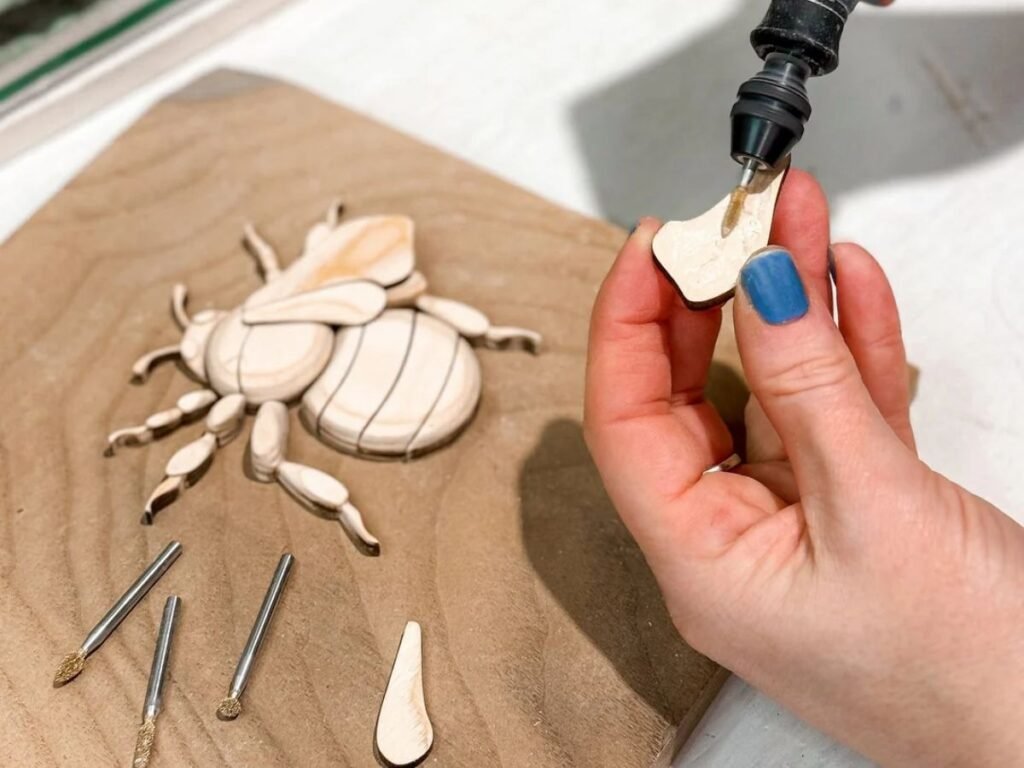
Creating intricate patterns and precise details in woodworking has long challenged both beginners and seasoned artisans. Scroll saw carving provides a practical solution, allowing woodworkers to craft delicate shapes and complex designs with accuracy and control. This technique accommodates fine curves, filigree patterns, and decorative inlays that are difficult to achieve with traditional saws. By integrating this technique into their workflow, craftsmen reduce mistakes, minimize material waste, and enhance overall project quality. Both hobbyists and professionals can enjoy more accessible, efficient, and satisfying woodworking experiences while exploring advanced design possibilities. This approach also allows for experimentation with new patterns safely.
Enhanced Precision for Complex Designs
One of the greatest advantages of this technique is its ability to achieve intricate detail with exceptional accuracy. Adjustable blade types and speeds allow artisans to navigate tight curves and sharp angles without splintering the wood. This precision is particularly useful for decorative panels, ornaments, and miniature wood projects. Using scroll saw carving, woodworkers can attempt designs that would otherwise be too complex or time-consuming with standard tools. The ability to maintain clean, professional results ensures that patterns can be replicated consistently across multiple projects, elevating the quality of every finished piece. Additionally, it provides a platform to experiment with advanced motifs safely.
Safer Handling of Delicate Materials
Working with thin or fragile wood demands careful handling to prevent cracking or breakage. Scroll saw carving reduces the risk of damage compared to conventional cutting tools, enabling craftsmen to work confidently with veneers and lightweight boards. The controlled motion of the saw supports experimentation with various wood types while maintaining material integrity. Ergonomic operation also reduces hand and wrist strain, making extended carving sessions more comfortable. By relying on this technique, artisans can explore intricate designs without fear of ruining valuable materials. This method promotes safer and more enjoyable woodworking for all skill levels.
Versatility Across Projects
Another advantage of scroll saw carving is its versatility for a wide range of woodworking projects. From custom signs and decorative furniture inlays to puzzles and intricate ornaments, artisans can adjust blades to match material thickness or design complexity. Using this technique, woodworkers can complete projects efficiently without needing multiple specialized tools. Incorporating this technique into a workshop enhances creativity and broadens project possibilities, providing both hobbyists and professionals with a tool that supports precision and adaptability. It also encourages exploring new design styles across different projects.
Reducing Material Waste and Errors
Minimizing errors and conserving materials is critical in fine woodworking. Scroll saw carving ensures craftsmen can follow detailed designs closely, correcting small deviations before they become larger issues. Accurate cutting reduces the likelihood of discarding flawed pieces, saving both wood and time. Using this technique also helps maintain uniformity across repeated patterns, allowing artisans to confidently take on complex projects without sacrificing quality. This precision promotes efficiency, letting woodworkers achieve professional results while conserving resources. Over time, it also lowers project costs and improves overall workflow.
Encouraging Skill Development and Creativity
Engaging with detailed woodworking provides artisans an excellent way to develop fine motor skills and creativity. Beginners can practice navigating curves and mastering patterns, while advanced woodworkers explore multi-layered designs, filigree work, or decorative inlays. By incorporating intricate cutting techniques into projects, craftsmen enhance both skill and confidence, producing designs that demonstrate craftsmanship and artistic expression. It encourages experimentation with new methods and materials, expanding creative potential. This approach also fosters patience and precision, essential qualities for high-quality woodworking, while allowing artisans to explore innovative patterns safely.
Conclusion
For woodworkers looking to overcome fine detail challenges, pairing precision techniques with specialized equipment can transform results. Using rotary carving tools for wood enhances accuracy, efficiency, and versatility. Thus, it helps complement intricate woodworking efforts and allows artisans to achieve professional-quality projects with confidence.
