

The road does not care whether you are chasing a personal best or simply trying to finish strong. It stretches endlessly, often under dim streetlights or the fading glow of dawn, where visibility becomes a silent determinant of safety. For endurance athletes, marathoners and triathletes alike, performance is no longer defined solely by speed, stamina, or strategy. It is also defined by how visible they are in environments that were never designed with athletes in mind.
In this evolving landscape, reflective material has emerged as a non-negotiable component of modern athletic gear. What was once considered a supplementary feature is now a foundational design element, reshaping how athletes train, compete, and stay safe.
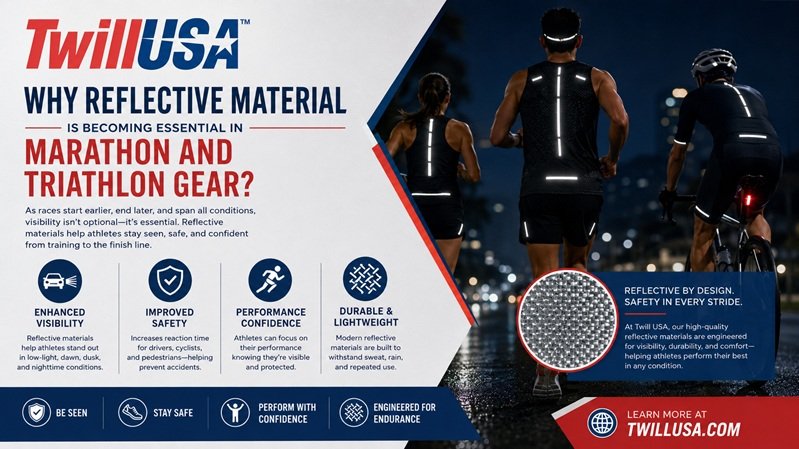
The Visibility is Imperative in Endurance Sports
Marathons and triathlons often begin before sunrise or extend into low-light conditions. Training schedules mirror this reality, with athletes hitting roads at dawn or dusk to avoid heat and manage time constraints. These hours, however, coincide with reduced visibility, arguably the most dangerous time for road users.
Reflective gear addresses a critical gap: it ensures that athletes are seen long before they are close enough to be recognized. Unlike bright colors, which rely on ambient light, reflective elements actively return light to its source, such as vehicle headlights, making athletes visible from significant distances.
This is not merely a convenience; it is a safety mechanism grounded in physics and necessity.
How Reflective Material Works?
At its core, reflective material uses microprismatic or glass bead technology to redirect light back toward its origin. When headlights hit a reflective surface, the material amplifies visibility by creating a bright, noticeable glow.
This function offers two key advantages:
- Enhanced Detection Distance: Drivers can identify athletes earlier, allowing more reaction time.
- Clear Movement Recognition: Reflective strips placed on moving body parts (like arms and legs) make human motion instantly recognizable.
The result is not just visibility, but clarity, which is far more critical in preventing accidents.
From Optional to Essential: A Shift in Gear Design
Athletic apparel has undergone a significant transformation over the past decade. Initially, reflective elements were limited to small logos or trims. Today, they are strategically integrated into the design architecture of performance gear.
Modern marathon and triathlon apparel now includes:
- Reflective piping along seams.
- High-visibility panels on jackets and shorts.
- Reflective overlays on shoes.
- Integrated reflective patterns that enhance motion visibility.
This shift reflects a broader understanding: safety and performance are interconnected. An athlete who feels secure can focus better, train harder, and compete with confidence.
Performance Benefits Beyond Safety
While safety remains the primary driver, reflective material also contributes indirectly to athletic performance.
1. Psychological Confidence
Athletes training in low-light conditions often experience heightened awareness and stress. Reflective gear reduces this anxiety, allowing for a more focused and relaxed performance mindset.
2. Training Consistency
With improved visibility, athletes are less restricted by time-of-day limitations. This flexibility leads to more consistent training schedules, an essential factor in endurance sports.
3. Group Dynamics
In triathlons and marathons, group training is common. Reflective gear ensures that teammates remain visible to one another, reducing the risk of collisions and improving coordination.
Reflective Material in Footwear and Accessories
Footwear brands have embraced reflective technology with notable enthusiasm. Running shoes now feature reflective heel counters, laces, and side panels, ensuring visibility from multiple angles.
Accessories have also evolved, including:
- Reflective hydration belts.
- LED-integrated reflective vests.
- Arm bands with reflective strips.
- Reflective compression gear.
These additions demonstrate that visibility is no longer confined to apparel, it is an ecosystem of safety-enhancing components.
Sustainability and Innovation in Reflective Technology
As sustainability becomes a priority in sportswear manufacturing, reflective materials are also evolving. Brands are exploring eco-friendly alternatives that maintain performance while reducing environmental impact.
Innovations include:
- Recycled reflective fabrics.
- Water-based reflective coatings.
- Durable materials that withstand repeated washing without degradation.
This convergence of sustainability and safety ensures that athletes no longer have to choose between environmental responsibility and performance.
The Role of Fabric Technology: Where Tackle Twill Fits In
While discussing performance gear, it is important to understand how different materials contribute to durability and design. One commonly referenced concept is what is tackle twill?
What is tackle twill? It refers to a technique where fabric patches, often used for lettering or logos, are stitched onto garments using a zigzag or decorative stitch. This method is widely used in sports jerseys due to its durability and textured appearance.
Although traditionally associated with team sports, tackle twill is finding relevance in endurance gear as well. When combined with reflective elements, it can enhance both aesthetics and functionality. For example:
- Reflective tackle twill logos add visibility without compromising style.
- Durable stitched elements ensure longevity under intense training conditions.
Understanding what tackle twill is helps highlight how traditional textile techniques are being adapted to meet modern performance demands.
Regulatory Influence and Event Standards
Race organizers and governing bodies are increasingly emphasizing athlete safety. Many events now recommend, or mandate, the use of reflective gear during low-light conditions.
This shift is driven by:
- Increased participation in endurance sports.
- Urban race environments with mixed traffic conditions.
- A growing focus on athlete welfare.
As a result, brands are aligning their product offerings with these expectations, ensuring compliance while maintaining performance standards.
Consumer Awareness and Market Demand
Today’s athletes are more informed than ever. They actively seek gear that offers measurable benefits, and visibility is high on that list.
Key trends driving demand include:
- Increased awareness of road safety.
- Social media influence highlighting athlete experiences.
- Product transparency from brands regarding material technology.
This informed consumer base is accelerating the adoption of reflective features across all price segments, making safety accessible to a broader audience.
The Aesthetic Evolution of Reflective Gear
Reflective gear is no longer purely functional, it is also stylish. Designers are integrating reflective elements in ways that enhance visual appeal without appearing overly technical.
This includes:
- Subtle reflective patterns visible only under light.
- Color-shifting reflective fabrics.
- Minimalist designs that maintain a premium look.
The result is gear that performs under pressure while maintaining a modern, sophisticated aesthetic.
Challenges and Considerations
Despite its advantages, reflective gear is not without limitations:
- Dependence on External Light: Reflective material requires a light source to function effectively.
- Wear and Tear: Lower-quality materials may degrade over time.
- Improper Placement: Ineffective positioning can reduce visibility.
These challenges highlight the importance of investing in high-quality gear and understanding how to use it effectively.
The Future of Reflective Technology in Endurance Sports
The next phase of innovation is likely to blend reflective technology with smart features. Emerging developments include:
- Adaptive reflectivity that adjusts brightness based on light conditions.
- Integration with wearable tech for enhanced safety alerts.
- Hybrid materials combining reflectivity with temperature regulation.
As these technologies mature, reflective gear will move beyond passive safety into active performance enhancement.
Conclusion
Endurance sports demand resilience, discipline, and precision. Yet, even the most prepared athlete is vulnerable in low-visibility environments. The integration of what is tackle twill
into marathon and triathlon gear represents a critical evolution, one that prioritizes safety without compromising performance.
From advanced fabric technologies to design innovation and regulatory influence, reflective elements have become indispensable. They are no longer an accessory but a necessity, embedded into the very fabric of modern athletic gear.
In a world where every second counts and every step matters, being seen is not optional, it is essential.
