

Mining projects demand significant capital, long timelines, and careful planning. Investors rarely rely on surface level information before committing resources to a project. Early stage technical reviews help investors understand whether a mining project holds realistic commercial potential or carries hidden operational risks.
A detailed pre-feasibility study mining process gives investors a clearer picture of production costs, infrastructure requirements, permitting challenges, and resource quality. Without these insights, financial decisions often rely on assumptions instead of measurable data.
Mining projects involve several moving parts, including geology, engineering, environmental compliance, logistics, and market demand. Technical reviews bring all these elements together in a structured format. Investors gain confidence when project data aligns with realistic operating conditions.
At an early stage, technical evaluations also identify weaknesses that may affect profitability later. A project may show strong mineral grades, though transportation issues or water shortages could reduce long term value. Identifying these concerns early supports smarter financial planning.
Understanding Early Stage Technical Reviews
Technical reviews examine mining projects before large scale development begins. Industry specialists assess geological reports, mine plans, infrastructure availability, operational assumptions, and environmental considerations. Investors use these reviews to understand whether a project deserves additional funding.
A proper review does more than confirm resource estimates. It evaluates whether projected production targets align with practical mining conditions. This process often includes engineering analysis, metallurgical testing, permitting reviews, and operational forecasting.
During a pre-feasibility study mining assessment, consultants examine estimated operating costs alongside capital expenditure forecasts. Investors need realistic financial projections because even small cost variations may affect long term profitability.
Technical reviews also evaluate project timelines. Delays in permitting, equipment procurement, or infrastructure development often increase costs significantly. Early identification of scheduling risks helps investors prepare realistic expectations.
Why Investors Depend on Accurate Data?
Mining investments carry substantial uncertainty. Commodity prices shift frequently, operating costs fluctuate, and regulatory conditions evolve over time. Investors rely on accurate technical data to reduce exposure to avoidable financial losses.
Early stage reviews provide measurable information instead of speculation. Geological modeling confirms reserve quality, while engineering studies estimate extraction feasibility. These findings help investors understand whether projected returns justify potential risks.
Projects lacking reliable technical analysis often encounter unexpected setbacks after development begins. Processing inefficiencies, unstable ground conditions, or inaccurate reserve estimates may force companies to revise production targets.
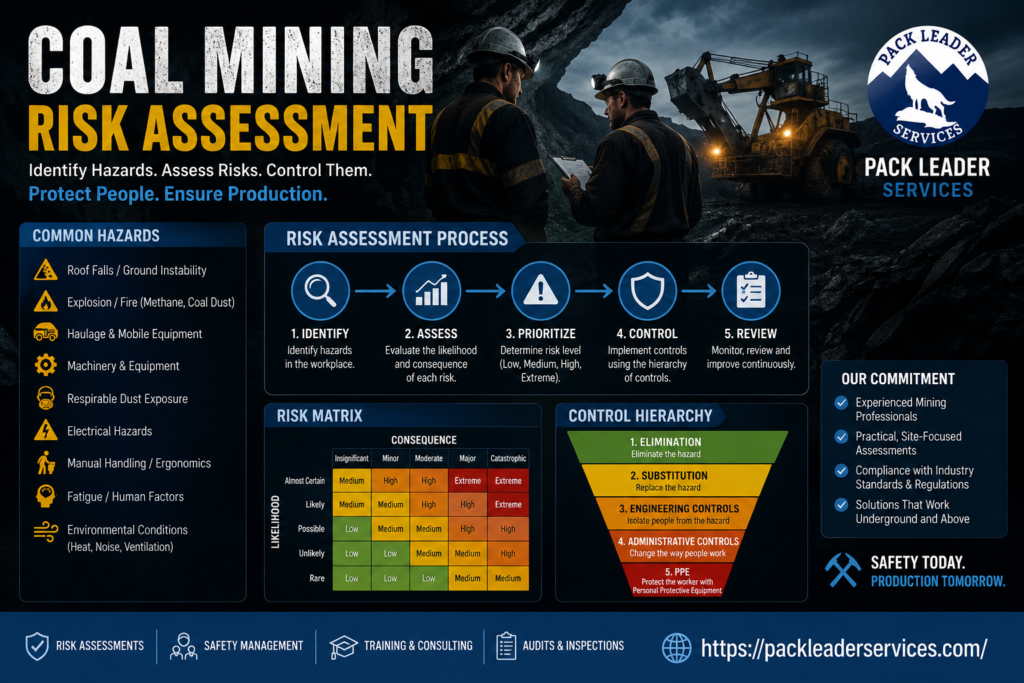
A structured coal mining risk assessment also supports investor decision making in coal related operations. Coal mining projects face unique environmental, safety, and regulatory concerns. Risk assessments identify ventilation challenges, groundwater conditions, slope stability concerns, and reclamation obligations before major investment occurs.
Investors appreciate transparency during early evaluations. Reliable technical reporting builds trust and supports stronger relationships between project developers and financial stakeholders.
Reducing Financial Surprises Before Development
Unexpected expenses often damage mining project profitability. Infrastructure upgrades, processing plant modifications, and environmental mitigation measures frequently increase development costs when issues remain unnoticed during early planning.
Technical reviews identify financial risks before construction begins. Consultants assess site accessibility, power availability, water supply requirements, and transportation logistics. These factors directly influence project economics.
A strong pre-feasibility study mining review also examines market conditions alongside operational assumptions. Commodity demand, transportation costs, and regional infrastructure availability affect project viability more than many investors initially expect.
Mining investors benefit when technical reviews include sensitivity analysis. This process measures how changes in fuel prices, labor expenses, or commodity values affect profitability. Investors gain a more realistic understanding of potential outcomes under varying market conditions.
Environmental compliance costs also deserve careful attention. Permitting delays or remediation requirements often create financial pressure if project teams underestimate regulatory expectations.
The Role of Risk Assessment in Mining Projects
Every mining project carries operational risks. Successful investors understand the importance of identifying these risks before committing significant capital. Early technical reviews create a structured framework for evaluating uncertainty.
A detailed coal mining risk assessment helps project teams evaluate worker safety concerns, geological hazards, and environmental liabilities. Underground conditions, methane accumulation, and ventilation requirements all influence operational planning.
Risk assessments also evaluate external threats. Political instability, changing regulations, and supply chain disruptions affect mining operations globally. Investors appreciate projects that demonstrate preparedness for these challenges.
Technical consultants often review emergency response planning, water management systems, and waste disposal strategies during risk evaluations. These operational details support safer project development and improved long term sustainability.
Financial institutions frequently require documented risk assessments before approving project financing. Strong technical reporting increases credibility and strengthens investor confidence during negotiations.
Improving Operational Efficiency Early
Mining projects perform better when teams identify operational inefficiencies before production begins. Technical reviews help operators optimize mine plans, processing methods, and infrastructure design during early development stages.
Engineers often identify opportunities to reduce hauling distances, improve equipment utilization, or streamline processing systems through early evaluations. These adjustments support lower operating costs and improved productivity.
A well-structured pre-feasibility study mining process also evaluates workforce requirements and maintenance planning. Labor shortages or equipment reliability issues may significantly affect production schedules if teams overlook them during planning.
Operational efficiency extends beyond extraction activities. Water usage, energy consumption, and waste management all influence long term profitability. Investors increasingly prioritize projects that demonstrate responsible resource management.
Technical reviews also support realistic production forecasting. Overly optimistic projections often create financial pressure once operations begin. Conservative planning based on verified technical data protects investor interests.
Environmental and Regulatory Considerations
Mining projects operate under strict environmental regulations in many regions. Failure to meet compliance requirements may result in costly delays, fines, or project shutdowns. Early technical reviews help identify environmental obligations before construction begins.
A comprehensive coal mining risk assessment often includes groundwater analysis, air quality evaluations, reclamation planning, and waste management reviews. These assessments help project teams understand environmental responsibilities clearly.
Regulatory approvals usually require detailed technical documentation. Investors prefer projects with organized permitting strategies because delays often increase financial uncertainty.
Community relations also influence mining project success. Local stakeholders expect responsible environmental management and transparent communication. Early technical reviews help project teams address concerns before conflicts escalate.
Sustainability planning continues to shape investment decisions across the mining sector. Investors increasingly evaluate how projects manage emissions, land rehabilitation, and long term environmental impacts.
Building Investor Confidence Through Transparency
Transparency plays a major role in mining investment decisions. Investors rarely commit large amounts of capital without understanding project risks, operational assumptions, and long term financial projections.
Detailed technical reviews create confidence because they present measurable data instead of promotional claims. Geological models, engineering evaluations, and operational forecasts provide investors with a stronger foundation for decision making.
A reliable pre-feasibility study mining report also demonstrates professionalism and preparation. Investors often view organized technical reporting as a sign of capable project management.
Third party technical evaluations add additional credibility. Independent specialists provide objective assessments that support more balanced investment decisions. Investors appreciate reviews that highlight both opportunities and limitations honestly.
Clear communication during early project stages also strengthens relationships between developers and stakeholders. Investors value realistic expectations more than exaggerated projections.
Conclusion
Mining investments involve substantial financial exposure, operational complexity, and long development timelines. Early stage technical reviews help investors reduce uncertainty and identify potential issues before they become expensive problems.
A structured pre-feasibility study mining process supports smarter decision making by evaluating operational feasibility, environmental obligations, project economics, and long-term risks. Investors gain a clearer understanding of whether a project aligns with realistic financial expectations.
At the same time, a detailed coal mining risk assessment helps identify safety concerns, regulatory challenges, and operational hazards that may affect project performance. These evaluations support more responsible planning and stronger investor confidence.
Mining projects succeed when decisions rely on accurate data, practical analysis, and transparent reporting. Early technical reviews provide that foundation and help investors protect capital while improving long term project outcomes.
