

A quiet transformation is underway in healthcare, one that moves beyond reactive treatments and into the realm of intelligent prevention. Instead of waiting for symptoms to appear, modern medicine is beginning to anticipate them, decode their origins, and neutralize risks before they evolve into disease. At the center of this shift stands a new kind of expert: Precision wellness provider, a professional who blends data science, clinical insight, and personalized care to redefine how we approach health.
The Limits of Traditional Preventive Medicine
For decades, preventive medicine has relied on standardized guidelines, annual check-ups, general dietary advice, and broad fitness recommendations. While these approaches have delivered measurable benefits at a population level, they often fall short at the individual level. Two people following the same routine can experience vastly different outcomes due to variations in genetics, lifestyle, metabolism, and environmental exposure.
This “one-size-fits-all” model overlooks the complexity of human biology. It assumes uniformity where there is none. As a result, early warning signs are frequently missed, and underlying imbalances go undetected until they manifest as chronic conditions.
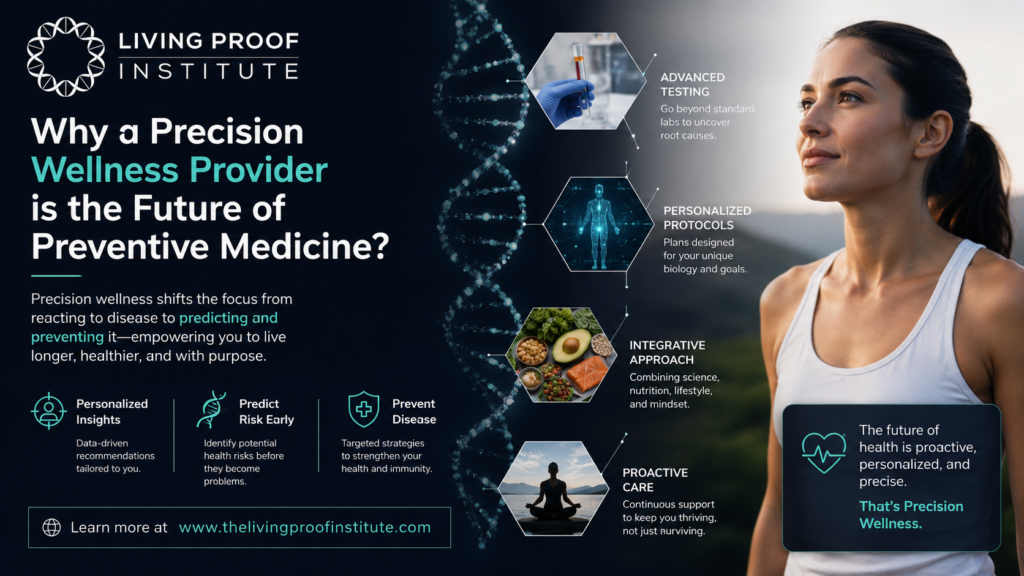
Enter the Precision Wellness Paradigm
The emergence of the Precision wellness provider signals a departure from generalized care toward deeply individualized strategies. Rather than relying solely on symptoms or surface-level indicators, these professionals leverage advanced diagnostics, such as genetic profiling, biomarker analysis, and metabolic testing, to create a detailed health blueprint for each individual.
This approach allows for targeted interventions. For example, instead of broadly recommending exercise, a precision wellness strategy might focus on improving vascular efficiency, optimizing oxygen delivery, and addressing inflammation, all tailored to the patient’s unique physiology.
The result is not just prevention, but optimization, where health is continuously fine-tuned rather than merely maintained.
Data-Driven Decision Making
At the core of precision wellness lies data, high-resolution, real-time, and actionable. Wearable technology, continuous glucose monitors, sleep trackers, and lab analytics provide a steady stream of insights into the body’s internal state.
A Precision wellness provider interprets this data to identify patterns that would otherwise remain invisible. Subtle fluctuations in heart rate variability, for instance, may indicate stress overload long before symptoms arise. Similarly, shifts in blood markers can signal metabolic inefficiencies that precede conditions like diabetes or cardiovascular disease.
This proactive surveillance enables early intervention, reducing the likelihood of disease progression and improving long-term outcomes.
Personalized Strategies for Circulatory Health
Circulation is a foundational aspect of overall wellness, influencing everything from energy levels to organ function. Poor blood flow can lead to fatigue, cognitive decline, and increased risk of chronic illness.
One of the most common questions patients ask is how to improve blood circulation in body. A generic answer might include exercise and hydration, but a precision approach goes much deeper.
A Precision wellness provider evaluates vascular health through detailed diagnostics, identifying specific barriers such as endothelial dysfunction, inflammation, or nutrient deficiencies. Based on these findings, they design targeted interventions that may include:
- Customized exercise protocols to enhance vascular elasticity.
- Nutritional plans rich in nitric oxide–boosting compounds.
- Stress management techniques to regulate blood pressure.
- Supplementation tailored to individual deficiencies.
This level of specificity ensures that interventions are not only effective but also sustainable.
Integrating Lifestyle, Genetics, and Environment
Health does not exist in isolation, it is the product of a dynamic interaction between genes, lifestyle choices, and environmental factors. Precision wellness acknowledges this complexity and integrates all three dimensions into a cohesive care strategy.
For instance, a person with a genetic predisposition to inflammation may require a different dietary approach than someone without it. Similarly, environmental exposures, such as air quality or occupational stress, can significantly influence health outcomes.
A Precision wellness provider synthesizes these variables to create a holistic plan that aligns with the individual’s unique context. This integration transforms wellness from a checklist into a living, adaptive system.
Preventing Chronic Disease Before It Begins
Chronic diseases such as diabetes, cardiovascular disorders, and autoimmune conditions often develop silently over years. By the time symptoms appear, significant damage may already have occurred.
Precision wellness disrupts this trajectory. Through early detection and continuous monitoring, it identifies risk factors at their inception. Instead of managing disease, it prevents it.
For example, insulin resistance, a precursor to diabetes, can be detected through advanced metabolic testing long before blood sugar levels become abnormal. With timely intervention, this condition can often be reversed entirely.
This proactive model not only improves individual health outcomes but also reduces the burden on healthcare systems.
The Role of Behavioral Science
Even the most sophisticated health plan is ineffective without adherence. Precision wellness recognizes this and incorporates behavioral science into its framework.
A Precision wellness provider works closely with patients to understand their motivations, habits, and barriers. Rather than prescribing rigid protocols, they design flexible strategies that align with the individual’s lifestyle and preferences.
This personalized engagement fosters accountability and long-term commitment, key factors in achieving sustainable health outcomes.
Technology as an Enabler, Not a Replacement
While technology plays a critical role in precision wellness, it does not replace human expertise. Data alone is not enough, it requires interpretation, context, and clinical judgment.
The Precision wellness provider acts as a bridge between technology and patient care, translating complex data into actionable insights. This human element ensures that care remains empathetic, nuanced, and responsive.
The Economic Case for Precision Wellness
Preventive care has always been more cost-effective than treatment, but precision wellness amplifies this advantage. By targeting interventions with high accuracy, it minimizes wasted resources and maximizes impact.
Early detection reduces the need for expensive treatments, hospitalizations, and long-term medication. For individuals, this means lower healthcare costs and improved quality of life. For systems, it translates into greater efficiency and sustainability.
A Shift in Mindset
Adopting precision wellness requires a fundamental shift in how we perceive health. It moves the focus from disease management to health optimization, from reactive care to proactive strategy.
Patients are no longer passive recipients of care, they become active participants in their health journey. With guidance from a Precision wellness provider, they gain a deeper understanding of their bodies and the tools to influence their outcomes.
The Future Is Already Taking Shape
The convergence of biotechnology, data analytics, and personalized care is not a distant vision, it is already reshaping the healthcare landscape. As awareness grows and technology becomes more accessible, precision wellness is poised to become the standard rather than the exception.
The question is no longer whether this model will dominate, but how quickly it will be adopted.
Closing Thought
Health is not a fixed state; it is a dynamic process that evolves with time, choices, and circumstances. The traditional model of waiting for illness to strike is no longer sufficient in a world where information and technology offer deeper insights into our biology.
The rise of the Precision wellness provider marks a turning point, one where prevention is precise, care is personalized, and health is actively engineered rather than passively maintained. For those seeking not just longevity but vitality, this approach represents the future of medicine.
