

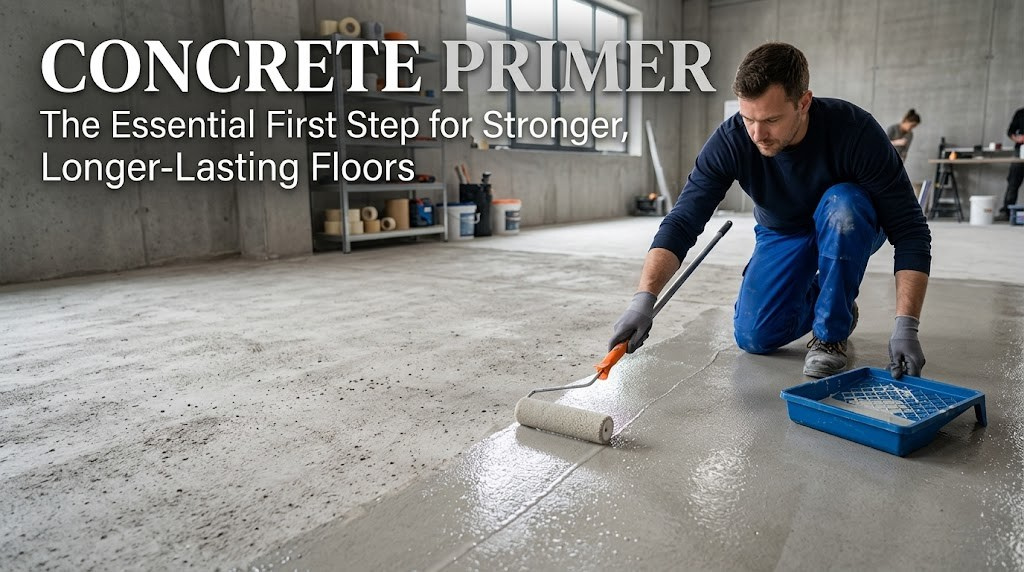
When people plan to paint or coat a concrete surface, they often focus on the final finish and overlook one of the most important stages: preparation. Whether it is a garage, workshop, patio, or interior floor, using the right concrete primer can make the difference between a finish that lasts for years and one that peels within months.
Concrete may look solid and ready for paint, but it is naturally porous and can hold dust, moisture, and contaminants. A high-quality primer helps create the ideal base for coatings, improving adhesion and durability. If you want professional-looking results, primer should never be skipped.
What Is Concrete Primer?
A concrete primer is a specially formulated base coat applied before paint, epoxy, or sealers. It prepares the surface by bonding to the concrete while creating a stronger grip for the topcoat.
Unlike ordinary paint undercoats, floor primers are designed to cope with heavy traffic, changing temperatures, and moisture often found in concrete spaces.
Common uses include:
- Garages
- Warehouses
- Basements
- Patios
- Workshops
- Commercial units
- Interior concrete floors
Why Concrete Floors Need Primer
Concrete surfaces are more complex than they appear. Even new slabs can contain trapped moisture or fine dust that affects paint adhesion. Older surfaces may have oil stains, cracks, or previous coatings.
Using a concrete floor primer offers several benefits:
Better Adhesion
Primer helps paint or epoxy bond properly, reducing peeling and flaking.
Seals Porous Surfaces
A concrete primer and sealer can reduce absorption, meaning less paint is needed and coverage becomes more even.
Improves Durability
Floors coated over primer often resist wear and tear more effectively.
Helps Prevent Moisture Issues
Some specialist primers are designed to reduce moisture-related coating failures.
Different Types of Floor Primers for Concrete
Choosing the right floor primer for concrete depends on where the floor is located and what topcoat you plan to use.
Acrylic Floor Primer
An acrylic floor primer is popular for domestic and light commercial areas. It dries quickly, is easy to apply, and works well before many floor paints.
Epoxy Primer
If you need heavy-duty protection, many professionals recommend the best epoxy primer for concrete before applying epoxy floor coatings. It offers excellent adhesion and strength.
Concrete Floor Primer Sealer
A concrete floor primer sealer combines sealing and priming in one product, making it useful for dusty or highly absorbent surfaces.
Garage Floor Primer
A dedicated garage floor primer is ideal where vehicles, oil, and tyre traffic create extra stress on the surface.
How to Prepare Concrete Before Priming
Even the best primer performs poorly on a dirty floor. Good preparation matters.
Step 1: Clean Thoroughly
Remove dust, grease, loose debris, and any old flaking paint.
Step 2: Repair Damage
Fill cracks or chips before applying primer for concrete floor surfaces.
Step 3: Test Moisture Levels
If moisture is present, choose a suitable concrete slab primer designed for damp conditions.
Step 4: Apply Evenly
Use a roller or brush and follow the product instructions carefully.
How to Choose the Best Primer for Concrete Floor Projects
When selecting the best primer for concrete floor applications, consider:
- Indoor or outdoor use
- Level of foot or vehicle traffic
- Existing moisture issues
- Paint or epoxy topcoat compatibility
- Drying time
- Surface condition
Reliable suppliers such as Trade Supplies Uk often stock a range of flooring primers, floor paint primer, and specialist coating systems to suit different jobs.
Common Mistakes to Avoid
Many DIY users run into problems by making avoidable mistakes:
- Priming a dusty surface
- Applying too thickly
- Ignoring drying times
- Using the wrong paint primer for concrete
- Skipping primer entirely
A little patience during preparation saves time and money later.
Final Thoughts
A quality concrete primer is one of the smartest investments for any floor painting project. It improves adhesion, increases durability, and helps create a smoother final finish. Whether you need an acrylic concrete primer, a garage floor primer, or a heavy-duty epoxy solution, choosing the right product gives your flooring the best possible start.
