

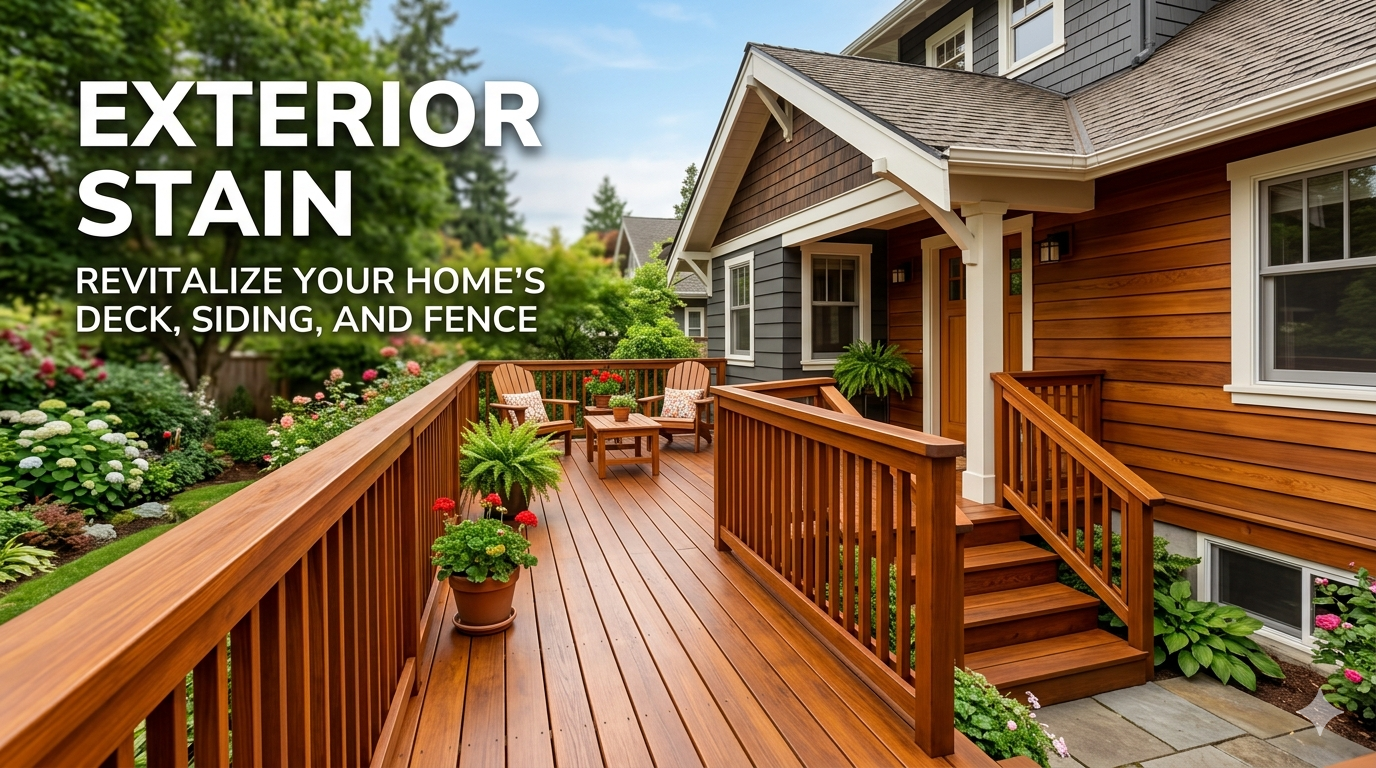
Outdoor wooden structures add warmth, beauty, and character to homes and commercial properties. Decks, fences, pergolas, siding, and outdoor furniture improve curb appeal while creating comfortable outdoor spaces. However, constant exposure to sunlight, rain, moisture, and changing temperatures can gradually damage wood surfaces over time.
Using high-quality exterior stain helps protect outdoor wood while enhancing its natural texture and appearance. With proper preparation and routine maintenance, stained wood surfaces can remain durable, weather-resistant, and visually appealing for many years.
Why Outdoor Wood Needs Protection
Wood is naturally vulnerable to environmental damage. Ultraviolet rays from sunlight can cause fading and dryness, while moisture may lead to swelling, cracking, mold, and rot.
Protective finishes help create a barrier against harsh weather conditions while preserving the natural grain of the wood. Unlike paint, stain penetrates the surface instead of covering it completely, allowing the natural texture and character of the material to remain visible.
Applying reliable exterior stain improves both durability and long-term appearance.
Benefits of Using Exterior Stain
Staining outdoor wood provides several important long-term advantages.
Enhances Natural Beauty
Stain highlights the wood grain and texture, creating a rich and natural appearance.
Protects Against Weather Damage
Protective coatings help shield wood from sunlight, moisture, and rain exposure.
Reduces Cracking and Warping
Proper sealing helps stabilize wood and minimize expansion caused by temperature changes.
Easier Maintenance
Stained surfaces are generally easier to maintain and recoat than painted wood.
Extends Surface Lifespan
Routine staining helps preserve the durability and strength of outdoor wood structures.
These benefits make exterior stain an essential part of outdoor maintenance.
Different Types of Wood Stain Finishes
Different stain options provide different levels of color, protection, and wood visibility.
Transparent Stain
Transparent finishes preserve the natural appearance of wood while providing light protection.
Semi-Transparent Stain
Semi-transparent stain adds subtle color while still allowing the grain pattern to remain visible.
Solid Stain
Solid stain provides stronger coverage and additional protection for older or weathered wood.
Choosing the right finish depends on the condition of the wood and the desired final appearance.
Selecting the Right Stain for Your Project
Several factors should be considered before choosing a product.
Wood Condition
New wood often works well with transparent finishes, while older surfaces may require more coverage.
Climate and Weather Exposure
Areas with intense sunlight or frequent moisture require stronger protective coatings.
Desired Appearance
Different stain colors create different visual effects and complement various outdoor styles.
Maintenance Expectations
Some finishes require more frequent maintenance and reapplication than others.
Selecting the proper exterior stain helps improve both durability and visual appeal.
Importance of Proper Surface Preparation
Preparation is one of the most important parts of any staining project. Poor preparation can reduce stain absorption and shorten finish lifespan.
Clean the Surface Thoroughly
Remove dirt, mildew, dust, and old coatings before applying stain.
Allow Wood to Dry Completely
Moisture trapped inside the wood can affect adhesion and finish durability.
Sand Rough Areas
Sanding helps improve smoothness and allows the stain to absorb evenly.
Repair Damaged Sections
Cracked or damaged boards should be repaired or replaced before staining.
Proper preparation creates stronger and longer-lasting results.
Application Tips for Better Results
Correct application methods help improve finish quality and durability.
Apply Thin and Even Coats
Multiple light coats create smoother and more consistent coverage.
Work in Small Sections
Staining manageable areas helps prevent uneven finishes and visible overlaps.
Avoid Extreme Weather Conditions
Very hot, cold, or wet weather can affect drying and performance.
Follow Recommended Drying Times
Allowing proper drying time between coats improves protection and finish quality.
Using proper techniques helps achieve cleaner and more professional-looking results.
Maintaining Stained Outdoor Surfaces
Routine maintenance helps preserve stained wood and improve long-term durability.
Inspect Surfaces Regularly
Check for signs of fading, peeling, or moisture damage.
Clean Wood Periodically
Removing dirt and debris helps maintain appearance and protection.
Reapply Stain When Needed
Weather exposure may gradually reduce protective performance over time.
Prevent Standing Water
Excess moisture can shorten the lifespan of stained surfaces.
Consistent maintenance helps keep outdoor wood strong and attractive.
Common Staining Mistakes to Avoid
Avoiding common mistakes improves both durability and final appearance.
Skipping Surface Preparation
Dirty or damaged wood prevents proper stain absorption.
Applying Stain to Wet Wood
Moisture can reduce adhesion and affect finish quality.
Using Excessive Product
Too much stain may create uneven finishes and longer drying times.
Ignoring Weather Conditions
Poor weather during application can affect performance and durability.
Being aware of these issues helps create stronger and more attractive results.
Choosing Reliable Products for Outdoor Projects
Reliable materials are essential for achieving professional and long-lasting finishes. Peterson’s Paints is one example of a brand associated with products commonly used for protecting and enhancing outdoor wood surfaces.
Quality materials help improve weather resistance, durability, and overall finish appearance.
Conclusion
Outdoor wood surfaces require regular care and protection to maintain their beauty and strength over time. By selecting suitable products, preparing surfaces correctly, and following effective application techniques, homeowners can improve both durability and visual appeal.
Using dependable exterior stain helps preserve natural wood beauty while protecting outdoor structures from moisture, sunlight, and long-term environmental damage.
