

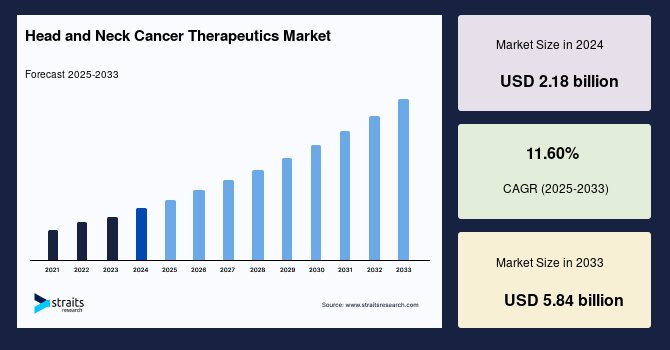
The global Head and Neck Cancer Therapeutics Market is experiencing significant growth due to the increasing prevalence of head and neck cancers, advancements in targeted therapies, and rising investments in oncology research and treatment development. Head and neck cancers include malignancies affecting the oral cavity, throat, nasal cavity, salivary glands, and larynx, requiring comprehensive therapeutic approaches involving surgery, chemotherapy, radiation therapy, and immunotherapy.
The global head and neck cancer therapeutics market size was valued at USD 2.18 billion in 2024 and is projected to reach from USD 2.43 billion in 2025 to USD 5.84 billion by 2033, registering a CAGR of 11.60% during the forecast period (2025-2033).
The growing adoption of precision medicine, increasing use of immunotherapy, and rising awareness regarding early cancer diagnosis are major factors driving market growth. Additionally, continuous advancements in molecular diagnostics, targeted drug development, and personalized cancer treatment are further supporting the expansion of the head and neck cancer therapeutics market globally.
Market Drivers
One of the primary drivers of the head and neck cancer therapeutics market is the increasing incidence of head and neck cancers worldwide. Risk factors such as tobacco use, alcohol consumption, human papillomavirus (HPV) infections, and unhealthy lifestyles are contributing to the growing number of cancer cases globally.
Another significant growth factor is the rapid advancement in targeted therapies and immunotherapies. Pharmaceutical companies and research institutions are increasingly developing innovative treatment options such as immune checkpoint inhibitors, monoclonal antibodies, and targeted molecular therapies that improve patient survival rates and treatment outcomes.
The growing emphasis on early cancer detection and precision medicine is also fueling market growth. Advances in diagnostic imaging, biomarker testing, and genomic profiling are enabling healthcare providers to identify cancers at earlier stages and develop personalized treatment plans for patients.
Increasing investments in oncology research and clinical trials are further supporting market expansion. Governments, biotechnology firms, and pharmaceutical companies are allocating substantial resources toward cancer drug discovery, combination therapies, and advanced treatment technologies.
Market Challenges
Despite strong growth prospects, the head and neck cancer therapeutics market faces several challenges. One of the major concerns is the high cost associated with advanced cancer therapies, particularly immunotherapies and targeted treatments. Limited affordability and reimbursement issues may restrict access to innovative therapies in developing regions.
Another challenge is the severe side effects and complications associated with cancer treatments. Patients undergoing chemotherapy, radiation therapy, or immunotherapy may experience significant adverse effects, affecting treatment adherence and quality of life.
The complexity of cancer diagnosis and treatment planning also presents challenges. Head and neck cancers often require multidisciplinary treatment approaches involving oncologists, surgeons, radiologists, and rehabilitation specialists.
Additionally, lengthy regulatory approval processes and high research and development costs may delay the commercialization of novel therapeutic products.
Market Segmentation
The head and neck cancer therapeutics market is segmented based on therapy type, cancer type, and end-user.
By therapy type, the market includes chemotherapy, targeted therapy, immunotherapy, radiation therapy, and others. Chemotherapy holds a significant market share due to its widespread use as a standard treatment approach for head and neck cancers.
The immunotherapy segment is witnessing rapid growth owing to increasing adoption of immune checkpoint inhibitors and personalized cancer immunotherapies that offer improved treatment outcomes and reduced recurrence rates.
By cancer type, the market is categorized into oral cavity cancer, pharyngeal cancer, laryngeal cancer, salivary gland cancer, and others. Oral cavity cancer dominates the market due to its high prevalence associated with tobacco and alcohol consumption.
The pharyngeal cancer segment is also growing steadily with increasing awareness regarding HPV-related cancers and advancements in diagnostic technologies.
By end-user, the market includes hospitals, cancer treatment centers, specialty clinics, and research institutes. Hospitals account for the largest market share due to the availability of advanced diagnostic infrastructure, multidisciplinary oncology teams, and comprehensive cancer treatment services.
Cancer treatment centers are also contributing significantly to market growth by offering specialized therapies, clinical trials, and personalized oncology care.
Regional Insights
Regionally, the head and neck cancer therapeutics market is analyzed across North America, Europe, Asia-Pacific, Latin America, and the Middle East & Africa.
North America dominates the global market due to advanced healthcare infrastructure, strong oncology research activities, and high adoption of innovative cancer therapies. The presence of major pharmaceutical companies and increasing clinical trial activities further support regional market growth.
Europe also represents a substantial market share, driven by growing investments in cancer research, increasing use of targeted therapies, and favorable healthcare reimbursement systems.
Asia-Pacific is expected to witness the fastest growth during the forecast period. Rising cancer prevalence, improving healthcare infrastructure, and increasing investments in oncology treatment facilities in countries such as China, India, Japan, and South Korea are driving regional market expansion.
The growing focus on early cancer diagnosis and increasing access to advanced treatment options are further contributing to market growth across the region.
Latin America and the Middle East & Africa are emerging markets with improving healthcare access, rising cancer awareness programs, and increasing investments in oncology infrastructure. Expanding access to diagnostic and treatment services is expected to create future growth opportunities in these regions.
Key Players Analysis
The head and neck cancer therapeutics market is highly competitive, with several pharmaceutical and biotechnology companies focusing on innovative drug development, immunotherapy research, and strategic collaborations to strengthen their market presence. Companies are investing heavily in clinical trials, targeted therapies, and precision medicine technologies to improve treatment outcomes and patient survival rates.
Manufacturers are also emphasizing partnerships with hospitals, cancer research institutes, and biotechnology firms to accelerate drug development and expand therapeutic pipelines. Strategic mergers, acquisitions, and licensing agreements remain key growth strategies among leading market participants in the oncology sector.
Continuous advancements in cancer immunotherapy, molecular diagnostics, and personalized treatment approaches are expected to intensify competition among market players during the forecast period.
For detailed insights, visit: https://straitsresearch.com/report/head-and-neck-cancer-therapeutics-market
About Us
Straits Research is a leading research and intelligence organization, specializing in research, analytics, and advisory services, along with providing business insights and research reports.
Contact Us
Email: sales@straitsresearch.com
Tel: +1 646 905 0080 (U.S.), +44 203 695 0070 (U.K.)
