

Imagine old systems holding you back. You need cloud power, but not all at once. Hybrid cloud migration combines the best aspects of both worlds. It keeps essential data on-site while moving the rest to the cloud. This method fits perfectly for growing companies. Let’s break it down in simple terms.
India embraces this trend. Companies combine private clouds with public ones like AWS. Why rush to go fully public? Hybrid cloud migration saves money and increases flexibility. Statistics show that 85% of companies will use hybrid setups by 2025. Ready to learn more? This blog dives deep. We cover key benefits, steps, tips, challenges, tools, real successes, and more in straightforward terms.
What is Hybrid Cloud Migration Really?
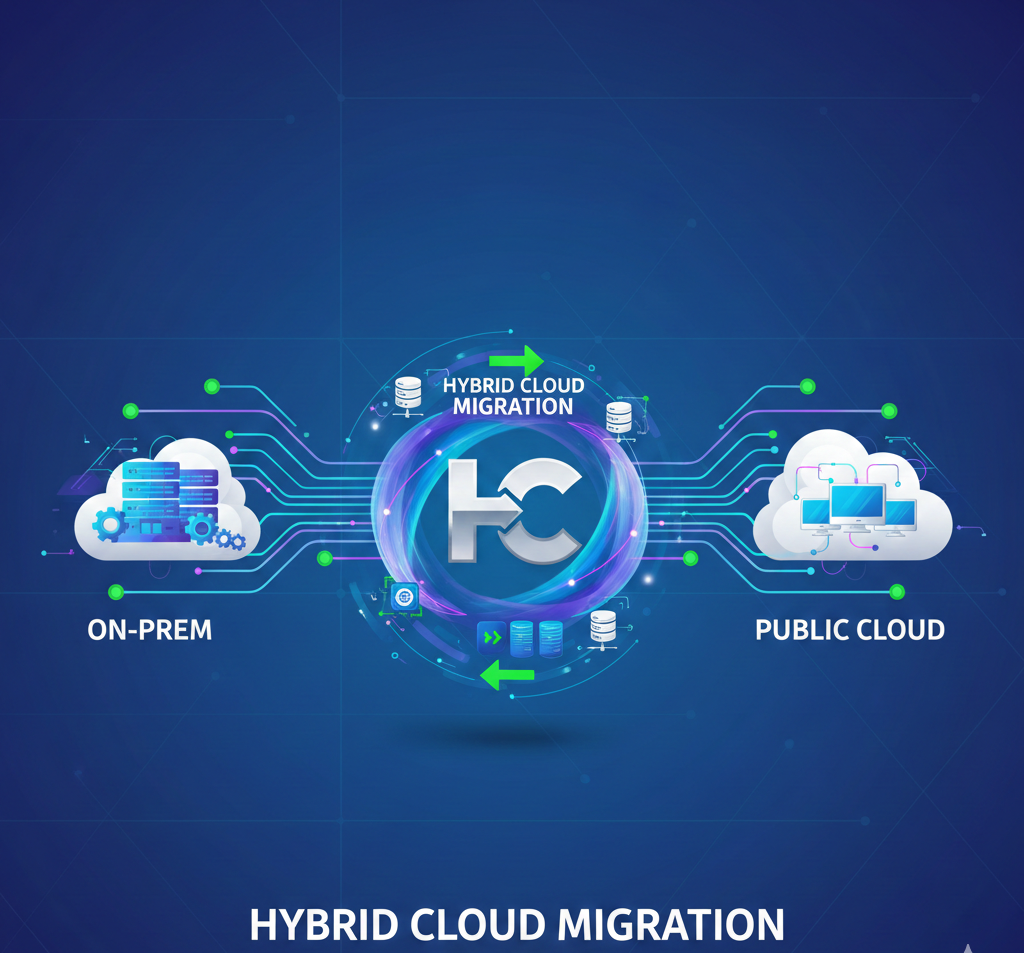
Hybrid cloud migration connects on-premise systems to public clouds. You can think of it as using private servers for sensitive information and the public cloud for heavy applications. There’s no need for a complete overhaul.
It creates a seamless bridge. Data flows freely between the two setups. Applications run where they work best. Security remains strong on the private side while scalability is available on the public side.
Start small and test a few applications. Scale up gradually. Evidence from industry reports shows that hybrid approaches cut migration risks by 40%. Companies avoid major disruptions.
Cloud migration services make the process smooth. Providers take care of the tricky tech aspects while you focus on your business operations. You don’t have to become cloud experts overnight.
This setup suits Indian companies well. Local data regulations require on-site control while public clouds manage growth spikes.
Why Go for Hybrid Cloud Migration Now?
- Many leaders hesitate about full public cloud migration. Data security is their biggest concern. What if hackers breach everything? Hybrid cloud migration offers a smart solution.
- Keep compliance-sensitive data local. Shift to the cloud only for peak periods. There’s no full exposure. Costs decrease quickly too. You only pay for what you use in the cloud. One major bank saved 35% on IT costs this way.
- AWS cloud migration tools speed things up. Mumbai data centers maintain high speeds, and low latency means happier users. Cloud migration service providers report a 60% faster rollout with hybrid methods.
- Market trends also support this. India’s cloud spending is reaching new heights, with hybrid leading the way. Companies gain an advantage over competitors who rely solely on on-premises solutions.
- Consider seasonal businesses. E-commerce spikes during festivals. Hybrid setups can handle the demand without wasting resources.
Key Benefits of Hybrid Cloud Migration
Benefits pile up quickly. Here’s a short list:
- Flexibility is key—scale up or down as needed.
- Security remains strong—choose the best tools from both sides.
- No vendor lock-in—you can change providers if necessary.
- Disaster recovery works well—data gets backed up across systems.
- Cost control shines—prevent overspending on hardware.
Cloud modernization fits perfectly here. Update old applications during the transition to gain speed and efficiency. Companies report faster innovation, enabling teams to experiment freely and enhance agility.
Steps to Nail Your Hybrid Cloud Migration
Don’t jump in without a plan. Follow this clear path in simple numbered steps.
1. Assess everything. List all applications, check data sensitivity, and note dependencies.
2. Choose your strategy. Will you rehost simple apps or refactor complex ones?
3. Select the right tools. AWS Outposts brings the cloud to your location
4. Test in small phases. Migrate low-risk items first and learn quickly.
5. Monitor closely. Track performance and make adjustments as needed.
6. Optimize continuously. Right-size resources to eliminate waste.
Cloud migration consulting experts guide each step. They identify potential issues early, saving time and money. A phased approach builds confidence, allowing teams to adjust smoothly.
Helpful Tips for Smooth Hybrid Cloud Migration
- Pro tips can make a significant difference. Try these now:
- Always start with low-risk items to quickly build team confidence
- Train staff early. A skills gap can derail projects.
- Budget extra for APIs. They connect systems together.
- Choose reliable cloud migration service providers. Local expertise often outperforms global companies.
- Plan cloud migration and modernization together for a complete refresh.
- Document everything for future teams.
– Test failover regularly to ensure backups work.
Enterprise cloud migration projects benefit from these tips. Small changes can lead to significant gains.
Challenges in Hybrid Cloud Migration and Smart Fixes
Roadblocks can occur. Integration is often a major issue. On-premise and cloud systems don’t always connect easily.
Data synchronization can lag, which frustrates users. Security gaps may arise occasionally.
Effective fixes exist. Use reliable middleware first. Tools like VMware bridge gaps efficiently. Encrypt all data flows to prevent breaches.
Cloud migration solutions now incorporate smart AI features. They can predict issues before launch. One retailer avoided a major outage thanks to this technology.
Cost overruns can happen. Post-move right-sizing can save 25%, so keep an eye on bills weekly.
Skills shortages can be detrimental. Partner with experts to fill gaps quickly.
Tools Powering Hybrid Cloud Migration
Tools make everything work. Here are some top picks for you:
- AWS cloud migration with Outposts offers full AWS capabilities on-site.
- Azure Arc manages everything in a hybrid setup.
- Google Anthos handles multi-cloud environments smoothly.
- VMware Tanzu unifies Kubernetes clusters.
- Red Hat OpenShift adds enterprise-level features.
Cloud migration consulting helps choose the best tools. The right combinations can increase success rates significantly. Choose based on your technology stack. Free trials help test compatibility without big upfront costs.
Cloud Migration Services Role in Hybrid Success
Solo efforts often struggle. Cloud migration services can make a big difference. Experts map your entire setup and handle complicated details.
They provide tailored cloud migration solutions. Their plans cater to everything from startups to large firms without any cookie-cutter approaches.
Cloud migration and modernization packages transform outdated systems. Old mainframes can be upgraded quickly. Providers offer 24/7 support for peace of mind.
Real Wins from Hybrid Cloud Migration
Stories illustrate the impact. Take that retailer again. During peak sales, old servers struggled, but hybrid cloud migration changed everything.
Payment data stayed secure on-site while inventory applications shifted to AWS. Sales soared by 40% without any downtime during the surge.
A healthcare example also stands out. Enterprise cloud migration met strict regulations through hybrid systems. Patient records remained private while applications accelerated significantly.
Statistics support this. Hybrid users innovate three times faster, and revenue grows steadily.
In the bank case, costs dropped by 35%, and their agility became unmatched.
Cloud Modernization During Hybrid Cloud Migration
Going solo often falls short. Cloud modernization completes the picture. Break large applications into microservices.
Containers package applications efficiently, and Kubernetes runs them intelligently. Cloud migration and modernization together unlock real speed.
Companies experience a 30% boost in efficiency, with teams deploying daily instead of monthly. Start with quick wins by containerizing simple services first.
Future Trends in Hybrid Cloud Migration
The future looks promising. Edge computing is becoming more common, and 5G is greatly increasing speeds.
India’s market is projected to soar to $10 billion by 2028, driven by cloud migration service providers.
AI will streamline processes automatically. Zero-touch migrations are on the horizon. Stay hybrid, as fully public clouds may not fit enterprises in the long run.
Retailer’s Hybrid Cloud Migration Success
A growing retailer faced crashes during peak order times. Their servers struggled, but hybrid cloud migration changed everything.
Payment data remained secure on-site while inventory smoothly transitioned to AWS. Cloud migration services led the way, and sales increased by 40% with no downtime.
Cloud migration consulting minimized risks. The smooth rollout impressed staff and leadership. This demonstrates that hybrid cloud migration delivers significant results.
Conclusion
Hybrid cloud migration skillfully combines on-premise control with public cloud capabilities. It provides unmatched flexibility for scaling during peak times. Security stays strong with sensitive data located on-site. Costs decrease through pay-as-you-go models. Companies save 30-40% on IT spending while increasing agility.
This blog outlined clear steps from assessment to optimization. Pro tips, like phased testing, help minimize risks. Trusted cloud migration service providers aid in complex integrations. Cloud modernization turns legacy applications into microservices for three times faster innovation.
Cloud migration consulting ensures compliance and no downtime. AWS cloud migration tools like Outposts create seamless hybrid setups. Enterprise cloud migration succeeds by avoiding 70% of common failures.
FAQs
- What sets hybrid cloud migration apart?
Ans. It combines private and public clouds, providing top flexibility.
- What is the typical AWS cloud migration timeline for hybrid?
Ans. The timeline usually ranges from 3-9 months, depending on size.
- Is cloud migration consulting necessary?
Ans. Yes, it is crucial because it greatly reduces risks.
- Is it ideal for enterprise cloud migration?
Ans. Absolutely, it grows alongside your business.
