

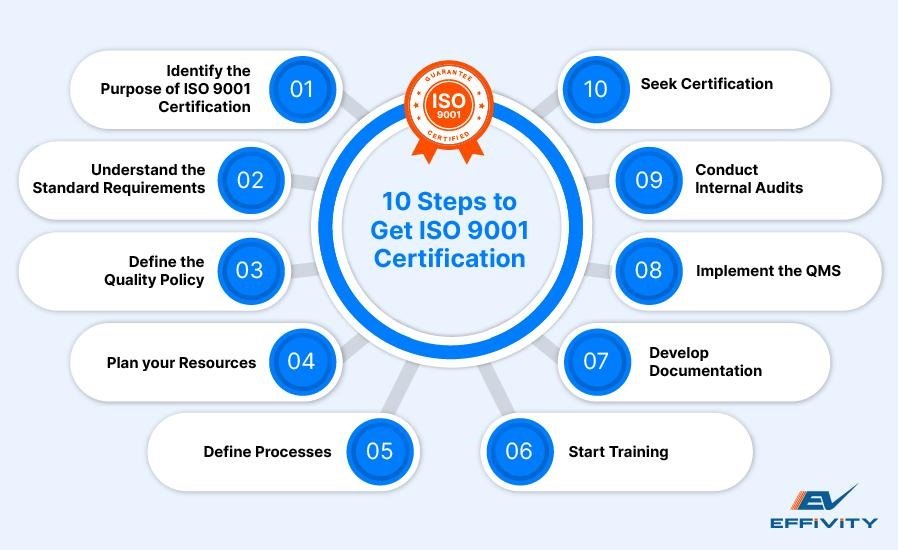
Small and medium-sized enterprises (SMEs) are the backbone of many economies, yet they often face intense competition, limited resources, and increasing customer expectations. To survive and grow in such an environment, SMEs must focus on quality, efficiency, and continuous improvement.
This is where ISO 9001 Quality Management Certification for SMEs becomes a powerful tool. ISO 9001 is the world’s most recognized quality management standard, designed to help businesses deliver consistent products and services while improving internal processes.
For SMEs, adopting ISO 9001 is not just about certification—it is about building a strong foundation for growth, customer trust, and long-term success.
What is ISO 9001 and Why It Matters for SMEs
ISO 9001 is an international standard that outlines the requirements for a Quality Management System (QMS). It helps organizations standardize processes, reduce inefficiencies, and ensure consistent quality in their operations.
Many small businesses believe that ISO 9001 is only for large corporations, but this is a misconception. The standard is flexible and scalable, making it suitable for organizations of all sizes. In fact, SMEs can benefit even more because it helps them build structured systems and compete with larger companies.
By implementing ISO 9001 Quality Management Certification for SMEs, businesses can improve performance, enhance customer satisfaction, and create a culture of continuous improvement.
1. Improved Product and Service Quality
One of the most important benefits of ISO 9001 is its strong focus on quality. The standard requires businesses to define processes clearly, monitor performance, and ensure consistent output.
For SMEs, this means fewer errors, less rework, and better products or services. By following structured quality control measures, businesses can meet customer expectations more effectively and build a reputation for reliability.
Consistency in quality not only improves customer satisfaction but also reduces operational issues in the long run.
2. Increased Customer Satisfaction and Trust
Customer satisfaction is at the core of ISO 9001. The standard emphasizes understanding customer needs, gathering feedback, and continuously improving services.
When SMEs implement ISO 9001 Quality Management Certification for SMEs, they create a customer-focused culture. This leads to:
- Better communication with clients
- Faster resolution of complaints
- Consistent delivery of quality
Satisfied customers are more likely to return and recommend your business, helping you build long-term relationships and loyalty.
3. Enhanced Operational Efficiency
SMEs often struggle with inefficiencies due to lack of structured processes. ISO 9001 addresses this issue by introducing standardized procedures and clear workflows.
With improved systems in place, businesses can:
- Reduce waste and duplication
- Minimize errors
- Improve productivity
Efficient operations lead to cost savings and better use of resources, which is crucial for small businesses with limited budgets.
4. Better Business Opportunities and Market Access
ISO 9001 certification is globally recognized, making it easier for SMEs to enter new markets and attract clients.
Many organizations and government projects require ISO certification as a prerequisite. By obtaining certification, SMEs can:
- Qualify for international tenders
- Win larger contracts
- Compete with bigger companies
ISO 9001 certification acts as proof that your business meets international quality standards, increasing your credibility in the market.
5. Stronger Internal Structure and Management
One of the key challenges for SMEs is the lack of structured management systems. ISO 9001 helps businesses establish clear roles, responsibilities, and procedures.
This results in:
- Better coordination between departments
- Improved communication
- Clear accountability
A well-structured organization operates more smoothly and can handle growth more effectively. ISO 9001 provides the framework needed to achieve this structure.
6. Continuous Improvement and Growth
ISO 9001 is built on the principle of continuous improvement. Businesses are required to regularly evaluate their performance and identify areas for enhancement.
This proactive approach helps SMEs:
- Adapt to changing market conditions
- Improve processes over time
- Stay competitive
Instead of reacting to problems, businesses can prevent them and continuously improve their operations. This leads to long-term growth and sustainability.
7. Increased Profitability and Cost Savings
Many SMEs assume that ISO certification is an expense, but in reality, it is an investment that delivers long-term financial benefits.
By improving efficiency and reducing waste, businesses can lower operational costs. Additionally, better quality and customer satisfaction lead to repeat business and increased revenue.
ISO 9001 helps organizations identify inefficiencies, eliminate unnecessary costs, and improve resource utilization, ultimately boosting profitability.
How ISO 9001 Empowers SMEs to Compete with Larger Companies
One of the biggest advantages of ISO 9001 is that it levels the playing field for SMEs. Small businesses can use certification to demonstrate their commitment to quality and professionalism.
With ISO 9001 Quality Management Certification for SMEs, even a small company can:
- Compete with established brands
- Build trust with international clients
- Improve credibility in competitive markets
This gives SMEs a significant advantage, especially when trying to grow or expand into new regions.
Common Misconceptions About ISO 9001 for SMEs
Despite its benefits, many SMEs hesitate to adopt ISO 9001 due to common misconceptions:
“It’s only for large companies”
In reality, ISO 9001 is designed for businesses of all sizes and can be customized to fit small organizations.
“It’s too expensive”
While there is an initial investment, the long-term savings and benefits outweigh the costs.
“It involves too much paperwork”
Modern ISO 9001 focuses on practical processes rather than excessive documentation.
Understanding these misconceptions helps SMEs make informed decisions about certification.
Challenges SMEs May Face During Implementation
While ISO 9001 offers many benefits, SMEs may encounter some challenges:
- Limited resources and budget
- Lack of awareness or expertise
- Resistance to change within the organization
However, these challenges can be overcome with proper planning, training, and support. The long-term advantages make the effort worthwhile.
Future of SMEs with ISO 9001
As markets become more competitive and customer expectations continue to rise, SMEs must focus on quality and efficiency to survive.
ISO 9001 provides a future-ready framework that helps businesses adapt to changing conditions and maintain high standards. Companies that invest in quality management today are better positioned for growth tomorrow.
Conclusion
ISO 9001 certification is a powerful tool that can transform the way SMEs operate. From improving quality and efficiency to enhancing customer trust and profitability, the benefits are significant and long-lasting.
By adopting ISO 9001 Quality Management Certification for SMEs, businesses can build a strong foundation for success, compete with larger organizations, and achieve sustainable growth.
For SMEs looking to scale, improve performance, and gain a competitive edge, ISO 9001 is not just an option—it is a strategic necessity.
