

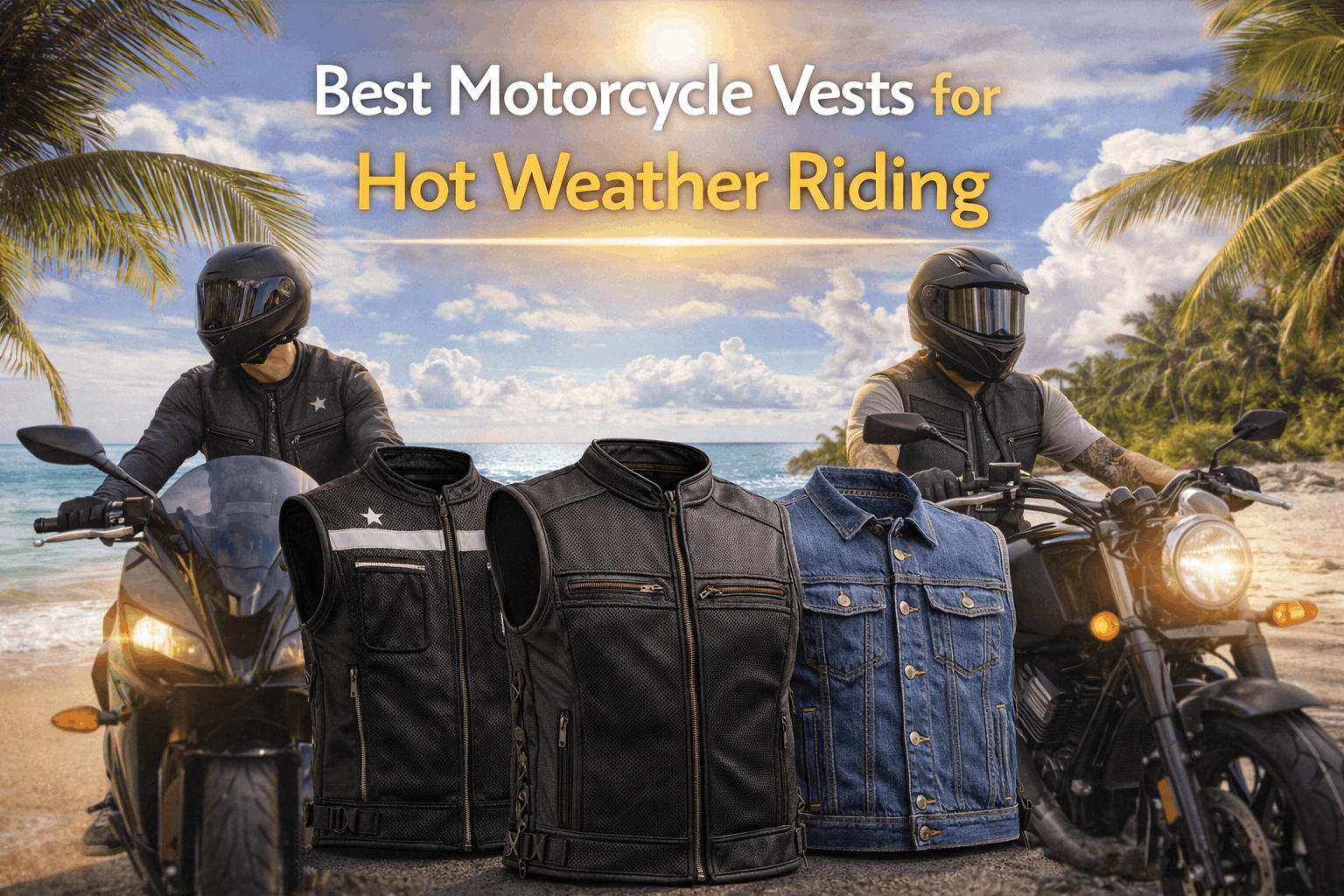
Hot weather riding presents unique challenges that directly affect rider safety, endurance, and comfort. Elevated temperatures increase physical fatigue, dehydration risk, and reduced concentration, making appropriate motorcycle apparel a critical factor in safe riding practices. Among summer riding gear, motorcycle vests serve as a practical solution by providing torso protection while maximizing airflow and mobility.
Unlike full jackets, vests allow heat to escape through the arms and underlayers, helping riders maintain thermal balance without sacrificing functional storage or structural durability. Selecting the correct vest for hot climates requires an understanding of material science, airflow engineering, moisture management, and riding ergonomics.
This article provides a comprehensive, research-based evaluation of the best motorcycle vest options for hot weather riding, focusing on material performance, professional selection criteria, and real-world riding applications.
Understanding Heat Management in Motorcycle Riding
Human thermoregulation becomes significantly challenged during motorcycle operation in high temperatures. Protective gear must balance ventilation, abrasion resistance, and moisture control to prevent overheating.
According to information outlined in discussions of motorcycle protective clothing on Wikipedia, rider gear must simultaneously address environmental exposure and crash protection, requiring strategic material design rather than simple lightweight construction.
Key Heat Factors Riders Face
- Direct solar radiation
- Engine heat exposure
- Reduced airflow in traffic
- Sweat accumulation inside gear
- Wind dehydration at highway speeds
Motorcycle vests designed for warm climates aim to reduce heat retention while maintaining structural functionality.
Why Motorcycle Vests Perform Better Than Jackets in Hot Weather
Motorcycle jackets provide extensive coverage but can trap heat during summer riding. Vests eliminate sleeve insulation while preserving core protection.
Advantages of Vests in Warm Conditions
- Increased airflow around arms and shoulders
- Reduced overall garment weight
- Improved evaporation of sweat
- Greater layering flexibility
- Less rider fatigue during long rides
These characteristics make vests particularly effective for urban commuting, touring in warm regions, and slow-speed riding environments.
Material Matters: Choosing the Right Fabric for Summer Riding
Material selection determines how effectively a vest handles airflow, moisture, and durability.
Denim Construction for Warm Weather Performance
Modern motorcycle-grade denim uses heavier yarn structures and reinforced stitching compared to fashion denim. This allows airflow while maintaining durability suitable for riding environments.
A Denim Vests option is widely used in warm-weather riding because it offers:
- Natural breathability through cotton fibers
- Balanced airflow and protection
- Lightweight comfort during extended rides
- Easy layering over moisture-wicking shirts
Denim adapts well to casual riding styles and stop-and-go city environments where ventilation is essential.
Textile Materials and Advanced Ventilation Engineering
Textile motorcycle gear represents one of the most significant advancements in modern riding apparel. Synthetic fibers are engineered specifically for airflow and moisture control.
A Textile Vest typically incorporates:
- Mesh or perforated panels
- Synthetic abrasion-resistant fibers
- Moisture-wicking liners
- Rapid drying capability
Textile fabrics are frequently selected for riders operating in extremely hot climates because they optimize ventilation without completely sacrificing durability.
Ventilation Technology Explained
Hot-weather motorcycle vests often integrate airflow systems designed using aerodynamic principles.
Common Ventilation Features
Mesh Panel Integration
Strategically placed mesh zones allow continuous airflow while riding.
Air Channel Construction
Internal spacing between fabric layers promotes heat dissipation.
Perforation Patterns
Micro-perforations increase breathability without weakening fabric integrity.
Moisture-Wicking Liners
Synthetic liners move sweat away from the skin to accelerate evaporation.
These technologies work together to maintain thermal comfort during prolonged rides.
Matching Vest Type to Riding Conditions
Professional gear selection aligns vest material with riding environment.
Urban Riding
- Frequent stops reduce airflow.
- Lightweight denim performs well due to comfort and breathability.
Highway Riding
- Continuous airflow favors textile designs with mesh ventilation.
- Reduced wind resistance helps regulate body temperature.
Touring and Long-Distance Riding
- Textile vests excel due to moisture management and lighter fatigue load.
- Multiple storage pockets support travel practicality.
Expert Insights and Best Practices
Layering Strategy for Hot Weather Riding
Industry experts recommend a three-layer summer system:
- Moisture-wicking base layer
- Ventilated vest layer
- Optional lightweight outer shell for weather changes
Cotton shirts alone retain moisture, whereas technical base layers enhance cooling efficiency.
Hydration and Gear Interaction
Proper vest ventilation works best when riders remain hydrated. Evaporation cooling becomes less effective during dehydration, increasing overheating risk.
Safety Considerations in Hot Weather Gear
Reducing gear weight should never compromise safety performance.
Professionally designed motorcycle vests maintain:
- Reinforced seams
- Abrasion-resistant panels
- Secure closure systems
- Stable fit at speed
Even warm-weather gear must maintain structural integrity during unexpected road conditions.
Common Mistakes and Misconceptions
Mistake 1: Choosing the Lightest Vest Available
Extremely thin materials may lack durability and structural strength.
Mistake 2: Ignoring Fit for Airflow
Oversized gear disrupts airflow patterns and causes instability.
Mistake 3: Wearing Non-Riding Apparel
Fashion vests lack reinforcement required for motorcycle use.
Mistake 4: Assuming More Ventilation Equals Better Protection
Balanced design is necessary; excessive mesh without reinforcement reduces safety.
Frequently Asked Questions (FAQs)
1. Are motorcycle vests safe for summer riding?
Yes. Properly designed vests maintain protection while improving airflow compared to full jackets.
2. Which material stays cooler: denim or textile?
Textile materials typically provide greater airflow, while denim offers balanced comfort and durability.
3. Can a vest replace a motorcycle jacket in hot weather?
A vest complements protective gear but does not fully replace armored jackets in high-risk conditions.
4. Why is airflow important while riding?
Airflow supports body cooling through evaporation, preventing heat stress and fatigue.
5. Do textile vests dry faster than denim?
Yes. Synthetic textile fibers typically dry faster than natural cotton-based materials.
6. Should summer vests fit tightly?
They should fit close to the body while allowing airflow channels to function effectively.
7. Are mesh panels durable enough for riding?
When reinforced properly, mesh panels balance ventilation with structural reliability.
8. What colors work best for hot weather riding?
Lighter colors reflect sunlight and reduce heat absorption.
9. How should a vest be maintained in summer?
Regular cleaning removes sweat salts that can degrade fabric fibers over time.
10. Is layering still necessary in hot climates?
Yes. Moisture-wicking layers improve cooling performance even in extreme heat.
Conclusion
Hot weather riding requires carefully engineered gear that balances ventilation, durability, and rider comfort. Motorcycle vests provide an effective solution by protecting the torso while allowing airflow essential for temperature regulation. Material choice plays a defining role, with denim offering breathable everyday comfort and textile construction delivering advanced ventilation and moisture control.
By selecting a vest aligned with riding conditions, climate exposure, and ergonomic fit, riders enhance endurance, reduce fatigue, and maintain safer riding performance. Properly chosen warm-weather motorcycle vests become an essential component of a rider’s summer gear system, supporting both comfort and long-term riding efficiency.
