

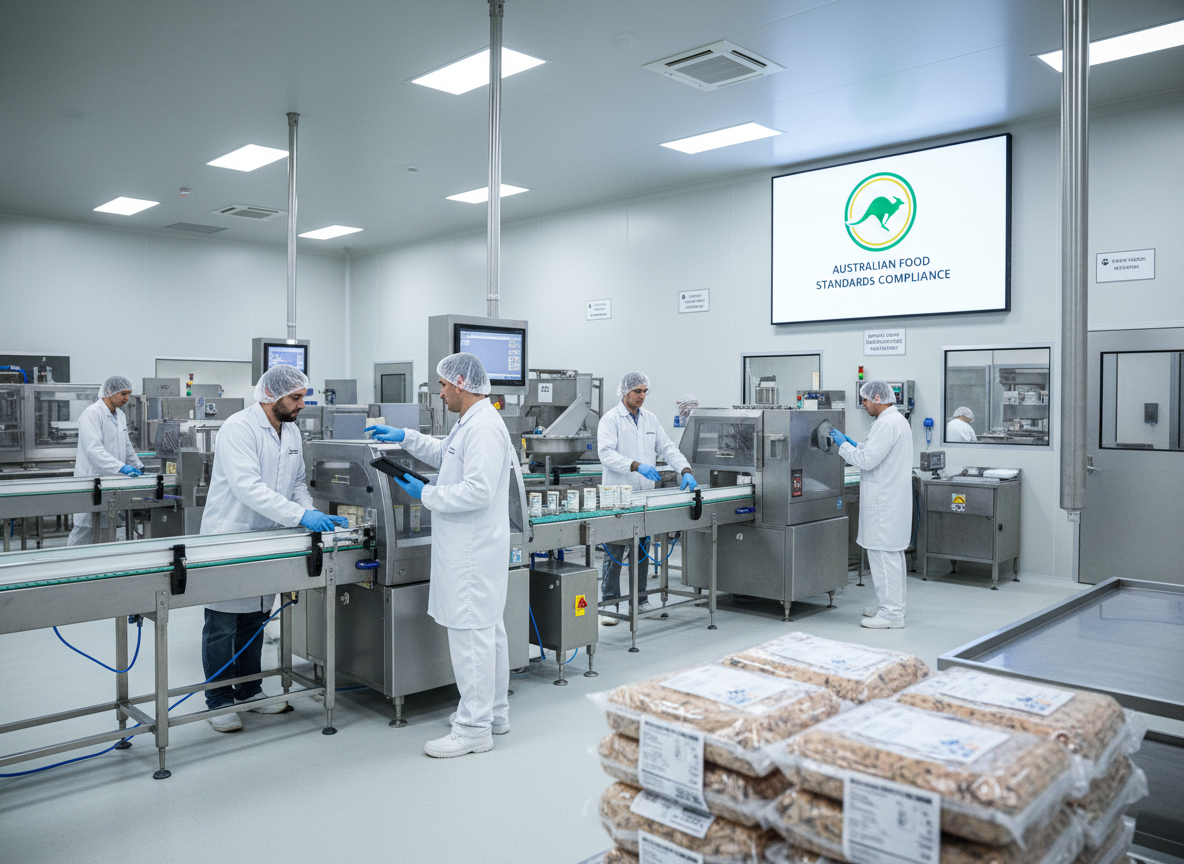
If your business operates anywhere in Australia’s food supply chain—whether you’re processing seafood in Queensland, packing ready-to-eat meals in Victoria, handling raw ingredients in WA, or running a small food manufacturing unit in NSW—you’ve probably heard about HACCP certification more times than you can count. And honestly, there’s a reason for that. HACCP Certification Australia isn’t just another industry buzzword; it’s the backbone of food safety compliance across the country.
But here’s the thing: a lot of businesses treat HACCP like a giant rulebook that’s out to make life complicated. Meanwhile, the companies that truly thrive see it as something simpler—a structured way to protect customers, stay legally compliant, and avoid costly disasters. So let’s break it down in a way that feels natural, understandable, and genuinely useful.
Why HACCP Certification Australia Matters More Than Ever
You know what? It’s easy to underestimate how much the Australian food industry has changed. Consumer expectations are sharper, regulators are stricter, and supply chains feel more interconnected than ever. Now, companies can’t just “hope” their processes are safe; they need documented, verifiable systems. That’s where HACCP certification Australia steps in.
It gives businesses a structured, science-based way to identify hazards, control contamination, and ensure that everything reaching consumers is safe. When a company earns this certification, it tells retailers, auditors, and customers that they’re serious about protecting public health. And let’s be honest—nobody wants to land in the news for a major recall. Compliance isn’t just a requirement anymore; it’s self-protection.
Understanding the Australian Food Safety Landscape—And Where HACCP Fits
Australia’s food rules aren’t built on guesswork. They’re shaped by the Food Standards Code, state legislation, and regulatory bodies that require businesses to document how they manage risks. HACCP compliance helps meet these requirements by offering a globally recognised method for identifying where things might go wrong in your process.
Whether you’re handling allergens, raw meat, packaging materials, additives, or frozen foods, HACCP helps you map out each risk. And that map becomes your HACCP food safety program, which auditors rely on during inspections. The beauty of HACCP, if you really think about it, is that it forces teams to stop reacting to problems and start preventing them.
The Real Meaning of HACCP (Without the Jargon Overload)
Sure, HACCP stands for Hazard Analysis and Critical Control Points. But what does that actually mean when you’re in a factory setting? Let me explain. Think of your process like a long, slightly unpredictable journey. Raw materials come in, workers handle them, machines process them, and eventually the finished product leaves your facility. At each step, something can go wrong—temperature issues, cross-contamination, allergens sneaking in where they shouldn’t, packaging failures, and the list goes on.
HACCP certification Australia requires companies to identify these hazards, decide which ones are critical, and create controls that prevent them. Instead of waiting for a batch to fail testing, HACCP helps stop the problem long before it reaches that stage. It’s not magical; it’s methodical.
Who Needs HACCP Certification in Australia? More Businesses Than You Think
Some people assume HACCP applies only to large factories with miles of production lines. Not true. Anyone handling food at any meaningful scale can come under HACCP expectations—manufacturers, packers, wholesalers, processors, cold storage operators, and even certain transport providers.
Retailers like Coles, Woolworths, and Costco often expect suppliers to maintain HACCP compliance or at least demonstrate that they follow a structured risk-management system. Smaller producers, especially those aiming for national distribution, discover pretty quickly that HACCP becomes essential for credibility.
Honestly, if your food business interacts with regulators, major retailers, or export channels, HACCP will eventually be on your checklist.
The Heart of It All: Building a HACCP Plan That Actually Works
A HACCP plan isn’t just paperwork. It’s the roadmap your team uses every day. And yes, writing one can feel like assembling a 10,000-piece jigsaw puzzle, but when done right, it simplifies everything. A good HACCP plan includes product descriptions, flow diagrams, hazard analyses, control measures, critical limits, monitoring processes, corrective actions, and verification procedures.
It sounds overwhelming, but with accurate process mapping, it becomes surprisingly logical. You start seeing your facility through a risk-focused lens. Suddenly, small decisions—like where to place a thermometer or how often to check metal detectors—make much more sense. And auditors can tell instantly whether a plan reflects real operations or something copied from an old template.
Common Mistakes Australian Companies Make With HACCP (And How To Avoid Them)
One thing I’ve noticed is that many companies treat HACCP like a one-off assignment. They do the documentation once, file it away, and hope it pleases auditors. But that’s not how HACCP works. Mistakes happen when monitoring logs aren’t maintained, staff aren’t trained, or corrective actions are ignored.
Another mistake? Forgetting to review the program when processes change. Something as simple as switching ingredient suppliers can modify hazard levels. When teams overlook these changes, the HACCP audit reveals inconsistencies. But there’s good news. Most of these issues disappear when companies commit to routine reviews and proper HACCP training for staff.
HACCP Certification Process in Australia—A Realistic Step-By-Step Experience
Let’s talk about how certification works because understanding the progression makes the whole thing feel less intimidating. Generally, you’ll go through these phases: gap assessment, HACCP team formation, hazard analysis, documentation development, staff training, internal audits, and then the external HACCP audit.
Most accredited certifiers follow similar methods, whether you’re working with SAI Global, AusQual, HACCP Australia, SGS, or other recognised bodies. The audit often includes facility inspections, interviews, document verification, and observation of live processes. It’s detailed but structured. Once approved, you receive your certificate—usually valid for 12 months with annual surveillance.
Training: The Part Everyone Underestimates But No One Should Skip
Honestly, if there’s one part companies push aside for “later,” it’s training. And ironically, it’s the part auditors notice most. A HACCP system is only as strong as the people running it. HACCP training gives your team the ability to recognise hazards, respond correctly, and follow monitoring steps.
Training doesn’t have to be boring or repetitive. There are online programs, blended workshops, and even internal refresher sessions you can run yourself. What matters is consistency. When your staff understand why a process exists, they’re far more likely to follow it than if they’re told to “just do it because the auditor wants it.”
Why Australian Companies Choose HACCP Consultants
Sometimes, bringing in HACCP consultants saves time, especially for businesses without in-house quality experts. Consultants help interpret Australian food safety laws, build documentation, prepare teams, and highlight weak spots before certification.
A good consultant doesn’t simply hand you a binder—they guide you through understanding your system. They ask the questions you didn’t think of, observe your workflows, and help you recognise risks specific to your operation. It’s kind of like having a second set of eyes that sees things your team may have normalised.
How HACCP Certification Strengthens Your Business (Beyond Compliance)
Let’s be honest—nobody wants to think about food safety failures, but they happen. And when they do, the consequences stretch far beyond financial losses. Reputational damage, product recalls, legal action—it all adds up.
With HACCP certification, companies build systems that catch problems before they grow. It increases customer confidence, improves internal efficiency, reduces waste, and builds long-term brand resilience. Many Australian companies discover that once HACCP systems become routine, everyday operations feel smoother. Suddenly, staff know expectations, documentation flows easily, and decisions feel less ambiguous.
Maintaining Your HACCP System—The Real Secret To Long-Term Compliance
Achieving certification is one milestone; maintaining it is another. Regular internal audits, corrective actions, equipment calibration, supplier reviews, and refresher training sessions keep everything functioning. Auditors want to see continuous engagement—not a last-minute scramble before inspections.
Think of HACCP like physical fitness: you don’t stay strong by exercising once a year. You stay strong through small, consistent habits. The same is true for HACCP systems. When logs are filled daily, issues are fixed immediately, and managers stay engaged, compliance becomes almost effortless.
Final Thoughts: HACCP Certification Australia Isn’t As Complicated As It Seems
When you break it down, HACCP certification Australia is less about rigid rules and more about building a culture that protects food quality. Whether you’re supplying local supermarkets or exporting to international markets, HACCP gives your business the structure it needs to stay compliant and competitive.
It’s practical, logical, and surprisingly empowering once you understand its rhythm. And if you’ve been hesitating or feeling overwhelmed, just remember this—every strong food business in Australia started exactly where you’re standing now.
