

For the average passenger, a flight is a time to disconnect. You put your phone in airplane mode, settle into your seat, and let the world below fade away. But for the pilots in the cockpit and the systems running the aircraft, the exact opposite is happening. A modern flight is a constant, invisible exchange of data and voice, a digital conversation that never pauses from gate to gate.
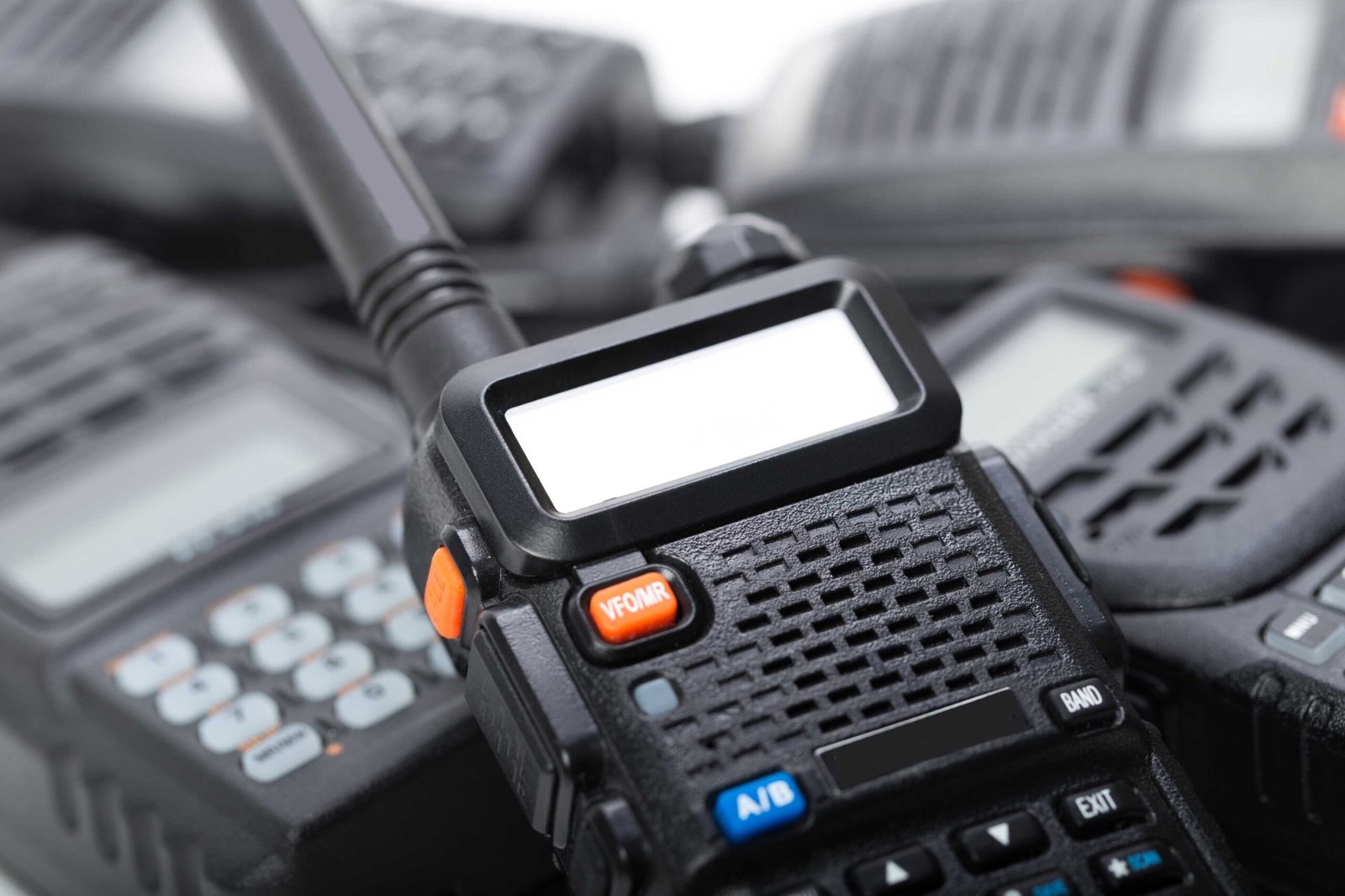
The clarity and reliability of vhf in aviation make it the primary tool for critical instructions. When a controller needs to tell a pilot to turn left immediately to avoid traffic, they use VHF. It provides an instant, human connection that conveys urgency and nuance. It is used for everything from obtaining takeoff clearance to receiving landing instructions.
If this connection breaks, safety is compromised. But how exactly does a metal tube traveling at 80% of the speed of sound, six miles above the earth, stay in touch with the ground? It’s not just one system, but a layered network of technologies ranging from century-old radio waves to cutting-edge satellites.
This article explores the intricate web of communication that keeps aircraft connected. We will look at the different radio bands used for voice, the digital data links that are replacing talk, and the ground-based engineering that makes it all possible.
The Primary Lifeline: VHF Radio
When you hear a pilot talking to Air Traffic Control (ATC) in a movie, you are hearing the most fundamental layer of aviation communication. For short to medium-range communication, the industry standard is Very High Frequency (VHF) radio.
This system is the workhorse of the sky. It operates on a “line-of-sight” principle, meaning the aircraft and the ground station must essentially be able to “see” each other electronically. Because aircraft fly so high, this line of sight extends for hundreds of miles.
The Limitation of Line-of-Sight
The biggest drawback of VHF is the horizon. Once an aircraft flies over the ocean or into a remote region where there are no ground stations, VHF signals fade into static. For decades, this meant planes were effectively out of touch until they reached the other side. Today, however, we have solutions for the “dark spots.”
Crossing the Oceans: HF and SATCOM
When a flight leaves the continent—say, flying from New York to London—it leaves the range of standard VHF ground stations. To stay connected, aircraft switch to different technologies designed for long-haul reach.
High Frequency (HF) Radio
Before satellites, High Frequency (HF) radio was the only way to talk over oceans. Unlike VHF, HF radio waves can bounce off the ionosphere (a layer of the atmosphere) and reflect back to Earth. This allows the signal to skip over the horizon, enabling communication over thousands of miles.
However, HF is notoriously temperamental. It is full of static, affected by solar flares, and often sounds like listening to a conversation through a thunderstorm. While still a legal requirement for many oceanic crossings, it is essentially a backup system today.
Satellite Communication (SATCOM)
The game-changer for modern connectivity is SATCOM. Just as you might use a satellite phone in the desert, modern aircraft use satellite networks (like Inmarsat or Iridium) to maintain crystal-clear voice and data links anywhere on the planet.
This technology has revolutionized safety. It allows for constant tracking of the aircraft’s position, engine health, and system status, regardless of whether it is over the middle of the Pacific or the North Pole.
The Silent Conversation: ACARS and CPDLC
Not all communication happens via voice. In fact, a huge amount of information is exchanged silently through digital text messages.
ACARS: The Aircraft’s Text Message
The Aircraft Communications Addressing and Reporting System (ACARS) is like SMS for airplanes. It automatically sends data bursts to the airline’s operations center.
- OOOI Events: It automatically reports when the aircraft pushes back (Out), takes off (Off), lands (On), and arrives at the gate (In).
- System Health: If an engine starts vibrating abnormally or a hydraulic pump overheats, ACARS sends a maintenance alert to the ground engineers instantly, so they can be ready with parts when the plane lands.
CPDLC: Texting with Controllers
Controller-Pilot Data Link Communications (CPDLC) is replacing voice radio for routine ATC instructions. Instead of reading back a complicated route change over a crackly radio, the controller types the instruction. It appears on a screen in the cockpit. The pilot reviews it and presses a button to “Accept.” This reduces the chance of misunderstanding and frees up the crowded voice frequencies for urgent matters.
The Role of Transponders: “I Am Here”
Communication isn’t just about talking; it’s about being seen. Radar tells a controller where an object is, but it doesn’t tell them who it is or how high it is. That’s the job of the transponder.
Mode S and ADS-B
Modern aircraft use “Mode S” transponders. When a radar beam hits the plane, the transponder fires back a digital reply containing the flight number and altitude.
This is evolving into ADS-B (Automatic Dependent Surveillance-Broadcast). With ADS-B, the plane doesn’t wait to be “pinged” by radar. Instead, it uses GPS to determine its own position and broadcasts it to the world twice a second. This allows controllers—and even other aircraft—to see traffic with pinpoint precision, far greater than what old-school radar could provide.
The Foundation: Ground Infrastructure
It is easy to focus on the high-tech gadgets in the plane, but none of this works without robust infrastructure on the ground. The antennas, receivers, and data centers that capture these signals are the unsung heroes of connectivity.
Maintaining these ground stations is a massive engineering challenge, especially in harsh environments where extreme weather can degrade electronic performance. If a ground station fails, a sector of airspace goes silent.
Engineering for Resilience
The approach to airport engineering Qatar has implemented at Hamad International Airport is a prime example of building for resilience. In the Gulf region, equipment faces blistering heat, high humidity, and fine, conductive dust. These are the enemies of sensitive electronics.
To ensure aircraft stay connected, engineers there use advanced climate-hardening techniques. Transmitters are housed in specialized, cooled shelters. Antenna masts are treated with corrosion-resistant coatings. Redundant fiber-optic networks ensure that once a signal is received from the plane, it is instantly routed to the control tower without interference. This level of infrastructure investment ensures that the “digital handshake” between the sky and the ground is never broken, regardless of the environmental conditions.
The Future: The Connected Ecosystem
We are moving toward a future where the aircraft is a node in a massive, interconnected network.
SWIM (System Wide Information Management)
The future concept is called SWIM. Instead of point-to-point communication (pilot to controller), information will be shared across a network. Weather data from one aircraft’s radar could be instantly beamed to every other aircraft behind it, automatically updating their flight paths to avoid turbulence.
High-Speed In-Flight Connectivity
We are also seeing the passenger and operational worlds merge. The same high-speed Ka-band satellite antennas that allow you to stream Netflix at 35,000 feet are being used to download massive amounts of engine diagnostic data in real-time, allowing airlines to predict failures weeks in advance.
Conclusion
The isolation of flight is a myth. A modern aircraft is one of the most connected devices on the planet. It is constantly “talking” via VHF voice, satellite data, transponder pings, and digital text messages.
This web of connectivity is what makes aviation the safest form of transport. It ensures that pilots are never alone, that controllers always have the full picture, and that the aircraft itself can signal for help the moment something goes wrong. As technology evolves from analog voice to high-speed digital networks, this bond between the ground and the sky will only become stronger, making the miracle of flight even more routine and reliable.
