

Most plumbing designs are wrong: the weakest point isn’t the pipe. It’s the connection.
Under-slab plumbing doesn’t fail randomly. It fails where movement meets rigidity at joints, transitions, and connection points. When soil expands or contracts, even a small shift can place stress on these areas. Over time, that stress turns into cracks, leaks, and expensive repairs.
This is exactly where a mudskipper vault makes a difference.
Why critical connections are at risk
In expansive soil conditions, the ground doesn’t stay still. It swells with moisture and shrinks when dry. That movement transfers directly to anything embedded in it, including plumbing lines.
Now think about how most systems are built:
- Pipes are fixed in place
- Connections are rigid
- Transitions between systems are often unprotected
The result? Pressure builds up at the joints. And joints don’t tolerate movement well.
That’s why connection points are the first to fail.
What does a vault system actually do?
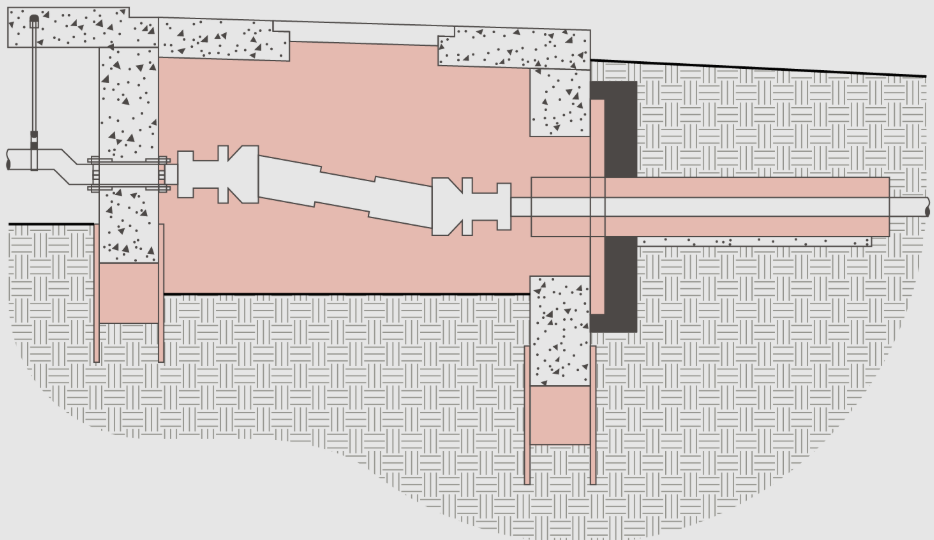
A mudskipper vault isn’t just a protective box around plumbing. It creates a controlled environment where critical connections are isolated from soil movement.
Instead of letting the ground dictate how pipes behave, the vault introduces space, flexibility, and protection.
What this really means is:
- Connections are no longer under direct soil pressure
- Movement is absorbed, not transferred
- Stress at transition points is significantly reduced
It’s a simple shift in design thinking to protect the most vulnerable areas instead of reinforcing everything.
How it protects real-world systems
Let’s break it down in practical terms.
In a typical project, plumbing lines often transition:
- From isolated to non-isolated zones
- From building interiors to external systems
- Across structural boundaries
These transition points are where problems start.
By placing a mudskipper vault at these locations, you’re doing three things:
- Creating separation
The vault physically separates the connection from moving soil. - Allowing controlled movement
Pipes can shift slightly without stressing joints. - Maintaining accessibility
If something needs inspection or adjustment, it’s not buried and inaccessible.
This combination is what protects the system long-term.
The industry is slowly shifting from rigid systems to adaptable ones. And for good reason, ground movement isn’t something you can eliminate. You can only design around it.
A mudskipper vault fits into that mindset. It doesn’t fight the soil. It works with the reality of it. And that’s the difference between a system that survives on paper and one that performs in the field.
Final thought
If you’re looking at under-slab plumbing as a static system, you’re already at risk. The better approach is to identify where movement will happen and protect those points first.
Because in the end, it’s not the pipe that fails. It’s the connection!
