

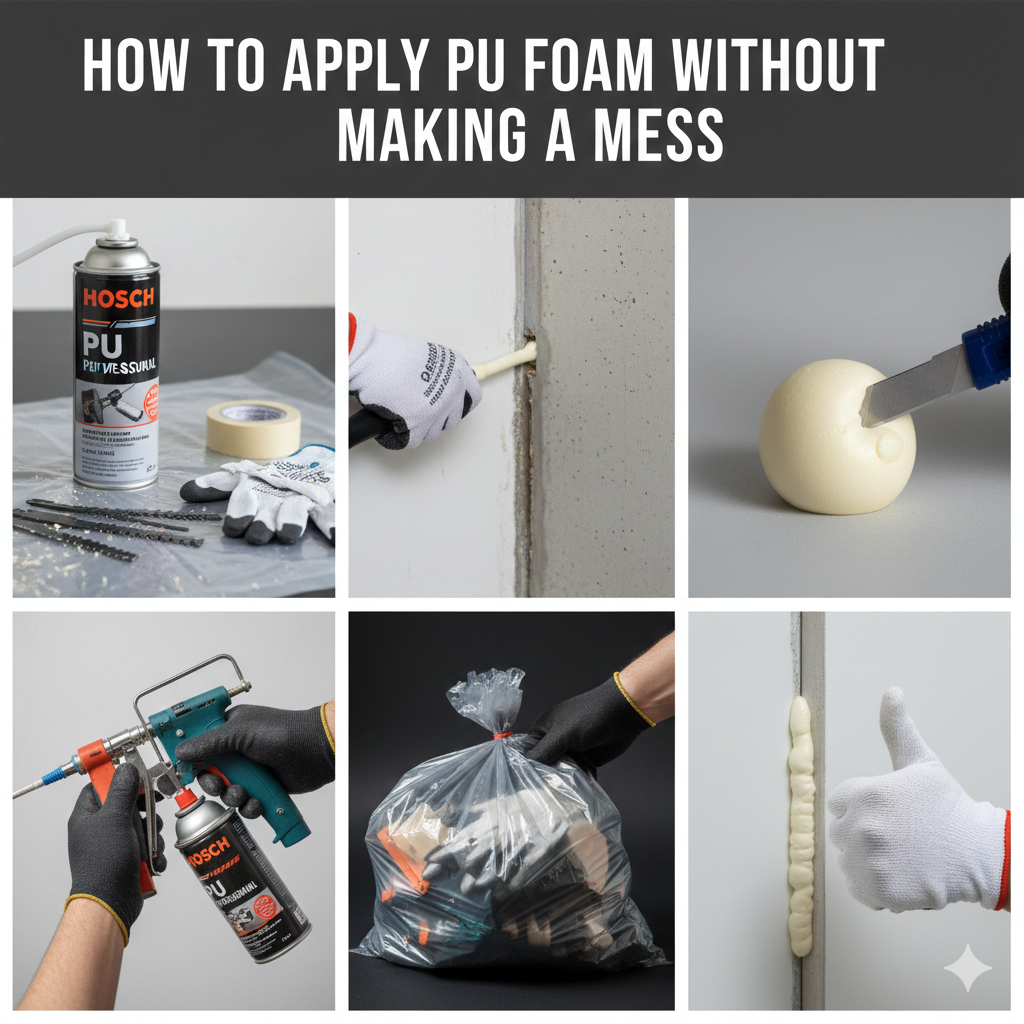
PU foam is one of those products that professionals swear by — and beginners fear.
It seals gaps, insulates spaces, fixes frames, reduces drafts, and improves energy efficiency. But if you’ve ever seen foam overflow from a wall cavity or stick permanently to someone’s hands, you know how quickly things can go wrong.
The truth is simple: PU foam is not messy by nature. It becomes messy when applied without preparation or control.
If you understand how it behaves and follow a few practical techniques, you can apply it cleanly and professionally every time.
Let’s break it down.
Why PU Foam Gets Messy in the First Place
Most foam-related problems come down to three things:
- Overfilling gaps
- Poor surface preparation
- Lack of expansion awareness
Polyurethane foam expands after application — sometimes significantly. Many users apply too much, expecting it to stay exactly as dispensed. Instead, it grows, spills out, and hardens into an unwanted mass.
High-quality Polyurethane foam is engineered for controlled expansion, but proper handling remains essential.
Start with Proper Preparation (This Is Where Professionals Win)
Clean application starts before the foam even leaves the can.
Step 1: Clean the Surface
Dust, grease, and loose particles reduce adhesion and create uneven curing. Use a brush or cloth to remove debris from the cavity or joint.
Step 2: Lightly Moisten the Area
PU foam cures with moisture. A light mist of water improves bonding and ensures consistent expansion. Avoid soaking — excessive water can affect structure.
Step 3: Protect Surrounding Surfaces
Foam bonds aggressively to wood, metal, tiles, glass, and clothing. Mask off nearby visible areas with tape and plastic sheeting.
A few minutes of preparation prevents hours of scraping later.
Use the Right Type of Foam for the Job
Different applications require different foam types. Choosing correctly reduces unnecessary overflow.
Standard Expansion Foam
Ideal for filling larger gaps in walls or construction joints.
Low-Expansion Foam
Best for window and door frames where too much pressure could cause misalignment.
Gun-Grade Foam
Provides better control than straw-applied versions. Professionals prefer this for precise dosing.
Selecting appropriate Polyurethane foam tailored to your task immediately reduces the risk of excess expansion.
Shake Well — More Than You Think
Before applying, shake the can vigorously for at least 20–30 seconds.
Why?
Proper mixing ensures consistent texture and even expansion. Poorly mixed foam can spray unevenly, drip, or expand unpredictably.
If you pause for more than a few minutes during application, shake again before resuming.
The Golden Rule: Fill Only Half the Gap
This is the most important principle of clean foam application.
Never fill a cavity completely.
Instead:
- Fill approximately 40–50% of the space.
- Allow natural expansion to do the rest.
It’s tempting to “top it off,” but that’s exactly how foam ends up spilling out.
Controlled filling is what separates a neat application from a messy one.
Correct Positioning Matters
Always hold the can upside down when applying foam. This ensures consistent pressure and proper dispensing.
Apply with steady trigger control:
- Press gently.
- Move continuously along the gap.
- Avoid sudden stops.
A smooth, continuous motion prevents buildup and dripping.
Work in Layers for Large Cavities
Deep gaps require patience.
Instead of trying to fill everything at once:
- Apply the first layer.
- Let it expand partially.
- Add another layer if needed.
Layering gives you more control and reduces internal air pockets.
Professionals using quality Polyurethane foam often rely on this staged approach for structural filling.
Managing Corners and Vertical Surfaces
Corners and overhead applications are where most mess happens.
For vertical gaps:
- Start from the bottom and work upward.
- Apply slowly.
- Keep steady movement.
For overhead areas:
- Use minimal pressure.
- Apply smaller amounts.
- Expect slightly slower expansion.
Working gradually prevents gravity from turning foam into a drip problem.
Immediate Cleanup: Timing Is Everything
If foam lands somewhere unintended, act immediately.
While uncured:
- Use PU foam cleaner.
- Acetone can help in early stages.
- Wipe carefully without spreading.
Once cured, removal requires mechanical scraping — which can damage surfaces.
Speed is your best friend in cleanup.
Allow Full Curing Before Cutting
Foam may feel dry on the surface within 10–20 minutes, but full curing can take several hours.
Cutting too early can cause tearing or pulling.
Once fully hardened:
- Use a sharp utility knife.
- Trim flush with the surface.
- Avoid excessive force.
Clean trimming produces a professional, seamless result.
Common Mistakes to Avoid
Even experienced users can slip into bad habits.
Avoid these:
❌ Overfilling cavities
❌ Skipping moisture activation
❌ Using too much trigger pressure
❌ Not protecting visible surfaces
❌ Attempting to reshape foam before curing
❌ Using the wrong expansion type
Most foam messes are preventable with patience and preparation.
Pro Tips for a Cleaner Finish
Here are a few additional insights professionals rely on:
- Keep spare nozzles ready.
- Store cans upright.
- Practice on scrap material if you’re new to foam.
- Use low-expansion foam near delicate structures.
- Maintain moderate temperature during application (extreme cold affects performance).
Investing in reliable Polyurethane foam ensures predictable expansion and better control — which is essential for precision work.
Where Clean Application Makes the Biggest Difference
Applying PU foam neatly is especially important in:
- Window and door installations
- Visible wall penetrations
- Interior renovation projects
- Insulation upgrades
- HVAC pipe sealing
In these scenarios, excess foam isn’t just messy — it can affect aesthetics and finishing work.
Final Thoughts
PU foam is an incredibly effective sealing and insulating material. When used correctly, it delivers airtight, durable, and long-lasting results.
The secret to a mess-free application lies in:
- Proper preparation
- Controlled dispensing
- Respecting expansion
- Cleaning immediately
- Choosing the right product
With the correct technique and high-quality Polyurethane foam, you can achieve professional results without sticky surprises.
Foam doesn’t have to be chaotic — when handled properly, it becomes one of the most efficient and reliable tools in any construction or renovation project.
