

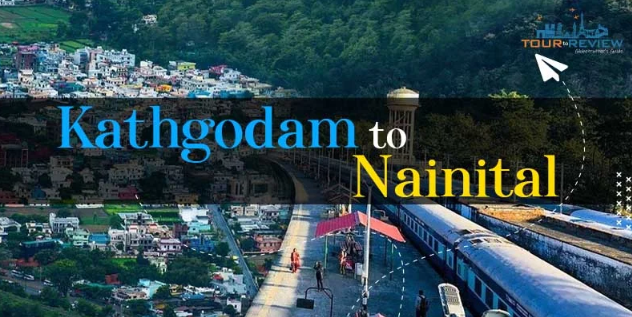
Set at the gentle edge of the Kumaon foothills, kathgodam is one of those places that quietly does important work. It doesn’t shout like a big city or pose like a postcard hill station. Instead, it connects worlds. To the south stretch the plains with their markets and rail lines; to the north rise forests, lakes, and winding mountain roads. For countless travelers, this town is the first deep breath of cooler air, the place where the rhythm changes and the horizon begins to tilt upward.
Historically, kathgodam grew around movement and trade. The name itself hints at timber and transport, and for a long time the area functioned as a logistical hinge between lowland commerce and hill economies. Over the decades, that role expanded. What began as a practical stopover slowly became a lived-in town with schools, hospitals, neighborhoods, and a pace that blends urgency with patience. Even today, you can feel both currents: the rush of arrivals and departures, and the steadiness of people who call this place home.
Geographically, the setting explains much of its character. Rivers and streams weave nearby, and the first folds of the Himalaya begin to assert themselves just beyond the town. This is why kathgodam feels like a threshold rather than a destination in the narrow sense. The light changes here, the air thins just a little, and the landscape starts to suggest stories of pine forests, lake reflections, and switchback roads. Travelers often notice that their phones fill with photos even before they think they have “reached the hills.”
Transport is the town’s most visible heartbeat. The railway station is a familiar landmark, and for many people, stepping onto the platform marks the emotional start of a mountain journey. Buses, shared taxis, and private cars line up with quiet efficiency, each carrying families, backpackers, and locals heading up or down. The phrase kathgodam to nainital is spoken so often that it feels like a single word, shorthand for a classic route that has introduced generations to the lakes and viewpoints of the region.
But kathgodam is not only a transit point. Spend a day here and you’ll notice markets that serve both daily needs and travel urgencies, tea stalls that become informal meeting rooms, and neighborhoods where children play under the same trees their grandparents remember. The town carries a dual identity: part working hub, part gentle introduction to the mountains. This mix gives it a grounded, unpretentious charm that many travelers appreciate once they slow down enough to see it.
Food is one of the easiest ways to understand the place. Small eateries serve quick meals for people on the move—simple, filling, and comforting. At the same time, local flavors hint at the hills ahead: seasonal vegetables, lentils cooked with restraint, and the occasional sweet that tastes better after a long journey. In kathgodam, a cup of tea is rarely just a drink; it is a pause between chapters, a moment to check tickets, maps, or simply the weather.
The town’s relationship with nature is close and practical. Hills are not a distant backdrop here; they shape daily routines. Rain can change plans, fog can delay departures, and a clear morning can lift everyone’s mood. Residents of kathgodam learn to read these signs the way coastal towns read tides. This awareness creates a subtle respect for the environment, not as an abstract idea but as a neighbor that must be understood and accommodated.
Culturally, the area reflects the meeting of plains and hills. Festivals bring color and crowds, and you can see traditions overlap in music, dress, and food. Markets sell both everyday goods and items meant for travelers—woolens, walking sticks, rain gear. This blend is part of what makes kathgodam feel dynamic rather than frozen in a single identity. It is always adjusting, always preparing for the next wave of arrivals.
For many visitors, memories of the region begin here. The first mountain road, the first sharp curve, the first view that makes the driver slow down—these moments often follow soon after leaving kathgodam behind. Yet when journeys end, the town reappears as a place of return, where tired legs find level ground and stories begin to sort themselves into memories. In this way, it frames experiences without competing with them.
Urban development has brought both convenience and questions. Better roads, more accommodation options, and improved services have made travel easier. At the same time, residents and planners have to think carefully about growth, traffic, and environmental pressure. Kathgodam sits at a sensitive junction, and its future depends on choices that balance accessibility with preservation. The challenge is to remain a welcoming gateway without losing the calm that makes the threshold meaningful.
Education and healthcare have also expanded, turning the town into a service center for nearby areas. This role adds another layer to its identity. It is not just a place you pass through, but a place where people come to study, work, and build lives. Over time, this has given kathgodam a confidence that comes from usefulness rather than spectacle. It does not need to impress; it needs to function well, and largely, it does.
Travel writers sometimes overlook such towns because they lack dramatic viewpoints or famous landmarks. Yet places like kathgodam are essential to the travel experience. They teach patience, offer orientation, and remind us that journeys are made of segments, not just highlights. Without these connectors, the map would be a series of isolated dots rather than a network of lived routes.
There is also a quieter, more personal side to the town. Early mornings can be surprisingly peaceful, with mist lifting slowly and shopkeepers opening shutters. Evenings bring a different energy, as arrivals mix with locals finishing their day. In these hours, kathgodam feels less like a checkpoint and more like a community, one that happens to sit at a very important crossroads.
In the end, the town’s greatest strength may be its modesty. It does not claim to be the destination, only the beginning or the return. And that is a powerful role. Kathgodam teaches us that gateways matter, that transitions deserve attention, and that some places shape our experiences not by dazzling us, but by guiding us—steadily, reliably—toward the stories we came to find.
