

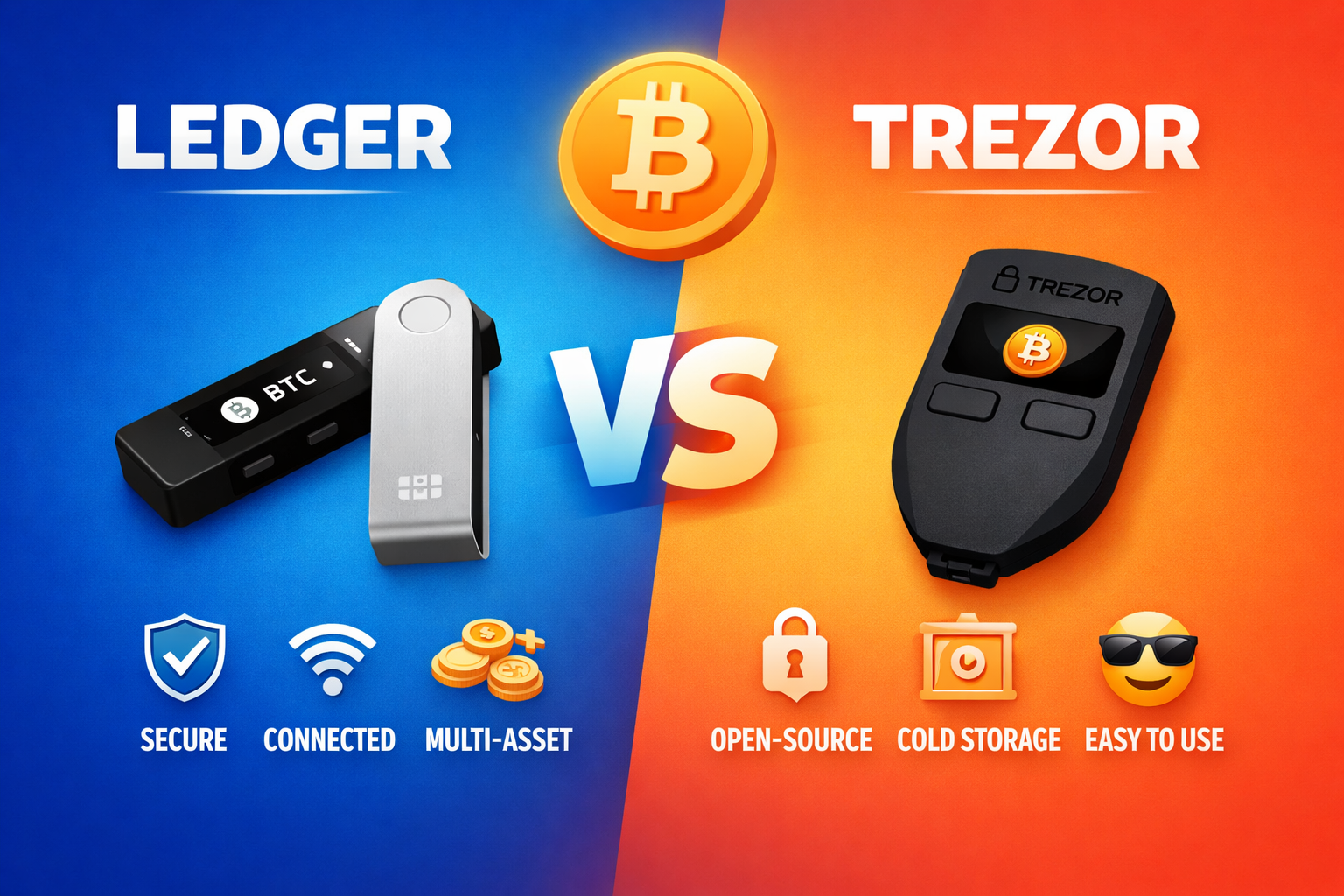
When it comes to protecting your cryptocurrency, hardware wallets are considered the gold standard. Among the most trusted names in this space are Ledger and Trezor. Ledger vs Trezor for Bitcoin brands have built strong reputations for keeping digital assets safe from hackers, malware, and phishing attacks.
In this comprehensive guide, we’ll compare Ledger and Trezor in detail—covering security, features, usability, supported coins, pricing, and which one is better for Bitcoin users.
What Are Hardware Wallets?
A hardware wallet is a physical device that stores your cryptocurrency private keys offline. Unlike software wallets or exchange accounts, hardware wallets are not constantly connected to the internet, making them far less vulnerable to cyberattacks.
Both Ledger and Trezor wallets operate on this principle: your private keys never leave the device, ensuring maximum protection.
Overview of Ledger Wallets
Ledger is a France-based company founded in 2014. It has become one of the most popular hardware wallet providers worldwide.
Popular Ledger Models
- Ledger Nano S Plus
- Ledger Nano X
Key Features of Ledger
- Secure Element chip (used in banking cards and passports)
- Supports 5,000+ cryptocurrencies
- Bluetooth connectivity (Nano X)
- Ledger Live app for portfolio management
- Regular firmware updates
Ledger devices are designed with strong hardware-level security, making them appealing to both beginners and advanced users.
Overview of Trezor Wallets
Trezor is a Czech-based company and one of the pioneers of hardware wallets, launched in 2013 by SatoshiLabs.
Popular Trezor Models
- Trezor Model One
- Trezor Model T
Key Features of Trezor
- Open-source firmware and software
- Touchscreen interface (Model T)
- Wide cryptocurrency support
- Integration with third-party wallets
- Advanced recovery options
Trezor focuses heavily on transparency and open-source development, which appeals to security enthusiasts.
Ledger vs Trezor: Security Comparison
Security is the most critical factor when choosing a hardware wallet.
Ledger Security
Ledger uses a Secure Element (SE) chip, a tamper-resistant hardware component designed to protect sensitive data. This chip is certified and widely used in financial industries.
However, Ledger’s firmware is partially closed-source, meaning users must trust the company for some aspects of security.
Trezor Security
Trezor, on the other hand, uses a fully open-source approach. Its firmware and software are publicly available for auditing by developers worldwide.
Instead of a Secure Element, Trezor relies on transparency and community scrutiny. While this approach builds trust, it may be more vulnerable to physical attacks compared to Ledger’s SE chip.
Verdict on Security
- Ledger: Stronger hardware protection
- Trezor: Greater transparency
Both are extremely secure for everyday use, but your choice depends on whether you prioritize hardware-based security or open-source trust.
Ledger vs Trezor: Supported Cryptocurrencies
Ledger
supports over 5,000 coins and tokens, including:
- Bitcoin (BTC)
- Ethereum (ETH)
- Binance Coin (BNB)
- Cardano (ADA)
- Solana (SOL)
Trezor
Trezor also supports a wide range of cryptocurrencies, including:
- Bitcoin (BTC)
- Ethereum (ETH)
- Litecoin (LTC)
- ERC-20 tokens
However, Trezor generally supports fewer coins than Ledger, especially newer or niche tokens.
Verdict on Supported Coins
- Ledger: Better for altcoin investors
- Trezor: Sufficient for major cryptocurrencies
Ledger vs Trezor: User Experience
Ledger User Experience
devices use the Ledger Live app, which provides:
- Portfolio tracking
- Buy/sell/swap features
- Staking options
The interface is modern and beginner-friendly, though managing apps on the device can feel slightly technical.
Trezor User Experience
Trezor uses the Trezor Suite interface, which is clean and easy to navigate. The Model T’s touchscreen improves usability significantly.
Trezor also integrates well with third-party wallets like:
- MetaMask
- Electrum
Verdict on Usability
- Ledger: Better mobile experience (Bluetooth support)
- Trezor: Simpler interface and touchscreen convenience
Ledger vs Trezor for Bitcoin
If your primary focus is Bitcoin, both Ledger vs Trezor for Bitcoin wallets are excellent—but there are some differences.
Ledger for Bitcoin
Ledger offers:
- Strong hardware-based protection
- Integration with Ledger Live
- Compatibility with advanced tools
Trezor for Bitcoin
Trezor is particularly محبوب among Bitcoin purists because:
- It is fully open-source
- Works seamlessly with Bitcoin-focused wallets like Electrum
- Offers advanced privacy features
Verdict for Bitcoin Users
- Choose Ledger if you want convenience and hardware-level security
- Choose Trezor if you value open-source transparency and Bitcoin-focused features
Ledger vs Trezor: Pricing
Ledger Pricing
- Ledger Nano S Plus: Budget-friendly
- Ledger Nano X: Higher price due to Bluetooth and battery
Trezor Pricing
- Trezor Model One: Affordable
- Trezor Model T: Premium pricing with touchscreen
Verdict on Pricing
Both brands offer options for different budgets, but:
- Trezor Model One is usually the cheapest
- Ledger Nano X offers more advanced features for its price
Ledger vs Trezor: Backup and Recovery
Both wallets use a recovery seed phrase (usually 12–24 words) to restore access.
Ledger
- Standard recovery phrase
- Optional passphrase feature
Trezor
- Standard recovery phrase
- Shamir Backup (advanced multi-share recovery)
Verdict
Trezor offers more advanced recovery options, making it appealing for users who want extra redundancy.
Pros and Cons
Ledger Pros
- Secure Element chip
- Supports many cryptocurrencies
- Mobile-friendly with Bluetooth
- Strong ecosystem
Ledger Cons
- Partially closed-source
- Past data breach (email leak, not funds)
Trezor Pros
- Fully open-source
- Easy-to-use interface
- Advanced recovery options
- Trusted by Bitcoin community
Trezor Cons
- No Secure Element chip
- Fewer supported coins
- No Bluetooth
Which One Should You Choose?
Choosing between Ledger and Trezor depends on your needs:
Choose Ledger if:
- You hold many altcoins
- You want mobile access via Bluetooth
- You prefer hardware-based security
Choose Trezor if:
- You value open-source transparency
- You primarily use Bitcoin
- You want advanced backup features
Final Thoughts
Both Ledger vs Trezor are among the safest ways to store cryptocurrency. They each have unique strengths, and neither is objectively “better” for everyone.
If security through hardware design and broader coin support matter most, Ledger is a strong choice. If you prioritize transparency, open-source code, and Bitcoin-focused features, Trezor may be the better option. Best Bitcoin Wallets You Can Use Safely
Ultimately, the best hardware wallet is the one that aligns with your investment strategy, technical comfort, and security preferences.
