

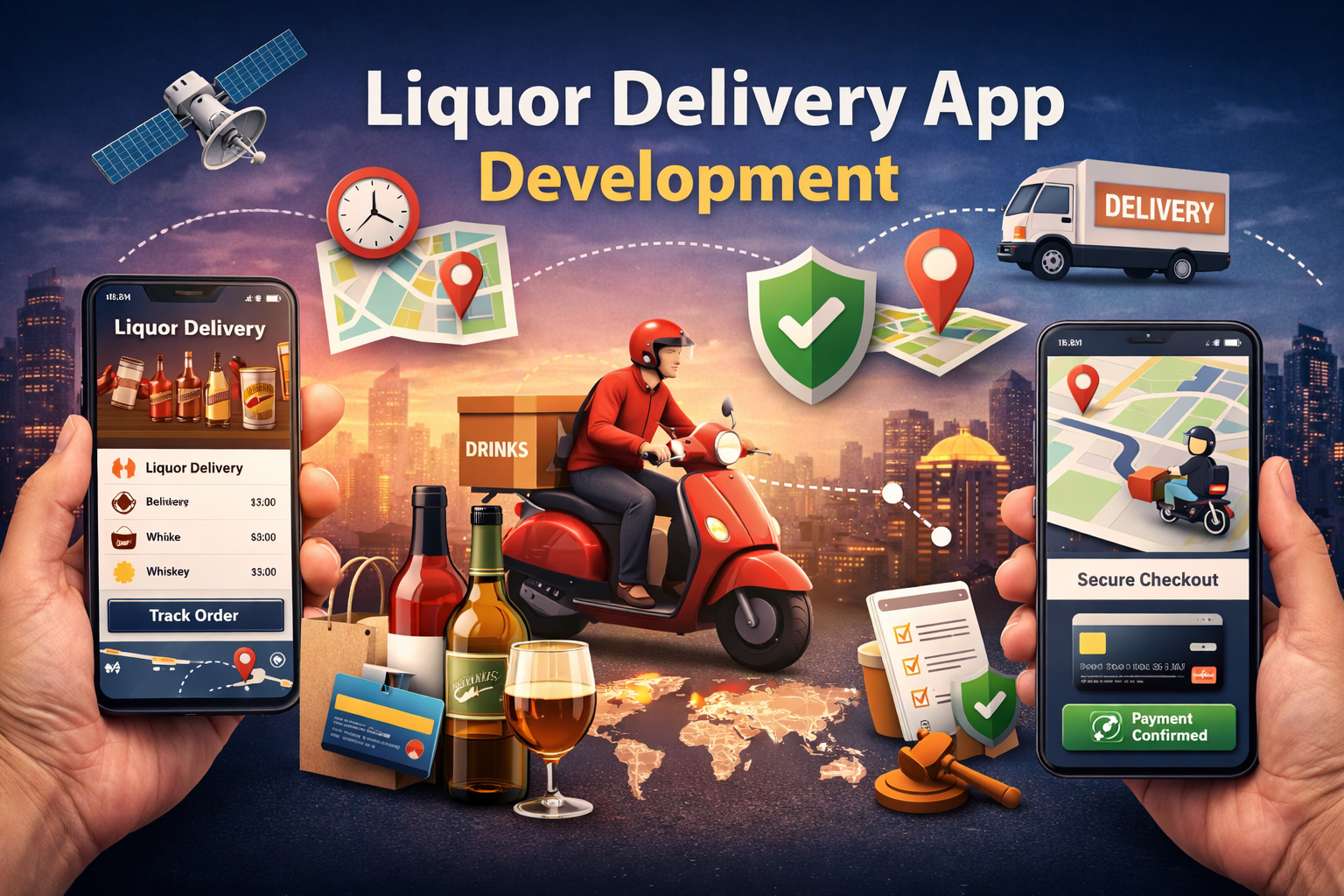
The rapid growth of on-demand services has reshaped consumer expectations across industries, including alcohol retail. Modern consumers value convenience, transparency, and fast delivery, making digital ordering platforms increasingly popular. A well-designed liquor delivery app integrates product browsing, secure payment processing, and real-time tracking to provide a seamless purchasing experience. Businesses entering this space must carefully plan their platform architecture, regulatory compliance, and user experience strategy. As demand continues to expand, companies are increasingly exploring Liquor Delivery App Development to create scalable platforms that meet evolving consumer expectations while maintaining responsible sales practices.
Why On-Demand Alcohol Delivery Apps Are Expanding Worldwide
The on-demand economy has transformed how consumers purchase everyday products. Alcohol delivery platforms are gaining popularity because they eliminate the need for in-store visits while offering a broader selection of beverages.
Several factors are contributing to the global expansion of these platforms:
- Changing consumer behavior
Digital convenience has become a priority, especially among younger demographics who prefer ordering products through mobile applications. - Urban lifestyle demands
Busy work schedules and long commute times make home delivery services more appealing than visiting physical stores. - Technology-driven convenience
Mobile payment systems, location tracking, and automated logistics allow apps to streamline the entire ordering process. - Regulatory adaptations
Many regions are updating their alcohol sales regulations to accommodate digital commerce while enforcing age verification and compliance standards.
These factors have created favorable conditions for businesses exploring Liquor Delivery App Development as a strategic digital investment.
Core Features Required in a Modern Liquor Delivery Platform
A successful liquor delivery application must combine functionality, security, and ease of use. The goal is to create a smooth experience for customers while enabling efficient operations for vendors and delivery partners.
Key features typically include:
Customer-Side Features
- Product catalog with categories and filters
- Age verification during registration and checkout
- Secure digital payment integration
- Order scheduling and delivery time selection
- Real-time order tracking
- Notifications for order status updates
Vendor Panel Features
- Inventory management dashboard
- Order acceptance and processing tools
- Sales analytics and reporting
- Product listing management
Delivery Partner Features
- Route optimization tools
- Order pickup notifications
- Proof of delivery verification
- Earnings tracking and order history
By integrating these elements effectively, businesses can create a reliable digital ecosystem that supports both customers and operational teams.
Designing Real-Time Tracking Systems for Delivery Accuracy
Real-time tracking is one of the most valuable capabilities in a delivery application. It improves transparency and builds customer trust by allowing users to monitor the progress of their orders.
The tracking system typically relies on several technologies:
- Global Positioning System integration
GPS tracking enables customers to see the exact location of their delivery partner during transit. - Live route updates
Navigation data allows the application to display estimated delivery times based on traffic conditions and distance. - Automated status notifications
Push notifications inform customers when the order is confirmed, picked up, and nearing arrival. - Delivery verification tools
Digital signatures, photo verification, or identity checks help confirm successful delivery.
Accurate tracking also helps businesses optimize delivery logistics by identifying delays and improving route planning.
Implementing Secure Checkout and Reliable Payment Processing
Secure checkout functionality is critical in any delivery platform, particularly when transactions involve regulated products. Customers must feel confident that their payment information and personal data are protected.
Important security elements include:
- Encrypted payment gateways to protect financial information
- Multi-layer authentication to prevent unauthorized transactions
- Age verification during checkout to comply with legal requirements
- Fraud detection mechanisms that monitor suspicious activity
Applications should also support multiple payment options to accommodate different customer preferences. These often include credit cards, debit cards, digital wallets, and in some regions, cash-on-delivery systems.
A well-structured checkout process improves user satisfaction while minimizing abandoned carts.
Technology Stack and Architecture Behind Delivery Platforms
Behind every efficient delivery application is a robust technical architecture. The technology stack determines how well the platform can scale, process transactions, and handle user traffic.
Typical components include:
Front-End Technologies
These frameworks support the customer-facing interface of the application.
Examples include:
- React Native or Flutter for cross-platform mobile apps
- Swift or Kotlin for native development
- Progressive web applications for browser-based access
Back-End Infrastructure
The server side manages data processing, order management, and communication between different components.
Common back-end technologies include:
- Node.js or Python-based frameworks
- RESTful or GraphQL APIs
- Cloud hosting environments for scalability
Database Systems
Databases store user profiles, order histories, product listings, and payment records.
Businesses often use:
- Relational databases for structured data
- NoSQL systems for scalability and flexibility
The technology stack must also support integration with mapping services, payment gateways, and logistics systems.
Compliance and Legal Considerations in Alcohol Delivery Apps
Alcohol sales are heavily regulated in many regions. Businesses developing delivery platforms must ensure strict compliance with legal requirements.
Important regulatory considerations include:
- Age verification systems
Applications must verify the customer’s legal drinking age before completing a purchase. - Delivery restrictions
Certain locations or time periods may restrict alcohol delivery. - Vendor licensing requirements
Retail partners must hold valid licenses to sell alcohol. - Tax and reporting obligations
Governments often require accurate sales reporting and taxation compliance.
Ignoring these requirements can lead to legal penalties or operational shutdowns. Therefore, regulatory compliance must be integrated into the design and workflow of the application.
Cost Factors That Influence Liquor Delivery App Development
Developing a digital delivery platform requires careful budgeting. Several variables influence the overall cost to build delivery app, including technical complexity and platform features.
Key cost drivers include:
- Application platform choice
Developing separate native apps for Android and iOS may increase development costs compared to cross-platform frameworks. - Feature complexity
Real-time tracking, payment integration, and analytics dashboards add development time and technical requirements. - UI and user experience design
Custom design elements, animations, and accessibility features require additional design resources. - Third-party integrations
Mapping services, payment gateways, and messaging systems may involve additional licensing or service costs. - Testing and security implementation
Quality assurance processes ensure the platform functions reliably and securely across devices.
Businesses often begin with a smaller version of the platform and expand features gradually.
Role of MVP Strategy in Launching Delivery Applications
Many companies choose to launch a simplified version of their application before investing in full-scale development. This approach allows them to validate their concept and gather user feedback.
Through MVP app development services, organizations can release a basic version that includes essential functionality such as:
- Product browsing
- Order placement
- Basic payment processing
- Delivery tracking
Benefits of an MVP strategy include:
- Reduced initial development costs
- Faster time to market
- Early identification of usability issues
- Real user feedback for future improvements
Once the MVP proves successful, additional features such as loyalty programs, advanced analytics, and promotional tools can be introduced.
Market Opportunities and Growth of Digital Alcohol Retail
The digital alcohol retail market has expanded rapidly over the past decade. Changing regulations, urban lifestyle trends, and technology adoption have all contributed to this growth.
Businesses entering the market often analyze established platforms to understand operational models. Some development strategies focus on building solutions inspired by existing delivery platforms, sometimes described as a Drizly Clone approach.
Key opportunities in this market include:
- Expanding into underserved geographic areas
- Integrating subscription or membership delivery models
- Partnering with local retailers and beverage brands
- Using data analytics to personalize product recommendations
Companies involved in pickup and delivery app development can leverage these opportunities by building platforms that adapt to evolving consumer behaviors.
Conclusion
Digital delivery platforms are reshaping the alcohol retail landscape by combining convenience, technology, and efficient logistics. Modern applications integrate features such as real-time tracking, secure payment systems, and regulatory compliance tools to deliver a seamless customer experience. Businesses that approach development strategically, focusing on scalable technology and user-centered design, are better positioned to adapt to market changes. As consumer expectations continue to evolve, thoughtfully designed delivery platforms will remain an important component of the broader on-demand commerce ecosystem.
