

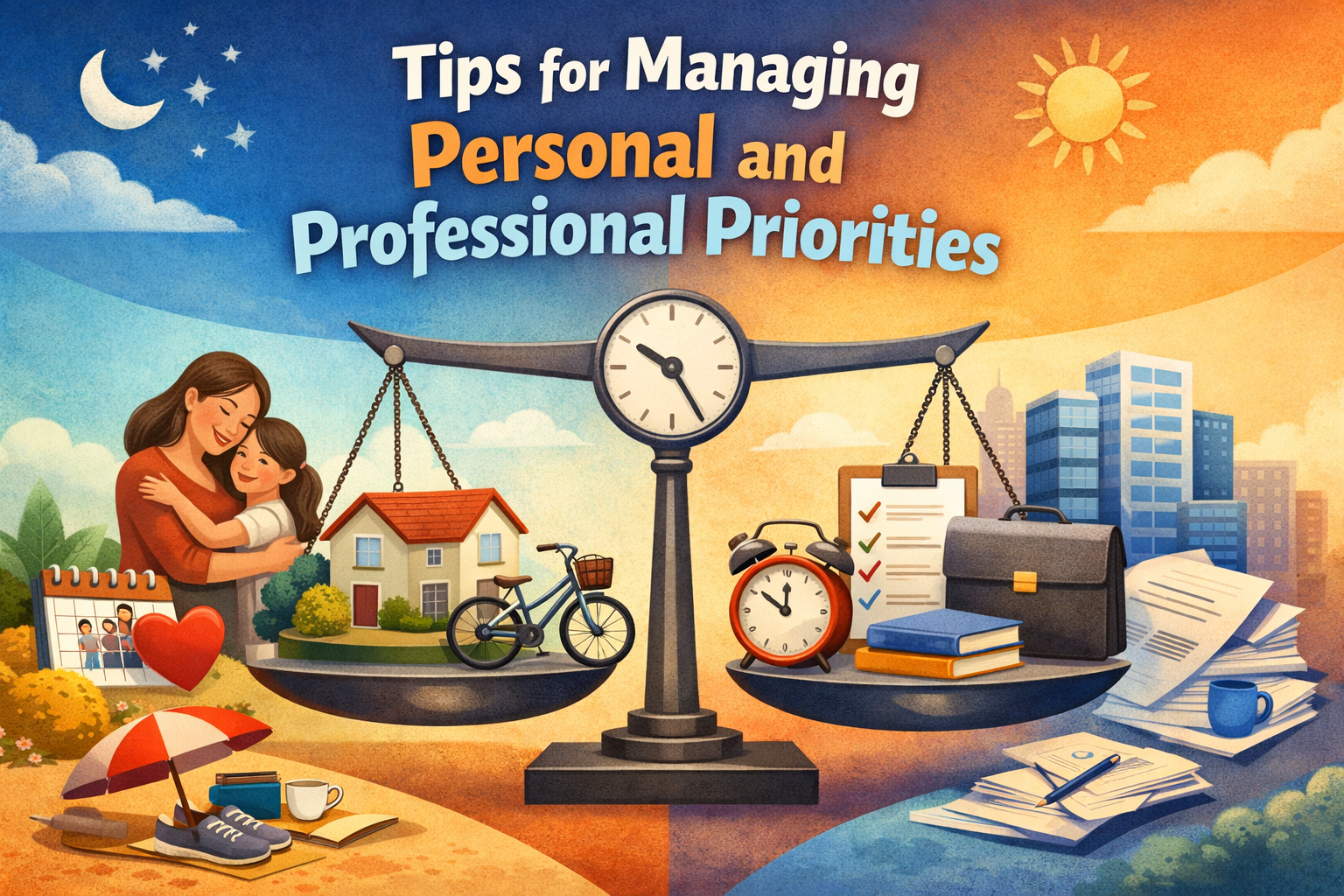
Let’s be real—handling work and life together sometimes feels like you’ve got 20 tabs open in your brain, and one of them is playing music but you don’t know which one. Emails, calls, family stuff, personal goals… everything wants attention right now.
The problem isn’t that you’re not trying hard enough. It’s that everything feels urgent at the same time. And when that happens, your focus goes all over the place.
Good news? You don’t need some perfect “balanced life” formula. You just need a smarter way to handle your time and energy so things don’t pile up like unread WhatsApp messages.
Let’s break it down.
1. Draw a Line Between Work Mode and Life Mode
If you’re replying to work messages while eating dinner, or thinking about deadlines while watching Netflix… yeah, that’s the problem.
You need a clear switch.
- Work time = work.
- Personal time = actually live your life.
No “just one quick email” after hours. That’s how it starts… and suddenly you’re back in work mode again. Once you mentally clock out, stay out. It helps your brain reset and keeps burnout away.
2. Stop Treating Every Task Like It’s an Emergency
Not everything is a fire to put out.
Some tasks matter. Some just look important. Big difference.
Instead of trying to do 15 things, pick 3 that actually move the needle. The rest? They can wait. When your focus is clear, your day feels less chaotic and more intentional.
3. Use Online Kundali for Smarter Timing
Okay, this is where things get a little interesting.
Planning is great, but timing also plays a role. Sometimes you try your best and things still feel off. That’s where an online kundali can help.
It gives you a rough idea of when to push forward and when to slow down. Not magic, not a shortcut—just a smarter way to align your actions with better timing. Think of it like checking traffic before leaving home. You still drive, but at least you know what’s coming.
4. Don’t Pack Your Day Like a Suitcase
If your schedule looks like there’s no breathing space… it’s going to crash. Guaranteed.
Back-to-back tasks sound productive, but in reality, they drain you fast. Leave some buffer time. Things will run late, people will interrupt, and plans will shift.
A little gap in your schedule = a lot less stress.
5. Plan Ahead (So You’re Not Guessing All Day)
Ever started your day and thought, “What should I do first?” That’s already wasted energy.
Decide your key tasks in advance. Even a rough plan works. When you know your next step, you move faster and with less confusion.
It’s like having Google Maps on instead of driving blindly and hoping for the best.
6. Keep Track of Important Stuff (Your Memory Isn’t That Loyal)
Let’s not pretend—we all forget things.
Deadlines, birthdays, random commitments… gone.
Instead of trusting your brain, use one solid system. Calendar, app, notes—anything. Just don’t scatter things everywhere. When everything is in one place, you don’t waste time trying to remember what you forgot.
7. Batch Your Tasks Like a Pro
Jumping from one type of task to another all day is exhausting.
Try grouping similar work together. For example:
- Calls together
- Deep work in one block
- Personal errands in another
This way, your brain stays in one mode longer, and you get more done without feeling drained.
8. Make Time for Yourself (Yes, It Counts)
If your entire day is just work and responsibilities, you’re basically running on low battery all the time.
You need time that’s just yours. No productivity pressure. No expectations.
Do something you enjoy—even if it’s small. That break isn’t wasting time; it’s what keeps you sane enough to handle everything else.
9. Adjust as You Go (Because Life Doesn’t Follow a Script)
Some days will go exactly as planned. Most won’t.
Instead of getting frustrated, tweak your schedule. Shift things around. Drop what’s not important.
Flexibility is what keeps your system working long-term. If you try to control everything too tightly, it’ll break.
10. Forget Perfect Balance—Aim for Real Balance
Trying to keep everything equal every single day? That’s unrealistic.
Some days work takes over. Other days, life does. That’s normal.
Look at the bigger picture. If both areas are getting attention over time, you’re doing it right.
Final Thoughts
Managing personal and professional priorities isn’t about doing more—it’s about doing what actually matters, at the right time, without burning yourself out.
When you combine simple planning, clear boundaries, and tools like an online kundali for timing awareness, things start to feel less messy and more under control.
You won’t have perfect days every time. But you will have better ones—and that’s what really counts. But you will have better ones—and that’s what really counts.
