

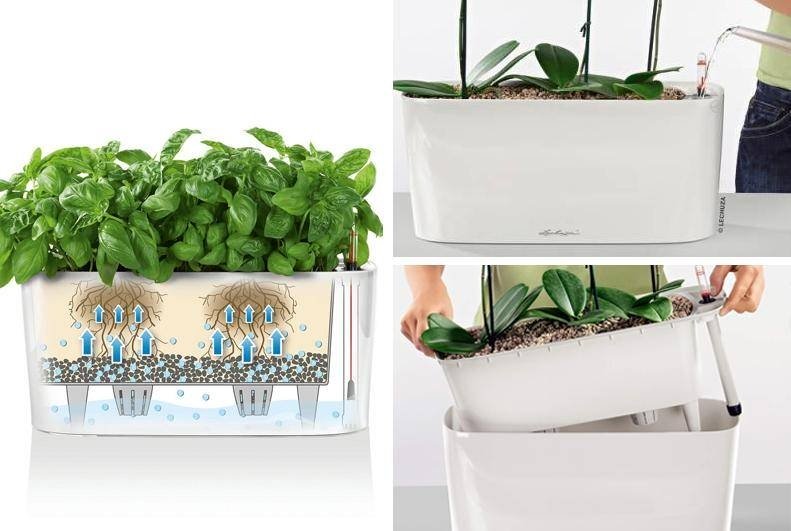
Self-watering planters promise easier gardening, and they deliver when everything works correctly. But when something goes wrong, the same system that kept your plants hydrated can quickly cause root rot, nutrient problems, or unexplained wilting. Catching issues early saves your plants and your investment in the growing season.
Problem: Water Reservoir Empties Too Fast
If you find yourself refilling the reservoir every day or two, something is off. Self watering planters should hold enough water for several days to a week, depending on plant size, weather, and container volume.
Possible causes:
The plant has outgrown the container. Large root systems drink more water and may have filled the soil space, leaving little buffer. Consider moving the plant to a larger self-watering planter or supplementing with top watering during peak summer.
The reservoir is undersized for the plant type. Tomatoes, peppers, and other heavy feeders need planters with generous reservoirs. Small decorative self-watering planters work for herbs and lettuce, but cannot keep up with fruiting vegetables.
Extreme heat accelerates water use. During heat waves, even properly sized planters empty faster. Check reservoirs daily when temperatures climb above 90 degrees.
Problem: Soil Stays Too Wet
Constantly soggy soil defeats the purpose of a self-watering system. Roots sitting in waterlogged conditions develop rot, and plants wilt even though water is available.
Possible causes:
The wicking system is drawing too much water. Some planters use fabric wicks or capillary mats that can become overly saturated. If your planter has removable wicks, check that they are not submerged too deeply in the reservoir.
Drainage holes are blocked. The best self-watering planters usually have an overflow hole to prevent overfilling. If debris clogs that hole, water backs up into the soil. Clear the overflow regularly.
The soil mix holds too much moisture. Heavy garden soil or mixes with excessive peat retain water beyond what the system needs. Switch to a lighter potting mix with perlite or coarse vermiculite for better drainage.
Problem: Plants Wilt Despite Full Reservoir
This frustrating situation usually points to root problems or wicking failure rather than a lack of water.
Possible causes:
Roots have rotted and can no longer absorb water. Check the root zone by gently lifting the plant. Brown, mushy roots confirm rot. Remove affected roots, let the soil dry out, and reduce reservoir levels going forward.
The wicking mechanism has failed. Fabric wicks degrade over time. Capillary channels in molded planters can clog with mineral deposits or root material. Clean or replace wicks and clear any channels that connect the reservoir to the soil.
Salt or fertilizer buildup blocks water uptake. Self-watering planters concentrate salts in the root zone over time because water evaporates, but minerals stay behind. Flush the soil with plain water from the top every few weeks to wash salts through.
Problem: White Crust on Soil Surface
A white crusty layer on the soil usually signals mineral buildup from fertilizers or hard tap water.
How to fix it:
Scrape off the crust gently without disturbing roots. Water thoroughly from the top to flush accumulated salts down and out the overflow hole. If your tap water is very hard, consider using filtered or rainwater in the reservoir.
Reduce fertilizer concentration. Self-watering planters need lighter feeding than traditional containers because nutrients stay in the system rather than washing out with each watering.
Problem: Algae or Mosquitoes in the Reservoir
Standing water invites algae growth and breeding mosquitoes if the reservoir stays exposed.
How to fix it:
Cover any openings to the reservoir. The best self watering planters typically include caps or covers for fill tubes. Use them.
Add a few drops of food-safe hydrogen peroxide to the reservoir if algae appears. This kills algae without harming plants.
Empty and refill reservoirs if mosquito larvae appear. Do not let water sit stagnant for weeks without checking.
Problem: Uneven Growth Across the Planter
If plants on one side thrive while the other side struggles, water distribution may be inconsistent.
How to fix it:
Check that the wicking material contacts the soil evenly across the entire planter bottom. Gaps leave dry zones that roots cannot access.
Ensure the planter sits level. A tilted container sends reservoir water to one side, leaving the other dry.
Conclusion
Most problems develop slowly. Weekly checks catch issues before they become emergencies. Look at reservoir levels, feel soil moisture, and inspect leaves for early stress signs. Self-watering does not mean no attention.
