

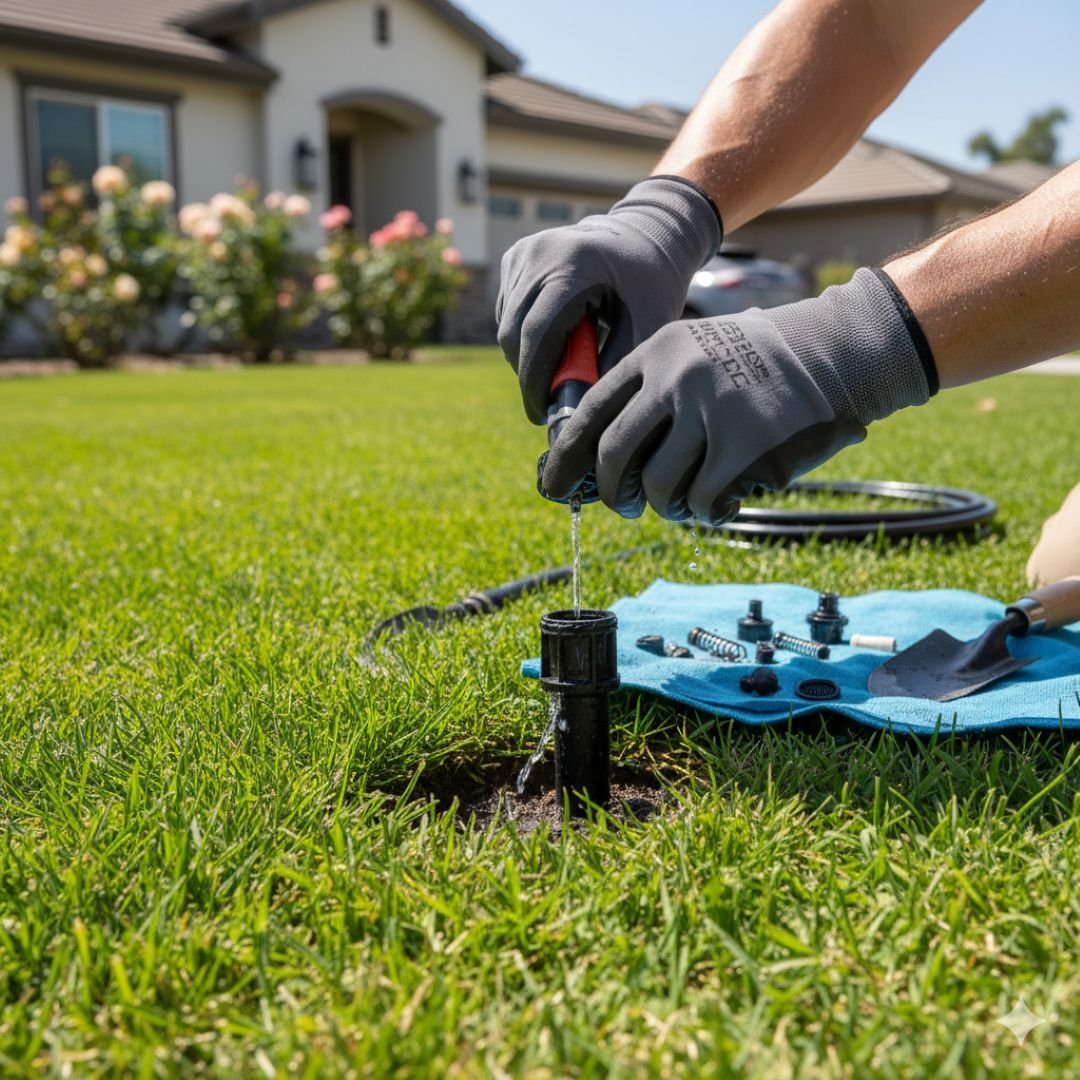
Weak spray, soggy patches, or rising water bills often mean it’s time to repair sprinkler system lines before your lawn suffers. Healthy grass depends on steady, even water flow.
When underground pipes crack or clog, pressure drops and coverage becomes uneven. In Los Angeles, where drought rules and water costs are high, wasted water is not just frustrating—it’s expensive.
Outdoor irrigation can account for up to 50% of a home’s total water use, according to the U.S. Environmental Protection Agency (EPA). Damaged sprinkler lines reduce efficiency and increase runoff.
Quick action protects your lawn, saves money, and prevents bigger repairs later. Here’s how to know when your irrigation system needs attention and what steps protect long-term performance.
Signs Your Sprinkler Lines Need Immediate Attention
Water flow problems rarely fix themselves. Early warning signs help prevent major landscape damage.
Low water pressure is one of the first clues. If sprinkler heads barely spray or fail to pop up fully, a leak or blockage may exist in the irrigation lines. Uneven spray patterns also point to pressure loss underground.
Soggy soil or pooling water in one area signals a cracked pipe. Wet spots often appear even when the system is off. That constant moisture can damage turf roots and invite pests.
A sudden spike in your water bill is another red flag. The EPA notes that household leaks can waste nearly 10,000 gallons of water each year. Underground irrigation leaks often go unnoticed for weeks.
Addressing these signs quickly keeps your lawn irrigation system running efficiently and protects your property from erosion and runoff.
Common Causes of Underground Irrigation Line Damage
Sprinkler lines sit beneath soil, so damage is not always visible. Yet several common issues lead to failure over time.
Tree roots often press against irrigation pipes. As roots grow, they crack or crush plastic lines. Shifting soil during hot Los Angeles summers can also stress connections.
Poor installation is another factor. Shallow pipe placement increases the risk of cuts from gardening tools. Weak fittings may loosen under water pressure.
Clogs develop when dirt or debris enters the system. Mineral buildup from hard water can narrow pipes and reduce flow. Southern California water often contains minerals that leave residue inside plumbing lines.
Understanding the cause helps determine the right repair approach. Sometimes, a simple pipe section replacement solves the issue. In other cases, a larger irrigation repair may be necessary.
When to Repair Sprinkler System Lines Instead of Replacing Them
Not every issue requires full replacement. Knowing when to repair sprinkler system lines saves time and money.
Small cracks or isolated leaks usually need only a pipe splice. Professionals cut out the damaged section and install a new fitting. This restores water pressure quickly.
Clogs can often be cleared with line flushing. Removing debris improves sprinkler head performance and balances water flow.
However, repeated leaks in multiple zones may signal aging pipes. If your irrigation system is over 15 years old, full replacement may offer better long-term value.
A licensed irrigation specialist can inspect pressure levels and valve performance. Proper diagnosis ensures your lawn sprinkler system receives the right solution, not a temporary fix.
How Delayed Repairs Impact Water Flow and Lawn Health
Ignoring damaged lines leads to uneven watering. Dry patches form where pressure drops. Meanwhile, broken sections may flood other areas.
Overwatering causes shallow root growth. Grass becomes weak and vulnerable to heat stress. In Los Angeles, high summer temperatures make strong root systems essential.
Runoff is another concern. The Metropolitan Water District warns that inefficient irrigation contributes to wasted water and soil erosion. Cracked lines often push excess water onto sidewalks or driveways.
Delays also increase repair costs. A minor leak can widen over time. What starts as a small fix may require extensive digging later.
Fast action keeps your irrigation maintenance simple and protects your investment in landscaping.
Professional Inspection vs. DIY Fixes
Small sprinkler head adjustments are manageable for many homeowners. Underground line repairs are different.
Read More: Why More Homeowners in Ireland Are Choosing Log Cabins
Irrigation systems use pressurized water lines connected to valves and controllers. Incorrect repairs can reduce system efficiency or damage nearby pipes.
Why Professional Repairs Work Better
- Accurate leak detection equipment
- Proper pipe depth and secure fittings
- Pressure testing before backfilling
Professionals also understand Los Angeles water regulations and conservation rules. Repairs must support efficient water use and avoid runoff.
Choosing expert help ensures your lawn irrigation repair lasts longer and performs better. It also prevents repeat service calls caused by temporary patches.
Prevent Future Sprinkler Line Problems
Preventive care extends the life of your irrigation system. Regular inspections catch small issues before they grow.
Check for uneven spray patterns each month. Monitor water pressure and watch for wet soil patches. Seasonal maintenance keeps valves and pipes clear.
Upgrading to a smart irrigation controller also helps. The EPA’s WaterSense program reports smart controllers can reduce outdoor water use by up to 20%. Balanced watering reduces pipe stress and prevents overpressure.
Proper pipe depth and high-quality fittings also matter. Durable materials resist cracking under shifting soil.
Preventive maintenance costs far less than emergency irrigation repair. Consistent care keeps water flowing evenly across your lawn.
Frequently Asked Questions
Q1. How do I know if I need to repair my sprinkler lines?
Signs include low pressure, soggy spots, uneven spray, or higher water bills. If water pools when the system is off, a leak likely exists underground. A professional inspection confirms the issue.
Q2. Can a small sprinkler leak increase my water bill?
Yes. Even minor leaks can waste thousands of gallons yearly, according to the EPA. Underground irrigation leaks often run unnoticed, increasing costs over time.
Q3. How long do sprinkler pipes usually last?
Most PVC irrigation pipes last 15 to 20 years. Soil movement, tree roots, and poor installation may shorten lifespan. Regular inspections help extend system durability.
Q4. Is it better to repair or replace old sprinkler lines?
If damage is isolated, repair works well. Multiple leaks or aging pipes may require replacement. A professional evaluation determines the best option.
Q5. How often should sprinkler systems be inspected?
Annual inspections are recommended. Checking before peak summer use ensures efficient watering. Regular maintenance prevents costly breakdowns.
Conclusion
Strong water pressure and even coverage depend on healthy underground lines. Knowing when to repair sprinkler system pipes prevents dry patches, runoff, and rising utility bills. Quick action keeps your lawn green while supporting responsible water use in Los Angeles.
For property owners who value dependable results, RototillerGuy brings over 25 years of experience and more than 500 local reviews.
With proven expertise in lawn installation, landscaping, and sprinkler services, RototillerGuy delivers reliable, high-quality outdoor transformations. Trust RototillerGuy to restore proper water flow and keep your landscape thriving year-round.
