

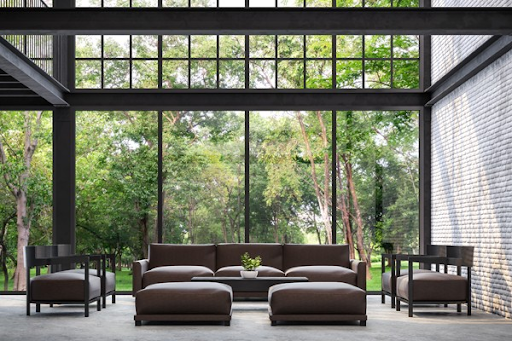
The global landscape of urban architecture is undergoing a tremendous shift. As cities grapple with rapid population growth, less resources, and the urgent need for environmental stewardship, the traditional methods of construction dominated by heavy masonry and concrete are being re-evaluated. In the current scenario, the steel building structures have emerged as the cornerstone of modern sustainable development.
Today, the integration of steel building construction and light gauge steel frame technology is enabling architects to push the boundaries of height, flexibility, and eco-efficiency.
Dive through this guide to explore why steel building structures are revolutionizing modern sustainable urban architecture in the current world.
The Sustainable Core of Steel
Sustainability in architecture is often measured by a building’s lifecycle, ranging from the extraction of raw materials to its eventual demolition or repurposing. Steel stands out as one of the few materials that aligns perfectly with the principles of a circular economy.
1. Infinite Recyclability
Unlike concrete, which often ends up as landfill or low-grade road base after demolition, steel is 100% recyclable without any loss in quality. A steel building structure erected today may contain steel that was first forged decades ago and can be melted down and reused indefinitely in the future. This reduces the demand for ore mining which significantly lowers the carbon footprint of the building industry.
2. Reduced Site Impact
Conventional construction is notorious for site disturbance, noise pollution, and massive waste generation. Steel building construction, however, relies heavily on precision engineering and off-site fabrication. Components are manufactured to exact specifications in a controlled environment and then transported to the site for assembly. This bolt-together approach reduces the time spent on-site, minimizes dust and noise, and ensures that very little material goes to waste.
3. Energy Efficiency and Insulation
Modern steel building structures are designed to be highly energy-efficient. While steel itself is a conductor, the systems built around a light gauge steel frame allow for superior insulation. High-performance thermal barriers and advanced cladding systems can be integrated seamlessly, ensuring that the facility maintains optimal temperatures with minimal energy consumption for heating or cooling.
The Rise of Light Gauge Steel Frames
The revolution in urban architecture is being led by the adoption of light gauge steel frame technology. This method uses cold-formed steel sections to create a structural skeleton that is incredibly strong yet remarkably lightweight.
Versatility in Design
Light gauge steel frames allow for greater architectural freedom. Though, steel has a high strength-to-weight ratio, it can support larger spans without the need for intrusive internal columns. This is particularly beneficial for urban facilities such as office complexes, healthcare centers, and educational institutions where open, flexible floor plans are essential.
Speed and Accuracy
Light gauge steel frames are manufactured using CAD (Computer-Aided Design) and CAM (Computer-Aided Manufacturing) technologies. This ensures that every piece fits perfectly, eliminating the need for on-site adjustments. The speed of assembly is significantly faster than traditional brick-and-mortar methods, allowing developers to commission a facility months ahead of schedule.
Urban Density and Vertical Growth
As land becomes scarcer and more expensive, cities must grow upward rather than outward. Steel building construction is the primary enabler of this verticality. The lightweight nature of steel allows for taller structures on foundations that would be insufficient for heavier materials. By facilitating denser urban living, steel structures help reduce urban sprawl.
The Role of Technology in Modern Steel Construction
The revolution is as much about digital technology as it is about metallurgy. Building Information Modeling (BIM) has transformed how steel building structures are realized. Through BIM, engineers can create a digital twin of the facility before a single piece of steel is cut. This allows for:
- Clash Detection: Identifying potential conflicts between structural elements and mechanical/electrical systems early in the design phase.
- Optimization: Refining the amount of steel used to ensure structural integrity while minimizing material weight and cost.
- Lifecycle Management: Tracking the materials used in the facility to simplify future maintenance or deconstruction.
Economic Sustainability
Sustainability also has an economic dimension. While the initial material cost of steel can sometimes be higher than timber or low-grade concrete, the total cost of ownership is often lower. The speed of construction leads to reduced labor costs and faster return on investment.
Transforming Infrastructure and Public Facilities
The impact of steel extends beyond residential and commercial skyscrapers. It is revolutionizing the construction of vital urban infrastructure. From transit hubs and sports arenas to warehouses and emergency healthcare facilities, steel provides the scalability and speed required to meet the needs of a growing population.
Conclusion
The shift toward steel building structures is a necessary response to the global challenges of the 21st century. By prioritizing steel building construction and leveraging the precision of light gauge steel frame technology, we are building cities that are more resilient, more efficient, and more harmonious with the natural world. Steel allows us to dream bigger while treading lighter on the planet.
As we look toward the future of urban development, the role of expert engineering and quality manufacturing becomes paramount. This is where leaders in the industry set the standard for excellence. Solvabuild is at the forefront of this architectural revolution, providing advanced solutions for modern steel buildings. Solvabuild specializes in delivering high-quality, sustainable, and durable steel structures tailored to the needs of modern urban environments. The perfect partner of choice for those looking to embrace the future of construction today. Visit the website for more information.
