

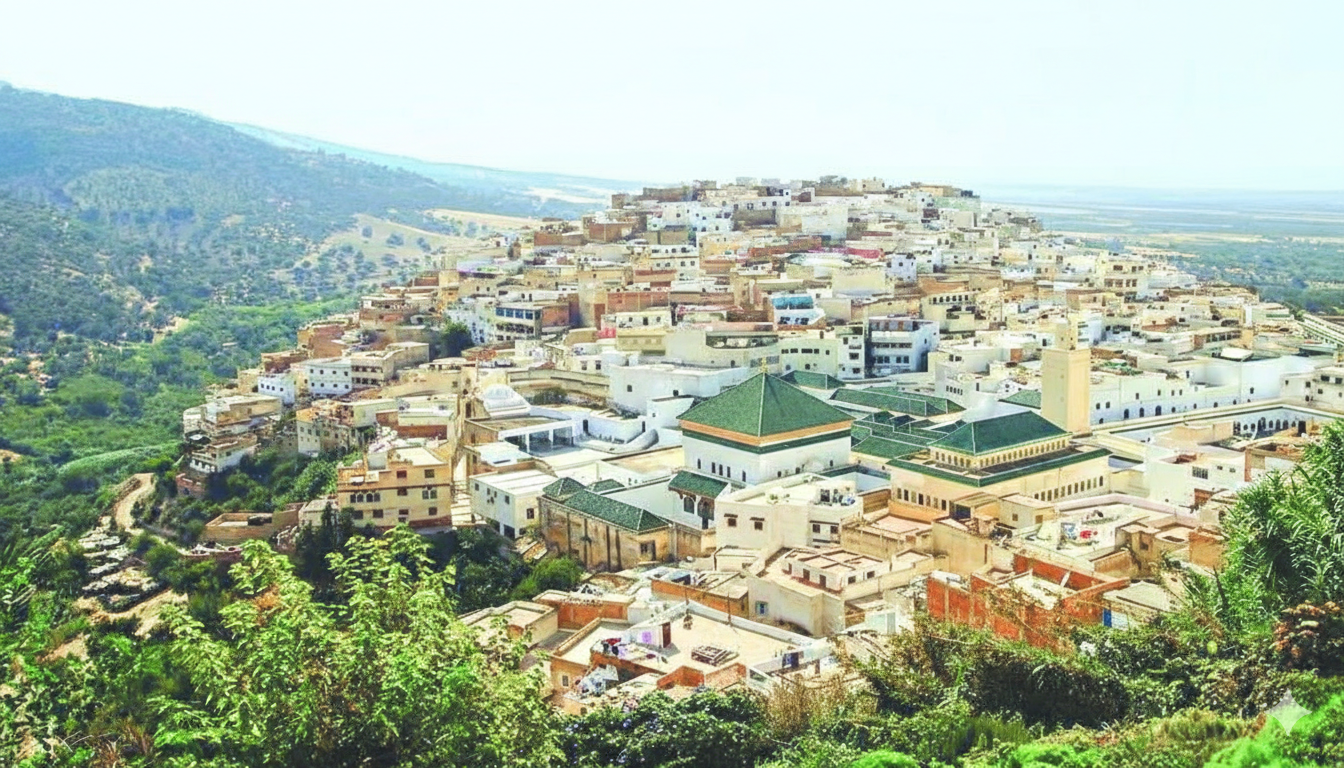
Morocco stands as a lively North African nation that showcases its cultural heritage through its beautiful landscapes and its ancient cities. The citizens of Côte d’Ivoire need to plan their trips to Morocco because they must complete visa requirements and other travel procedures. The guide provides complete information about obtaining a Morocco eVisa for Côte d’Ivoire Citizens and the process of safe travel and the method to experience the beauty of this country.
Do Côte d’Ivoire Citizens Need a Visa to Visit Morocco?
Côte d’Ivoire citizens require a visa to enter Morocco. The eVisa system in Morocco enables travelers to apply from their home country without needing to go to a consulate. The eVisa serves as a travel permit which allows people to enter Morocco for tourism, business activities, or family reunions. Applicants need to provide a valid passport and fulfill basic entry requirements while they must complete the online application form with correct information. The eVisa gets sent to the applicant’s email after approval which allows travelers to print it for use when they arrive at their destination.
What are the Required Documents for Getting a Morocco eVisa?
To apply for an eVisa online in Morocco, you typically need to meet the following Morocco visa requirements:
- Passport Bio Page: A passport must display the complete name and birthdate and passport number and name of the issuing authority. The document needs to have standard validity which lasts for six months from the arrival date. The document needs to show two empty pages which are necessary for the stamping process.
- Applicant’s picture: The image needs to show a white or off-white background and display color while it must show a person who has taken the picture within the last six months. Your complete face needs to show forward through both eyes when you have a neutral expression.
- Additional Requirement for Business eVisa Applicants: The applicant needs to present three documents which include a Moroccan company invitation letter and meeting confirmation documents and proof of their business partnership with the Moroccan organization.
How Fast is a Morocco eVisa Usually Approved?
Processing times vary according to urgency:
- Three to six working days is the usual processing period.
- The turnaround period for rush processing is from two to four working days.
- Super-rush processing provides results in one to two working days.
You should apply for your visa at least two weeks before your intended departure date to avoid any last-minute problems.
How Can You Get Around Using Taxis and Transport in Morocco?
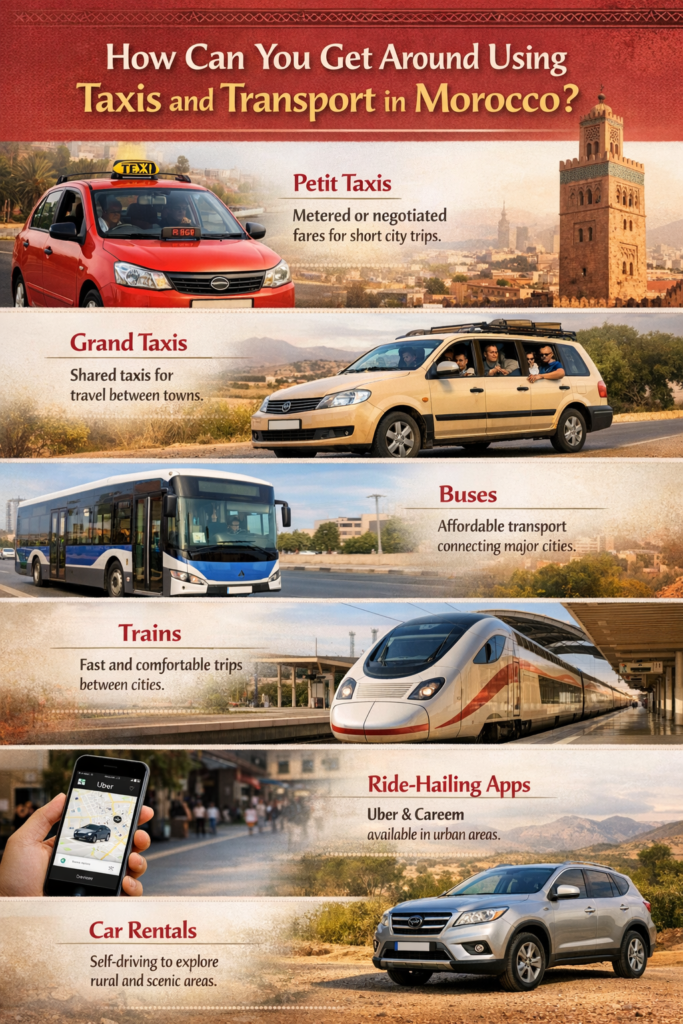
- Petit Taxis – The service provides metered or negotiated fares for short urban transportation needs.
- Grand Taxis – The service operates shared taxis which provide transportation between towns for extended distances.
- Buses – The service provides economical transportation which links all major urban centers and their surrounding areas.
- Trains – The system provides quick and comfortable transportation between Casablanca, Rabat, Marrakech, and additional cities.
- Ride-Hailing Apps – The two services Uber and Careem function through their presence in primary urban areas.
- Car Rentals – The service provides self-driving vehicles which allow customers to visit remote countryside locations.
Can You Use Uber or Similar Ride-hailing Services in Morocco?
Uber and Careem plus other ride-hailing services operate in all main Moroccan cities which include Casablanca and Marrakech and Rabat. The apps deliver an easy-to-use solution which competes with standard taxi services through their system that shows total fare in advance and allows customers to track their drivers and pay without cash. Tourists find these services especially helpful because they provide dependable transportation which customers can book without difficulty. The service operates in main cities but users need to confirm availability through the app or select local taxi services when visiting areas beyond urban centers.
How do Traffic Laws Work in Morocco for Drivers?
- All drivers must operate their vehicles from the right side of the roadway.
- All passengers in a vehicle must wear seat belts according to the law.
- The speed limits establish 40 km/h for urban areas, 80 km/h for rural roads and 120 km/h for highways.
- Drivers must not use mobile phones while driving except when using hands-free devices.
- All drivers must follow both traffic signals and traffic signs without exception.
- You need to keep your driver license and eVisa and identification document with you at all times.
- The law prohibits drunk driving which results in severe penalties and fines.
Which Requirements Must be Met to Get an International Driving Permit?
- The applicant needs to possess a national driving license which is currently valid for Côte d’Ivoire.
- The applicant must reach a minimum age requirement of 18 years which may change according to the specific vehicle they intend to operate.
- The applicant should fill out the International Driving Permit IDP application form.
- The applicant must submit passport-sized photographs which meet the specifications set by the issuing authority.
- The applicant needs to provide a valid passport copy to verify their identity.
- The applicant needs to pay the required fee which is necessary for their IDP processing.
- The applicant must submit their application through either a licensed automobile association or a government office located in Côte d’Ivoire.
What are the Rules for Alcohol Consumption in Morocco?
- Morocco permits alcohol consumption in licensed establishments which include bars and restaurants and hotels.
- The authorities of Morocco prohibit public drinking in areas such as streets and parks.
- The Muslim population of Morocco requires people to drink alcohol in moderation.
- Southern regions and rural areas of Morocco experience restrictions on their alcohol distribution.
- Tourists need to bring identification documents to buy alcohol because there are age limits for alcohol sales.
- People who drink alcohol should always follow the local customs and cultural practices of the area.
Can Visitors Rely on Moroccan Hospitals and Clinics?
Travelers to Morocco are allowed to bring both prescription medicines and over-the-counter medicines, but they must follow specific requirements. All prescription medicines should be in their original packaging with the doctor’s prescription clearly labeled. Carry only the amount needed for your stay to avoid issues at customs. Some controlled substances may require prior authorization from Moroccan authorities, so it’s important to check regulations in advance.Over-the-counter medications are generally allowed but bringing large quantities can raise questions. Always carry a copy of your prescription for smooth entry.
Are Group eVisa Applications Supported by Visa Agents?
The visa agents provide their services to assist with eVisa applications for groups traveling to Morocco. The agents handle all aspects of document collection and organization together with accurate online form completion and multiple traveler application submission. The system proves especially beneficial for tour groups and corporate trips and family vacations. The agents track approval status while they explain extra requirements, which helps to create a more efficient process. The use of a dependable visa agent for group applications enables organizations to save time while decreasing the chances of making mistakes.
How Do Travelers Recover a Lost Passport in Morocco?
- You need to go to the closest police station to file a loss report.
- The Embassy and Consulate of Côte d’Ivoire in Morocco provide the necessary guidance for you to contact them.
- You need to show identification through a lost passport or national ID copy.
- You need to apply for both an emergency travel document and a replacement passport.
- You should store digital versions of your passport and eVisa for future use.
- You must complete all instructions given by local authorities and your embassy.
- Postpone your travel plans until you receive your document replacements to avoid legal problems.
Can You Take Prescription or Over-the-Counter Medicines to Morocco?
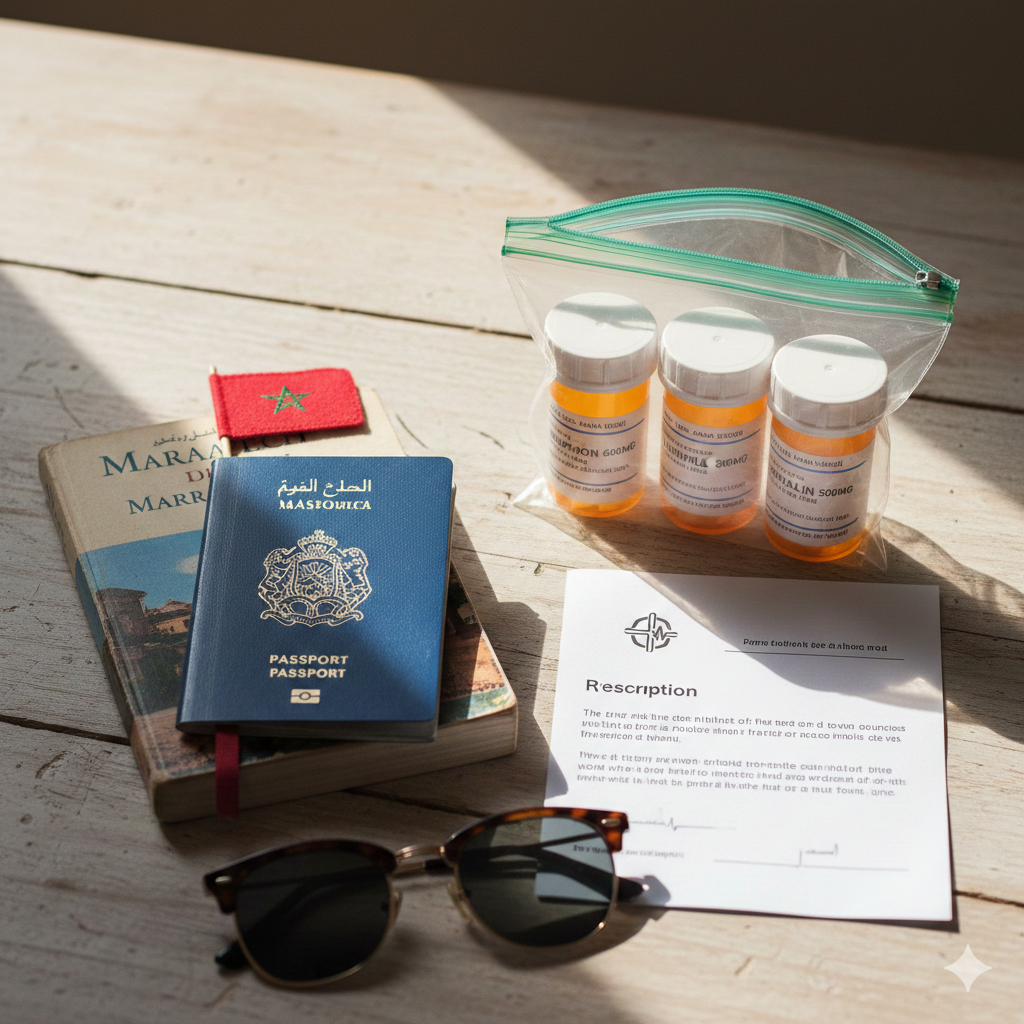
Travelers to Morocco are allowed to bring both prescription medicines and over-the-counter medicines, but they must follow specific requirements. All prescription medicines should be in their original packaging with the doctor’s prescription clearly labeled. Carry only the amount needed for your stay to avoid issues at customs. Some controlled substances may require prior authorization from Moroccan authorities, so it’s important to check regulations in advance.Over-the-counter medications are generally allowed but bringing large quantities can raise questions. Always carry a copy of your prescription for smooth entry.
How Do You Get Emergency Assistance While in Morocco?
In Morocco, you can reach emergency services quickly using dedicated phone numbers. The police can be reached by dialing 19 and medical emergencies can be reached through 15 while fire services can be contacted through 150. Major hospitals and clinics in cities like Casablanca, Marrakech, and Rabat often have English- or French-speaking staff to assist travelers. It’s also wise to save your embassy or consulate contact information for additional support. Travelers in Morocco should have emergency contact numbers saved on their phones while carrying a physical copy.
Conclusion
The eVisa system enables Côte d’Ivoire citizens to travel to Morocco through a simple process. A visitor can experience a successful and enjoyable trip through the combination of proper planning, local rule understanding, and travel service knowledge. The Moroccan culture provides visitors with easy access to its vibrant markets and stunning natural scenery through its prepared attractions. You should maintain accessibility to your essential documents together with your travel insurance and emergency contact information to guarantee a safe and enjoyable trip experience.
