

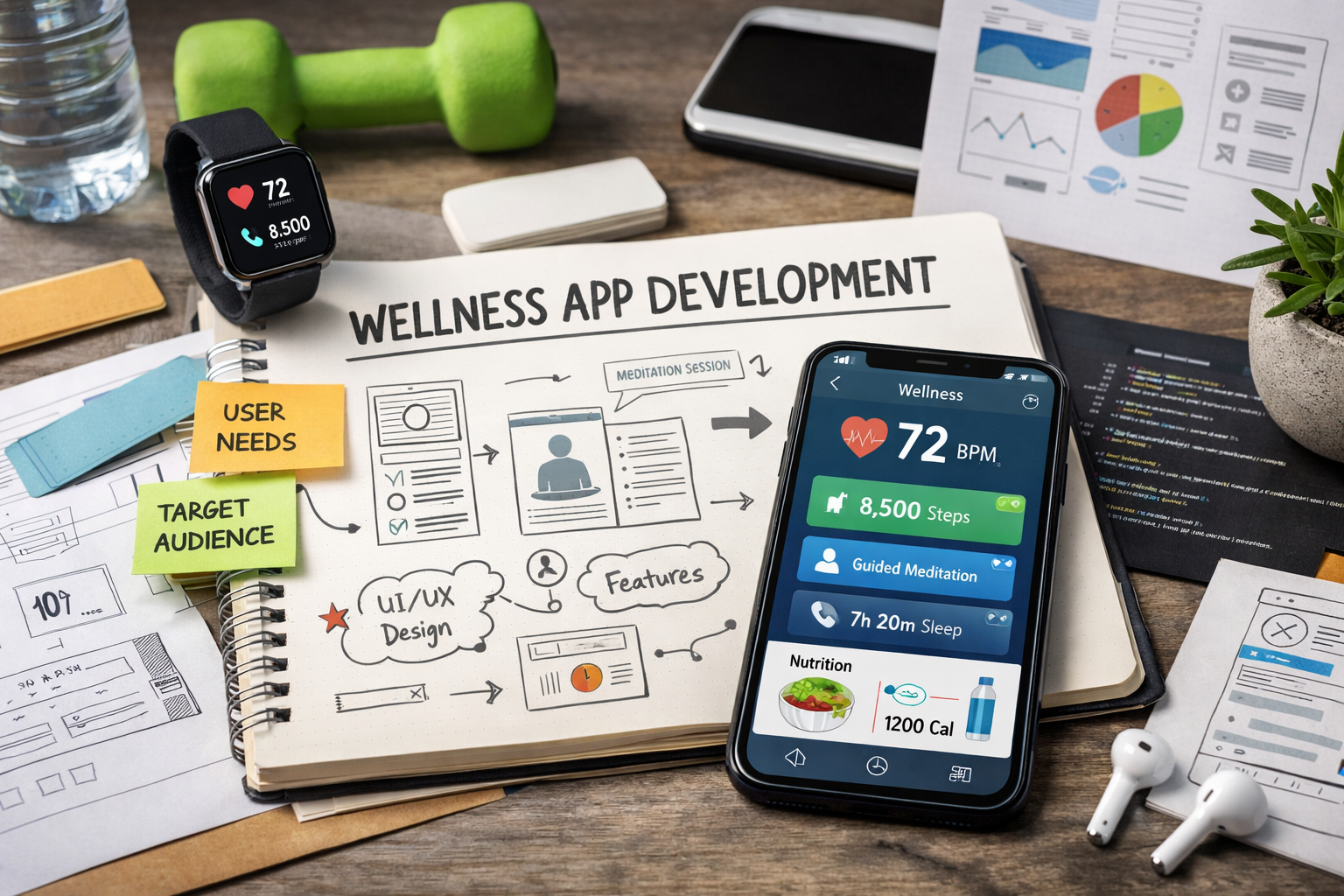
The global shift toward preventive healthcare, mental well-being, and fitness tracking has significantly increased the demand for Wellness App Development. Modern users expect personalized health insights, real-time monitoring, and seamless digital experiences. From meditation and fitness tracking to nutrition management and sleep analysis, wellness applications are transforming how individuals manage their daily health routines.
Businesses entering this space must recognize that users seek more than just features—they expect scientifically backed programs, intuitive interfaces, and secure data management. The wellness industry’s rapid digital expansion presents an opportunity for startups and enterprises to build scalable solutions that offer measurable value. A well-planned development strategy ensures long-term sustainability and competitive differentiation.
Step 1: Define Your Wellness App Concept and Target Audience Clearly
Every successful digital product begins with a clearly defined idea. In Wellness App Development, clarity of purpose determines product-market fit. Start by identifying the core problem your app will solve. Are you focusing on stress reduction, fitness tracking, chronic disease management, mental health support, or holistic lifestyle improvement?
Once the niche is defined, segment your target audience based on age, lifestyle, health goals, and technological comfort. For instance, an app designed for working professionals may emphasize quick meditation sessions and productivity tracking, while one targeting seniors may focus on medication reminders and easy navigation.
Market research should include competitor analysis, feature comparison, monetization patterns, and user feedback evaluation. This stage sets the foundation for feature prioritization and development budgeting.
Step 2: Conduct In-Depth Market Research and Competitive Analysis
A detailed market study allows businesses to understand current trends and user expectations. Analyze top-performing wellness applications to determine which features users engage with most frequently. Examine user reviews to identify gaps in existing solutions.
Study monetization strategies such as freemium subscriptions, premium plans, in-app purchases, and corporate wellness partnerships. Additionally, explore regional compliance requirements related to health data privacy and user security.
A strong competitive analysis provides direction for differentiation. Rather than duplicating features, identify opportunities to innovate—such as AI-powered recommendations, wearable integrations, or community engagement tools.
Step 3: Define Core Features and Functional Requirements Strategically
The feature set determines the value proposition of your wellness application. Instead of overloading the platform, prioritize features based on user needs and development feasibility.
Common core features in Wellness App Development include user registration, personalized dashboards, activity tracking, goal setting, push notifications, progress analytics, and integration with wearable devices.
Advanced functionalities may include AI-driven health suggestions, video consultation modules, real-time coaching, mood tracking, community forums, and gamification elements.
During this phase, prepare a detailed Product Requirement Document (PRD) that outlines functional specifications, user flows, and performance expectations. Clear documentation reduces development errors and accelerates project timelines.
Step 4: Choose the Right Technology Stack and Platform
Selecting the correct technology stack is essential for scalability, security, and performance. Decide whether you want to build a native app for iOS and Android or opt for cross-platform development frameworks.
Backend technologies must support secure user authentication, encrypted data storage, and real-time synchronization. Cloud infrastructure ensures scalability during high traffic periods. APIs should allow integration with wearables, payment gateways, and third-party health services.
A well-structured tech stack also simplifies future upgrades. If you plan to expand features or introduce AI capabilities later, choose technologies that support machine learning integration and advanced analytics.
Step 5: Focus on User Experience (UX) and Interface Design Excellence
User experience plays a critical role in the success of wellness applications. Since users engage with such apps daily, navigation must be simple, intuitive, and visually calming.
Design should emphasize clarity, readability, and minimal cognitive load. Use clean layouts, accessible fonts, and consistent visual elements. Onboarding flows must clearly explain app benefits and personalize the experience from the start.
Micro-interactions, subtle animations, and progress tracking visuals enhance engagement. Accessibility considerations such as voice commands and adjustable font sizes improve inclusivity.
Step 6: Develop a Secure and Scalable Backend Infrastructure
Wellness applications handle sensitive personal data, including health metrics and behavioral patterns. Therefore, implementing strong security measures is non-negotiable.
Use end-to-end encryption, secure APIs, multi-factor authentication, and compliance with regional health data regulations. Data backup mechanisms and disaster recovery planning should be incorporated early in development.
Scalability planning ensures that the application can handle increased user loads without performance degradation. Cloud-based infrastructure and modular architecture make scaling more efficient and cost-effective.
Step 7: Implement Monetization Strategies Thoughtfully
Revenue generation must align with user expectations and app value. Common monetization models in Wellness App Development include subscription plans, tier-based access, in-app purchases, and corporate wellness packages.
A freemium model allows users to explore basic features before upgrading to premium plans. Subscription pricing should reflect value—such as exclusive content, advanced analytics, or expert consultations.
Additionally, partnerships with fitness brands, wellness coaches, or healthcare providers can create diversified revenue streams without overwhelming users with advertisements.
Step 8: Perform Rigorous Testing and Quality Assurance
Before launch, thorough testing ensures reliability and performance. Conduct functional testing to verify feature accuracy, usability testing to evaluate user experience, and performance testing to measure load handling.
Security audits must identify vulnerabilities in data storage and API integrations. Cross-device testing ensures compatibility across various screen sizes and operating systems.
Beta testing with real users provides practical insights into usability improvements. Early feedback helps refine features and eliminate friction points.
Step 9: Plan a Strategic Launch and Marketing Campaign
Launching a wellness app requires more than uploading it to app stores. Develop a pre-launch marketing strategy that includes social media campaigns, influencer partnerships, email marketing, and content promotion.
App Store Optimization (ASO) improves discoverability by targeting relevant keywords and compelling descriptions. Launch promotions and limited-time subscription discounts can attract early adopters.
Post-launch marketing should focus on community building, regular content updates, and user engagement initiatives to maintain retention rates.
Step 10: Provide Continuous Updates and Maintenance Support
Successful apps evolve based on user feedback and technological advancements. Post-launch support includes bug fixes, feature upgrades, security patches, and performance optimization.
Analytics tools should track user behavior, engagement metrics, and churn rates. These insights guide future improvements and help refine monetization strategies.
Partnering with professional wellness app development services ensures long-term technical support, feature scalability, and compliance management.
Cost Factors Influencing Wellness App Development
The cost of developing a wellness application depends on multiple factors, including feature complexity, design requirements, platform choice, and integration needs.
Basic wellness apps with limited features may require lower budgets, while AI-driven or wearable-integrated platforms demand advanced development efforts. Backend complexity, security standards, and cloud infrastructure also impact overall costs.
Businesses should allocate budgets not only for initial development but also for marketing, maintenance, and continuous improvements.
Benefits of Hiring Professional wellness app development services
Collaborating with experienced wellness app development services offers several advantages. Professional teams bring expertise in UI/UX design, healthcare compliance, backend architecture, and scalable deployment.
They help transform ideas into structured product roadmaps, reducing time-to-market and development risks. Additionally, experienced developers anticipate technical challenges and provide strategic guidance for monetization and growth.
Outsourcing development also allows businesses to focus on branding, partnerships, and user acquisition while technical experts handle execution.
Conclusion
Wellness App Development is a structured journey that requires strategic planning, user-focused design, robust security measures, and continuous innovation. From defining the initial idea to launching and scaling the application, every step plays a crucial role in long-term success. Businesses that invest in research, scalable technology, and professional wellness app development services can build high-performing platforms that deliver measurable value to users. By focusing on personalization, data security, and seamless experiences, companies can create wellness applications that stand out in a competitive digital health market.
Frequently Asked Questions
What is Wellness App Development?
Wellness App Development refers to the process of designing, building, testing, and launching digital applications that help users manage their physical, mental, and emotional well-being. These apps may include features such as fitness tracking, meditation programs, nutrition planning, and health analytics.
How long does it take to develop a wellness app?
Development timelines vary depending on complexity. A basic wellness app may take three to four months, while feature-rich platforms with AI integration and wearable connectivity can take six months or longer.
What is the average cost of developing a wellness app?
Costs depend on features, platform selection, backend infrastructure, and security requirements. Basic applications require smaller budgets, whereas advanced solutions with real-time analytics and third-party integrations require higher investment.
Why should businesses hire wellness app development services?
Hiring wellness app development services ensures professional execution, regulatory compliance, strong security implementation, and scalable architecture. Experienced teams reduce risks and help deliver a market-ready product efficiently.
What monetization model works best for wellness apps?
Subscription-based models are most effective, especially when offering personalized insights and premium content. However, freemium strategies combined with in-app purchases and corporate wellness partnerships also perform well depending on target audience and app positioning.
