

In today’s digital world, patients turn to the internet for healthcare info. They research symptoms and pick medical providers online. Many people look online. They search for a local clinic, a specialist, or good medical advice. Online visibility is now crucial for healthcare providers. They need it to attract new patients and build lasting credibility.
However, improving online visibility is not about having a website. It requires strategic planning, consistent optimization, and the right digital approach. Many clinics, hospitals, and private practices are hiring healthcare SEO experts. They want to improve their online presence for search engines. This will help them better meet patients’ needs.
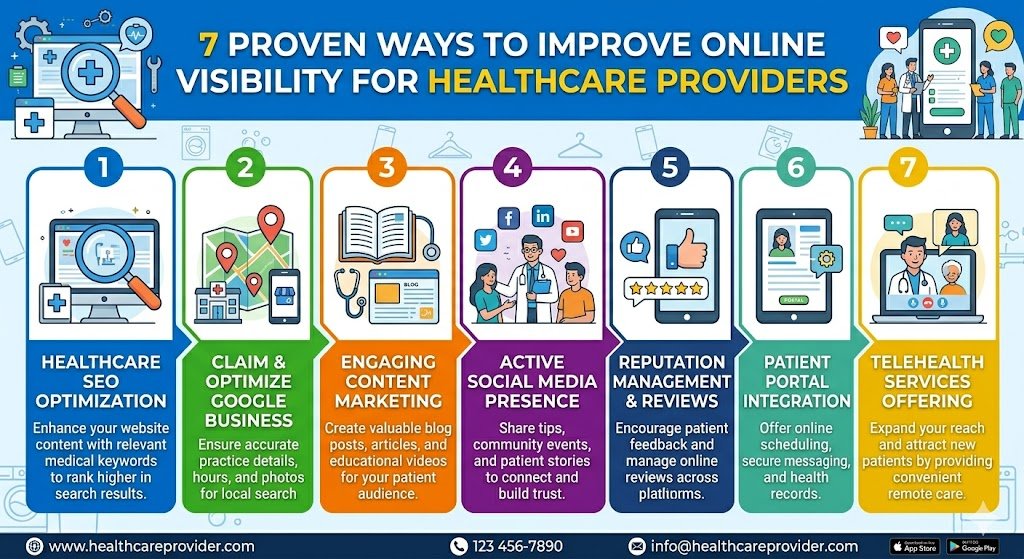
Here are seven ways healthcare providers can increase their online visibility. They can also boost their digital presence in a competitive market.
1. Optimize Your Website for Search Engines
SEO is a key strategy for boosting online visibility. A well-optimized website helps healthcare providers rank higher in search results. This way, patients can locate medical services online with minimal effort.
Effective SEO starts with optimizing key elements of a website:
- Keyword optimization: Use search terms that patients often type into search engines.
- Page titles and meta descriptions: This helps in search engines grasp your page content.
- Mobile-friendly design: Many patients search for healthcare services on smartphones.
- Fast loading speeds: A slow website hurts user experience and search rankings.
Healthcare SEO experts can assess your website. They can then apply strategies to boost your rankings. This also ensures you follow healthcare marketing standards. This makes it easier for potential patients to discover your services online.
2. Focus on Local Search Optimization
Most patients search for healthcare providers in their local area. When you search for “dentist near me,” you see local options. The same goes for “pediatric clinic nearby.” Search engines show choices close to you.
This makes local SEO essential for healthcare practices. Improving local visibility involves several key actions:
- Claiming and optimizing your Google Business Profile
- Ensuring your name, address, and phone number (NAP) are consistent across directories
- Adding location-specific keywords to your website
- Encouraging satisfied patients to leave online reviews
Local optimization boosts your chances of showing up in Google’s local map pack. This is usually the first thing patients see when they look for nearby medical services.
3. Publish High-Quality Medical Content
Content plays a major role in building online visibility and credibility. When healthcare providers share useful content, search engines see their sites as valuable.
Examples of effective healthcare content include:
- Blog articles explaining common medical conditions
- Preventive health tips and wellness guides
- Patient education resources
- Frequently Asked Questions about Treatments or Procedures
High-quality content not only improves search rankings but also builds trust with patients. When people find useful info on your site, they’re more likely to choose your clinic for care.
Content marketing is a key strategy used by leading healthcare SEO experts, helping healthcare organizations appear in search results for symptoms, treatments, and services while strengthening their overall digital marketing strategy and patient outreach.
4. Strengthen Your Online Reputation
Online reputation management is a key factor influencing patient decisions. Studies show that many patients read reviews before choosing a healthcare provider.
Positive reviews can significantly enhance your online credibility. Negative reviews, if ignored, can hurt your reputation.
Healthcare providers should focus on:
- Encouraging satisfied patients to leave reviews on platforms like Google
- Responding with professionalism to both positive and negative feedback
- Conducting frequent checks on review platforms
- Maintaining a respectful and patient-focused communication style
A strong online reputation builds trust. It can also affect search rankings. Search engines often look at reviews for local search results.
5. Maintain an Active Social Media Presence
Social media platforms have become powerful tools for increasing online visibility. They don’t directly change search rankings. But they do help connect healthcare providers and patients. This way, they can share important information.
Healthcare organizations can use platforms such as Facebook, LinkedIn, and Instagram to:
- Share health tips and educational posts
- Promote medical services and community events
- Highlight patient success stories (while respecting privacy regulations)
- Provide updates about new treatments or services
A strong social media presence increases website traffic and improves your online visibility.
Social media and good SEO help healthcare providers reach more people; this way, they can attract new patients.
6. Ensure Your Website Is Mobile-Friendly
Mobile usage has grown a lot in the last ten years. Now, many patients use their smartphones to find healthcare services. If a website doesn’t work well on mobile, visitors might leave quickly. They may search for another provider.
A healthcare website designed for mobile devices should include:
- Responsive design that adapts to different screen sizes
- Easy-to-read text and clear navigation
- Clickable phone numbers for quick contact
- Simple appointment booking options
Search engines also focus on mobile-friendly websites in their rankings. Healthcare providers who optimize for mobile tend to rank better in search results.
Working with skilled healthcare SEO experts makes your website mobile-friendly. This creates a smooth experience for patients.
7. Track Performance and Continuously Improve
Improving online visibility is not a one-time effort. It requires continuous monitoring, analysis, and optimization. Healthcare providers should check their digital performance often. This helps them see what works well and what needs fixing.
Important metrics to check include:
- Website traffic and visitor behavior
- Search engine rankings for targeted keywords
- Patient inquiries and appointment requests
- Conversion rates from online channels
Google Analytics and Google Search Console offer important insights. They show how patients use your website.
Healthcare providers can use this data to improve strategies and strengthen their business growth while maintaining a strong digital presence. Many organizations depend on healthcare SEO experts to analyze data and implement changes that boost online visibility.
Conclusion
The healthcare industry is getting more competitive online. Patients now use search engines to find trusted providers. Healthcare organizations enjoy more online visibility. It attracts new patients, builds trust, and expands their digital presence.
Teaming up with skilled healthcare SEO experts helps providers boost their websites. This leads to better search rankings and attracts more patients. Effective digital strategies help healthcare organizations. They stay competitive, visible, and trusted in today’s online world.
