

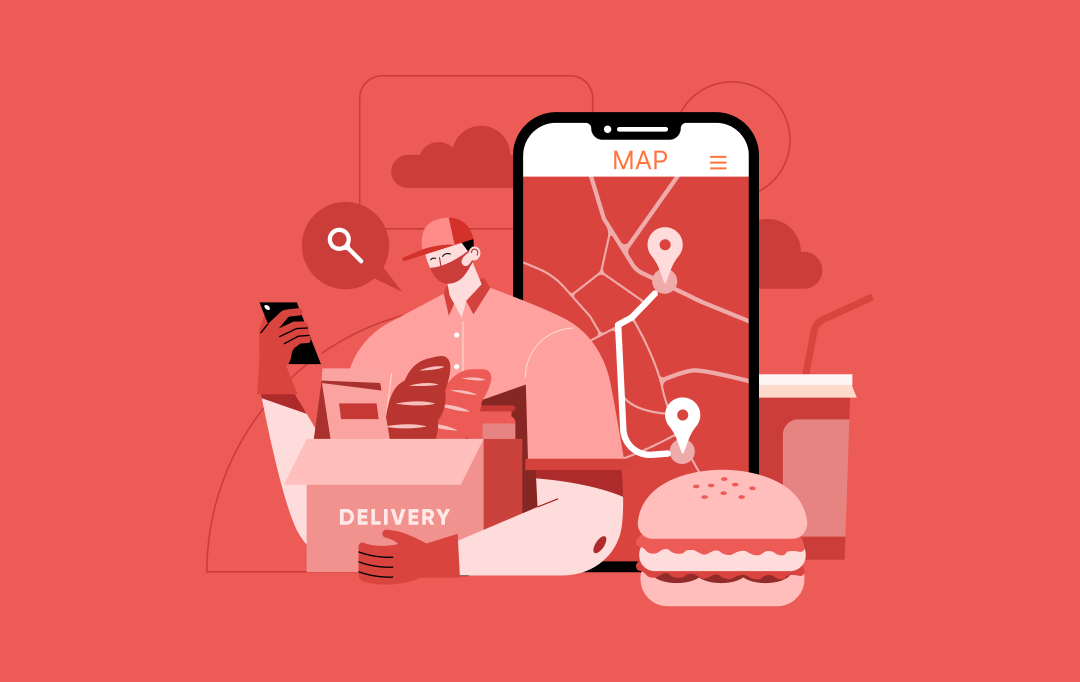
The food delivery and on-demand service industry has entered a new phase of digital transformation. Customers now expect instant ordering, real-time tracking, personalized recommendations, and seamless mobile experiences. For restaurants, cloud kitchens, and food startups, meeting these expectations requires more than just a basic mobile app—it demands intelligent, scalable, and cost-efficient digital solutions.
This is where AI-driven platforms and white-label technologies are reshaping the landscape.
Modern businesses are increasingly investing in AI-powered food delivery ecosystems, customizable mobile applications, and cost-efficient development models to reduce time-to-market and improve ROI. The combination of AI automation and ready-to-deploy frameworks is helping companies scale faster without building everything from scratch.
In this article, we explore how these technologies are enabling growth and efficiency in the food delivery industry.
The Rise of AI-Powered Food Delivery Ecosystems
The traditional food delivery model relied heavily on manual coordination between restaurants, delivery agents, and customers. However, as order volumes increased, inefficiencies such as delayed deliveries, inaccurate order handling, and poor customer experience became more common.
AI has changed this entirely.
Today’s platforms use machine learning and predictive analytics to automate core operations such as order management, route optimization, demand forecasting, and customer personalization.
Businesses investing in AI food delivery app development are able to build intelligent platforms that:
- Automate order processing and assignment
- Predict peak demand hours
- Optimize delivery routes in real time
- Offer personalized food recommendations
- Improve customer retention through behavioral insights
These capabilities are not just operational improvements—they directly impact revenue and customer satisfaction.
Why AI Is Becoming Essential for Food Delivery Growth
AI is no longer a competitive advantage; it is becoming a necessity.
Food businesses operate in a high-pressure environment where speed and accuracy determine success. AI-powered systems help reduce human dependency and bring consistency to operations.
For example, AI-based systems can automatically assign delivery partners based on proximity, traffic conditions, and workload. Similarly, recommendation engines increase order value by suggesting relevant add-ons or popular items.
From a business perspective, this leads to:
- Higher order completion rates
- Reduced operational costs
- Improved delivery accuracy
- Increased average order value (AOV)
As a result, businesses experience stronger margins and better scalability.
White Label Mobile Apps: A Faster Path to Market
While AI enhances intelligence, speed of deployment is equally important for startups and growing businesses. Building a food delivery app from scratch can take months of development, testing, and optimization.
This is where white-label solutions come in.
A white-label model allows businesses to launch fully functional apps with pre-built features that can be customized to match branding and operational needs.
Companies adopting white label mobile app development service benefit from:
- Faster time-to-market
- Lower development costs
- Pre-tested and stable architecture
- Custom branding and UI flexibility
- Built-in scalability features
For many startups, this approach significantly reduces the risk associated with product development while enabling them to focus on marketing and customer acquisition.
Combining AI and White Label Solutions for Maximum Efficiency
The real transformation happens when AI capabilities are integrated into white-label platforms.
Instead of choosing between speed and intelligence, businesses can now leverage both.
AI enhances white-label apps by adding features such as:
- Smart order recommendations
- Predictive delivery timing
- Dynamic pricing models
- Customer segmentation and analytics
- Intelligent push notifications
This hybrid approach allows businesses to launch quickly while still maintaining advanced functionality that improves user experience and operational efficiency.
Understanding Development Costs and ROI Planning
One of the biggest concerns for businesses entering the digital food delivery space is cost planning. App development expenses can vary significantly depending on features, technology stack, and scalability requirements.
To help businesses make informed decisions, tools like an app cost calculator play an important role in estimating development budgets based on feature selection and complexity.
Cost estimation helps businesses:
- Plan budgets more effectively
- Prioritize essential features for MVP development
- Avoid overspending on unnecessary functionalities
- Compare custom vs white-label solutions
- Evaluate expected ROI before investment
This transparency allows decision-makers to align technology investment with business goals.
Operational Efficiency Through Automation
Automation is at the core of modern food delivery systems.
AI-powered platforms reduce manual workload by automating:
- Order allocation
- Driver assignment
- Delivery tracking
- Customer communication
- Performance reporting
This not only improves efficiency but also reduces dependency on large operational teams.
For businesses, this means lower overhead costs and improved scalability without increasing complexity.
Data-Driven Decision Making for Business Growth
One of the most valuable advantages of AI-powered platforms is access to real-time data insights.
Businesses can track:
- Customer ordering patterns
- Peak business hours
- Popular menu items
- Delivery performance metrics
- Retention and churn rates
These insights allow businesses to refine their strategies and optimize operations continuously.
Instead of relying on assumptions, decision-makers can base their actions on real-time data.
Enhancing Customer Experience with Personalization
Customer experience is a major factor in the success of any food delivery platform.
AI enables hyper-personalization by analyzing user behavior and preferences. Based on this, apps can:
- Recommend relevant dishes
- Offer personalized discounts
- Suggest re-order options
- Customize notifications
This improves engagement and increases customer lifetime value.
Scalability for Growing Businesses
As food businesses expand, scalability becomes critical.
White-label platforms combined with AI capabilities allow businesses to:
- Handle increasing order volumes
- Expand to new locations easily
- Add multiple restaurant partners
- Launch multiple brands from a single system
This flexibility ensures long-term sustainability and growth.
The Future of AI in Food Delivery
The industry is moving toward even more advanced technologies such as:
- Voice-based ordering systems
- AI-powered kitchen automation
- Drone and autonomous deliveries
- Predictive meal planning
Businesses that adopt AI early will be better positioned to adapt to these innovations and maintain a competitive edge.
Conclusion
The combination of AI-powered systems and white-label mobile applications is redefining how food delivery businesses operate. From automation and personalization to cost efficiency and scalability, these technologies offer a complete ecosystem for modern digital food businesses.
By investing in AI food delivery app development, leveraging white label mobile app development service, and planning strategically using an app cost calculator, businesses can significantly reduce development risks while maximizing ROI.
In today’s competitive environment, success is no longer about just having a food delivery app—it’s about having an intelligent, scalable, and cost-efficient platform that drives long-term growth.
