

Building a strong vocabulary is one of the most important parts of a child’s language development. Understanding how words relate to each other helps children communicate better and express their thoughts clearly. Synonyms and antonyms play a crucial role in this process by teaching kids how words can have similar or opposite meanings. When children learn these concepts early, they become more confident in reading, writing, and speaking. It also helps them understand language patterns and improves their comprehension skills over time.
What Are Synonyms and Antonyms?
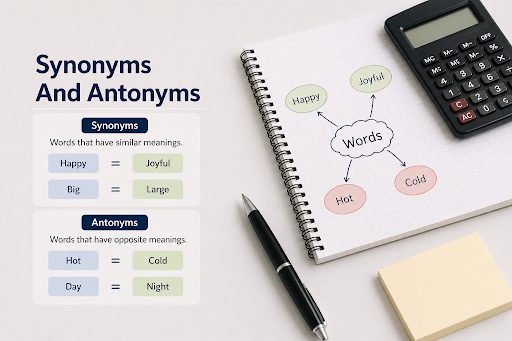
Synonyms and antonyms are basic concepts in English grammar that help kids understand word relationships. Synonyms are words that have the same or nearly the same meaning, while antonyms are words with opposite meanings. For example, words like “happy,” “joyful,” and “cheerful” are synonyms, while “hot” and “cold” are antonyms. Learning these helps children avoid repetition and use more descriptive language. It also enables them to understand contrasts and comparisons in sentences more effectively.
Why Learning Synonyms and Antonyms Is Important
Introducing synonyms and antonyms at an early age helps children expand their vocabulary and improve communication skills. These concepts make reading easier because kids can recognize different words with similar meanings. They also help children express ideas more clearly. Instead of repeating the same words, kids can use alternatives to make their sentences more interesting. Additionally, understanding opposites helps them grasp basic differences and relationships between words. This knowledge supports academic growth and improves both written and spoken language abilities.
Easy Examples for Kids
To help children understand synonyms and antonyms, simple examples can be very effective. Everyday words are the best way to introduce these concepts.
Examples of synonyms:
- Big: Large, huge
- Small: Tiny, little
- Fast: Quick, speedy
Examples of antonyms:
- Happy – Sad
- Day – Night
- Clean – Dirty
Using such familiar examples makes it easier for kids to relate and remember. It also encourages them to use these words in daily conversations.
Fun Ways to Teach Kids
Teaching synonyms and antonyms doesn’t have to be boring. There are many fun and interactive ways to help kids learn these concepts effectively. One simple method is word games. Asking children to think of similar or opposite words during conversations can make learning enjoyable. Another approach is storytelling, where kids replace simple words with better alternatives. Interactive tools like educational games and digital platforms also help reinforce learning. Many apps include quizzes and activities that make vocabulary building engaging and effective. Parents and teachers can also use flashcards, matching games, and quizzes to make the process more exciting and memorable.
Tips for Better Understanding
To master such concepts, children need consistent practice and guidance. One helpful tip is to encourage kids to use new words in sentences. This helps them understand context and usage better. Another effective strategy is reading regularly. Exposure to books introduces children to new vocabulary naturally. They can learn how different words are used in various situations. It is also important to teach kids that not all synonyms are interchangeable. Some words may have similar meanings but are used differently depending on the context. Practicing regularly and applying these words in real-life situations helps children build strong language skills.
Conclusion
Learning vocabulary is an ongoing journey, and understanding word relationships is a key part of it. By practicing similar and opposite words regularly, children can improve their communication and comprehension skills effectively. Using tools like kids’ learning apps can further enhance this experience by combining fun activities with structured learning, helping children build confidence in their language abilities. Interactive methods and consistent exposure make the process easier and more enjoyable.
