

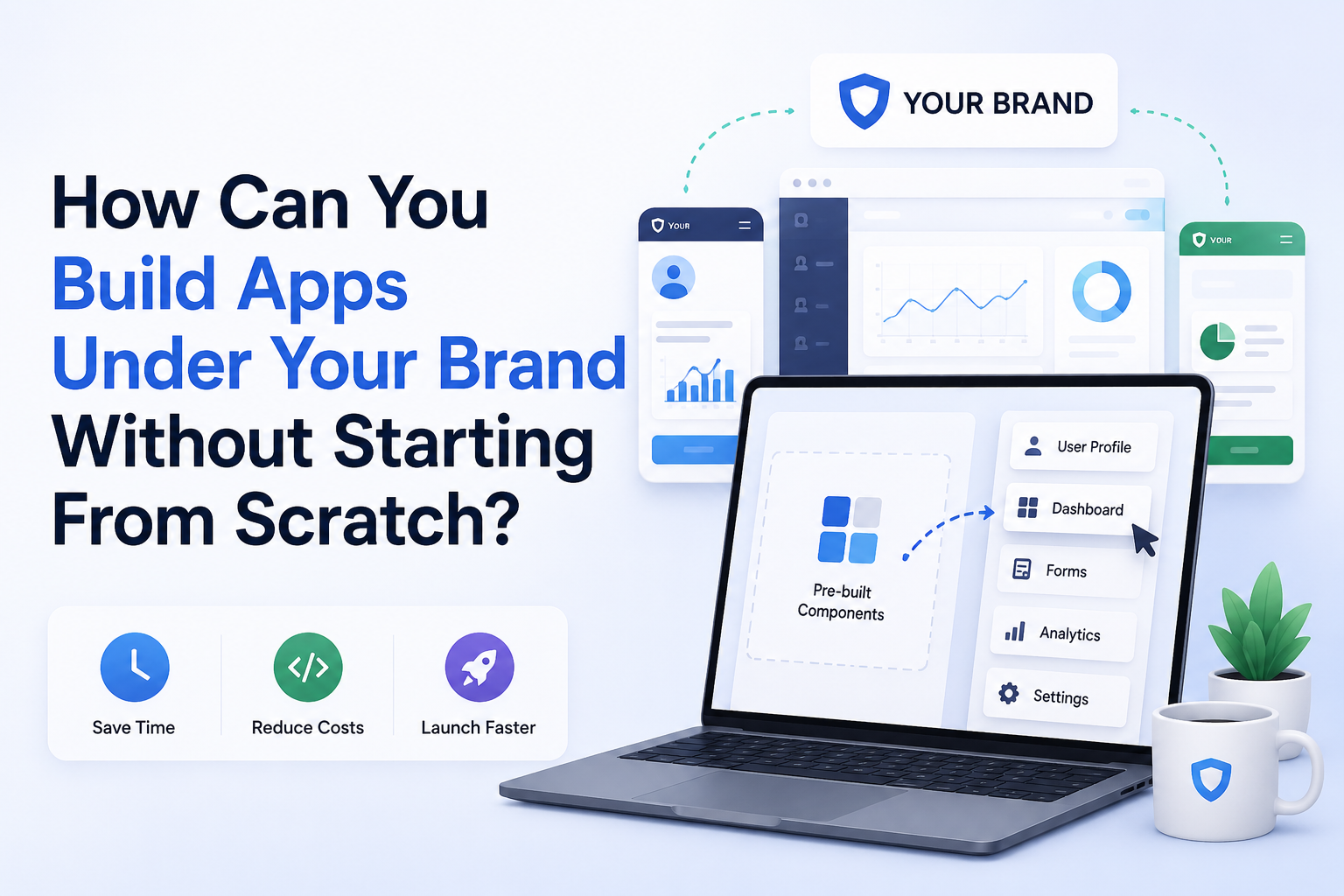
In today’s digital world, businesses must innovate quickly. They need to deliver fast and scale smartly. Mobile apps are now key to digital strategy. They are important not just for startups. Agencies, SaaS providers, and large businesses also rely on professional white label app development to grow their services.
However, building an app from scratch is resource-intensive. It demands time, technical expertise, budget, and ongoing maintenance. How can you create top-notch branded apps without restarting development each time?
The key is to use smarter frameworks, ready-made architectures, and flexible development models. This way, you can launch apps under your own brand without starting from scratch.
Understanding the Modern App Development Challenge
Traditional app development can be inefficient for scaling businesses. First, it often takes too long to build and launch apps. Then, frequent updates can slow down progress. Also, teams may struggle with communication. This can lead to misaligned goals. So, understanding these issues is key before exploring solutions.
Key Challenges:
- High Development Costs: Custom apps need skilled developers. They also must have designers, QA testers, and project managers.
- Long Time-to-Market: Building from scratch can take months, delaying revenue opportunities.
- Maintenance Overhead: Updates, bug fixes, and performance optimization need ongoing investment.
- Scalability Issues: Rebuilding similar apps for different clients leads to duplicated effort.
Agencies and digital service providers meet new challenges with every client. Clients come from various industries.
The Smarter Approach: Building Without Starting from Zero
Modern businesses are moving away from building every app from scratch. They prefer reusable systems and modular frameworks instead, especially when adopting leading white label app development approaches. This approach allows you to:
- Speed up delivery timelines
- Reduce operational costs
- Maintain consistent quality
- Focus on branding and customization
This model lets you build apps that look custom for clients. They run on a robust, pre-built backend.
Key Models That Enable Faster App Delivery
Key models like modular frameworks, templates, and no-code platforms enable faster app delivery by reducing development time, lowering costs, and allowing businesses to launch scalable, branded applications efficiently.
1. Template-Based Development
This means using ready-made UI/UX templates and changing them to fit brand needs.
Benefits:
- Faster design process
- Proven user experience patterns
- Reduced design costs
Limitations:
- Limited flexibility for highly complex apps
- Risk of generic design if not customized properly
2. Modular Architecture
Apps use reusable components or modules. These include login systems, payment gateways, and booking engines.
Advantages:
- Plug-and-play functionality
- Easy upgrades and feature additions
- Consistency across projects
Example Modules:
- User authentication
- Push notifications
- Analytics dashboards
- Payment integrations
3. No-Code and Low-Code Platforms
These platforms let you create applications using visual tools rather than regular coding.
Why Businesses Use Them:
- Minimal technical expertise required
- Rapid prototyping and deployment
- Cost-effective for MVPs
Best Use Cases:
- Small business apps
- Internal tools
- Basic client solutions
4. Pre-Built SaaS App Frameworks
This is one of the most scalable approaches. You take a ready-made software system and tailor it for various clients. You also brand it with your own name.
Core Features:
- Multi-tenant architecture
- Centralized management
- Custom branding capabilities
Ideal For:
- Agencies
- SaaS resellers
- Entrepreneurs looking to scale quickly
Benefits of Building Apps Under Your Own Brand
Using this approach isn’t about being efficient. It’s a smart choice that can greatly enhance your business growth.
1. Faster Time-to-Market
You can launch apps in weeks instead of months, giving you a competitive advantage.
2. Increased Profit Margins
Lower development costs mean higher profitability per project.
3. Scalability
You can serve many clients simultaneously without expanding your development team proportionally.
4. Brand Authority
Delivering apps under your brand strengthens your market positioning and credibility.
5. Recurring Revenue Opportunities
You can offer maintenance, updates, hosting, and feature add-ons as subscription services.
Step-by-Step Process to Get Started
Step 1: Define Your Target Market
Identify the niche you want to serve:
- Real estate
- Healthcare
- E-commerce
- Fitness
- Education
Narrowing your focus helps you tailor app features and marketing to meet your goals.
Step 2: Choose the Right Technology Stack
Depending on your approach, select tools or platforms that align with your goals:
- Cross-platform frameworks
- Backend-as-a-service solutions
- Cloud infrastructure
Step 3: Build or Get a Core Framework
This is your foundation. It should include:
- User management
- Admin dashboard
- Core functionalities relevant to your niche
Step 4: Customize Branding
Ensure every app reflects the client’s identity:
- Logo and color scheme
- Domain or app name
- UI/UX Personalization
Step 5: Test and Optimize
Before deployment:
- Conduct usability testing
- Fix bugs
- Optimize performance
Step 6: Launch and Scale
Once live:
- Gather user feedback
- Roll out updates
- Replicate the model for new clients
Common Mistakes to Avoid
Even with a streamlined approach, there are pitfalls you should be aware of.
1. Over-Customization
Trying to make every app completely unique defeats the purpose of scalability.
2. Ignoring User Experience
A poorly designed app will fail no matter how fast the development process is.
3. Choosing the Wrong Platform
Not all tools are suitable for every business model.
4. Lack of Support Infrastructure
Clients expect ongoing support—plan for it in advance.
Best Practices for Long-Term Success
Focus on Core Features First
Avoid feature overload. Start with the aspects that are most important to users.
Standardize Processes
Create SOPs for development, onboarding, and deployment.
Invest in Automation
Automate repetitive tasks like updates, backups, and monitoring.
Build Strong Client Relationships
Offer continuous value through updates, insights, and support.
Real-World Use Cases
Agencies Expanding Service Offerings
Digital agencies can add app solutions without hiring full development teams.
Entrepreneurs Launching SaaS Products
Quickly test ideas and enter the market with minimal risk.
Businesses Enhancing Customer Engagement
Apps improve communication, retention, and user experience.
Future Trends in App Development
The landscape continues to evolve, making this approach even more relevant.
AI Integration
Apps are becoming smarter with personalized user experiences.
Progressive Web Apps (PWAs)
Combining web and mobile app functionality for a broader reach.
API-First Development
Seamless integration with third-party services.
Cloud-Native Solutions
Improved scalability, security, and performance.
These trends highlight how modern technology AI, cloud computing, APIs, and progressive frameworks—is shaping scalable app ecosystems, enabling faster deployment, seamless integration, and enhanced user experiences across platforms.
Final Thoughts
Creating apps with your brand is now a must. Businesses need this to achieve growth in today’s digital world.
Use pre-built systems, modular designs, and smart development strategies. This way, you can build high-quality apps faster and cut costs. You can also create new revenue streams while keeping control of your brand.
The key is to balance efficiency and customization. This way, each app gives real value to users and stays scalable for your business.
If done right, this approach doesn’t save time; it turns your whole business model into a growth engine.
