

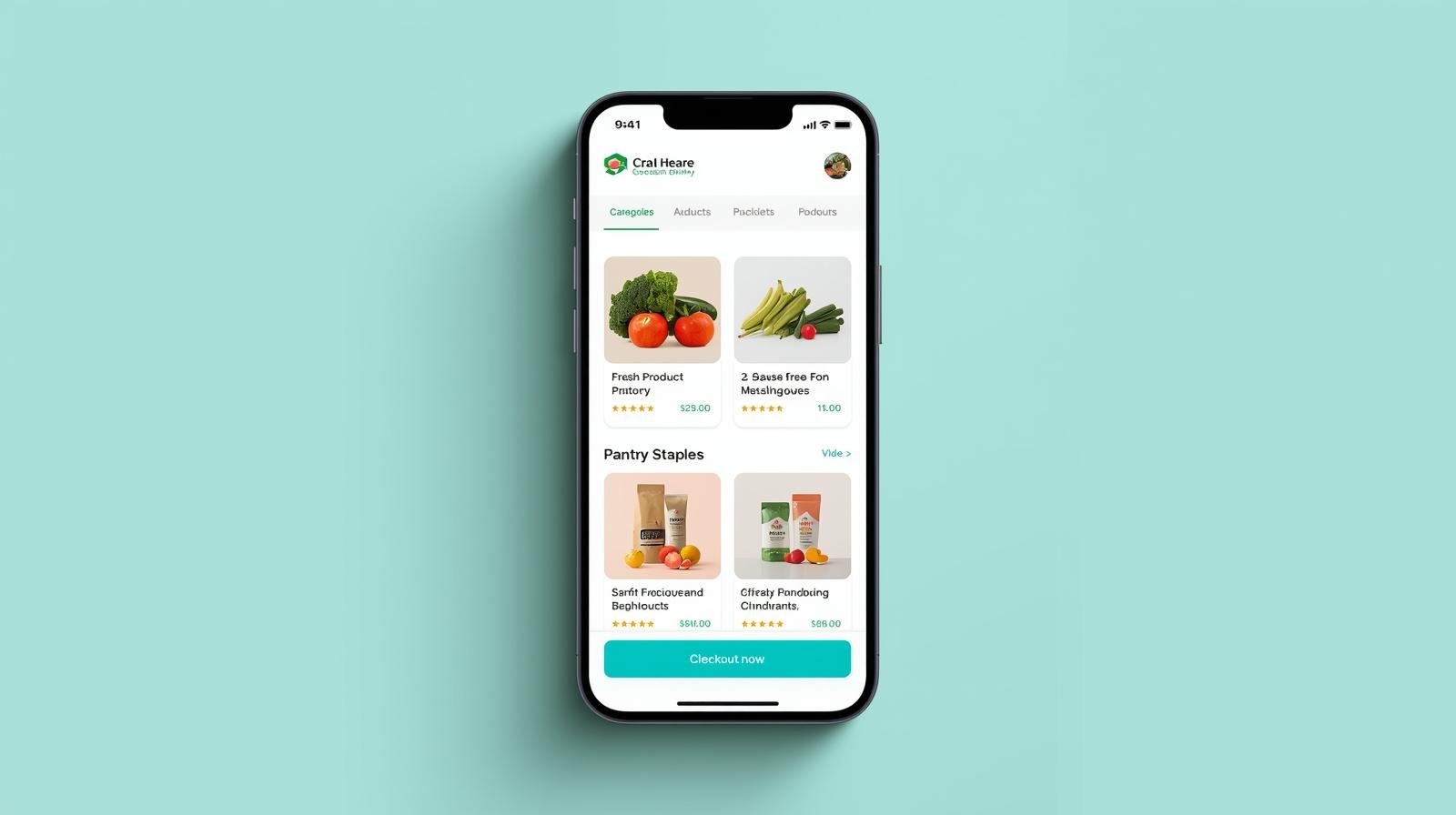
The rapid growth of online grocery shopping has transformed how consumers purchase daily essentials. With increasing demand for convenience, speed, and personalization, businesses are investing heavily in grocery delivery application development to stay competitive. The global grocery delivery market is expanding at a massive pace, driven by changing consumer behavior and technological innovation.
If you’re planning to build or upgrade a grocery app, understanding the latest trends is crucial. Below are the top trends shaping the future of grocery delivery apps.
1. Rise of Quick Commerce (10–30 Minute Delivery)
One of the biggest trends in grocery delivery application development is quick commerce, where customers expect ultra-fast delivery—often within 10 to 30 minutes.
To meet this demand, businesses are adopting:
- Dark stores and micro-warehouses
- Hyperlocal delivery networks
- Real-time route optimization
Speed is now a major competitive advantage. Apps that fail to deliver quickly risk losing users to faster competitors.
2. AI-Powered Personalization
Artificial Intelligence (AI) is revolutionizing grocery apps by making them smarter and more user-centric.
Key AI use cases include:
- Personalized product recommendations
- Predictive shopping lists
- Smart search and voice assistants
- Dynamic pricing strategies
AI helps apps understand user behavior and suggest relevant products, increasing both user satisfaction and order value.
3. Hyperlocal Delivery Model
Hyperlocal delivery continues to dominate grocery delivery application development. This model connects customers with nearby stores for faster and more efficient deliveries.
Benefits include:
- Reduced delivery time
- Lower logistics costs
- Better inventory management
This trend is especially important in urban areas where demand for instant delivery is high.
4. Real-Time Inventory Management
Nothing frustrates users more than ordering an item only to find it out of stock. Modern grocery apps now focus on real-time inventory tracking to solve this issue.
With this feature:
- Users see only available products
- Stock updates happen instantly
- Businesses reduce order cancellations
This improves user experience and builds trust in the platform.
5. Voice Commerce and AI Assistants
Voice-enabled shopping is becoming a key feature in grocery delivery apps. AI assistants allow users to add items to their cart using voice commands or simple text prompts.
For example, AI-powered tools can create shopping lists, suggest items, and even assist with meal planning. This trend enhances convenience and simplifies the shopping process, especially for busy users.
6. Subscription-Based Models
Subscription services are gaining popularity in grocery delivery application development. These models offer benefits like:
- Free or discounted delivery
- Scheduled recurring orders
- Exclusive deals
Subscriptions help businesses build customer loyalty and generate consistent revenue.
7. Multi-Vendor Marketplaces
Modern grocery apps are evolving into multi-vendor platforms, allowing multiple sellers to list products within a single app.
Advantages include:
- Wider product selection
- Increased competition among vendors
- Better pricing for customers
This model is ideal for scaling and expanding into multiple cities.
8. Data-Driven Personalization & Analytics
Data analytics plays a crucial role in improving user engagement and business performance. Grocery apps now use customer data to:
- Offer personalized discounts
- Suggest bundles and combos
- Optimize delivery routes
This data-driven approach significantly improves conversion rates and customer retention.
9. Sustainable and Eco-Friendly Practices
Sustainability is becoming a priority for both consumers and businesses. Grocery apps are integrating eco-friendly features such as:
- Sustainable packaging
- Local sourcing of products
- Carbon footprint tracking
This trend not only helps the environment but also attracts environmentally conscious customers.
10. Scalable Cloud-Based Architecture
As grocery apps expand to multiple cities, scalability becomes essential. Modern grocery delivery application development focuses on:
- Cloud infrastructure
- Multi-location support
- Localization (language & pricing)
This ensures that apps can handle high traffic, large inventories, and growing user bases efficiently.
Conclusion
The future of grocery delivery application development is driven by speed, intelligence, and user convenience. From AI-powered personalization to quick commerce and hyperlocal delivery, these trends are reshaping how grocery apps operate.
Businesses that adopt these innovations can deliver better user experiences, improve operational efficiency, and stay ahead in a highly competitive market. If you’re planning to build a grocery app, aligning with these trends will help you create a scalable and successful platform in the long run.
