

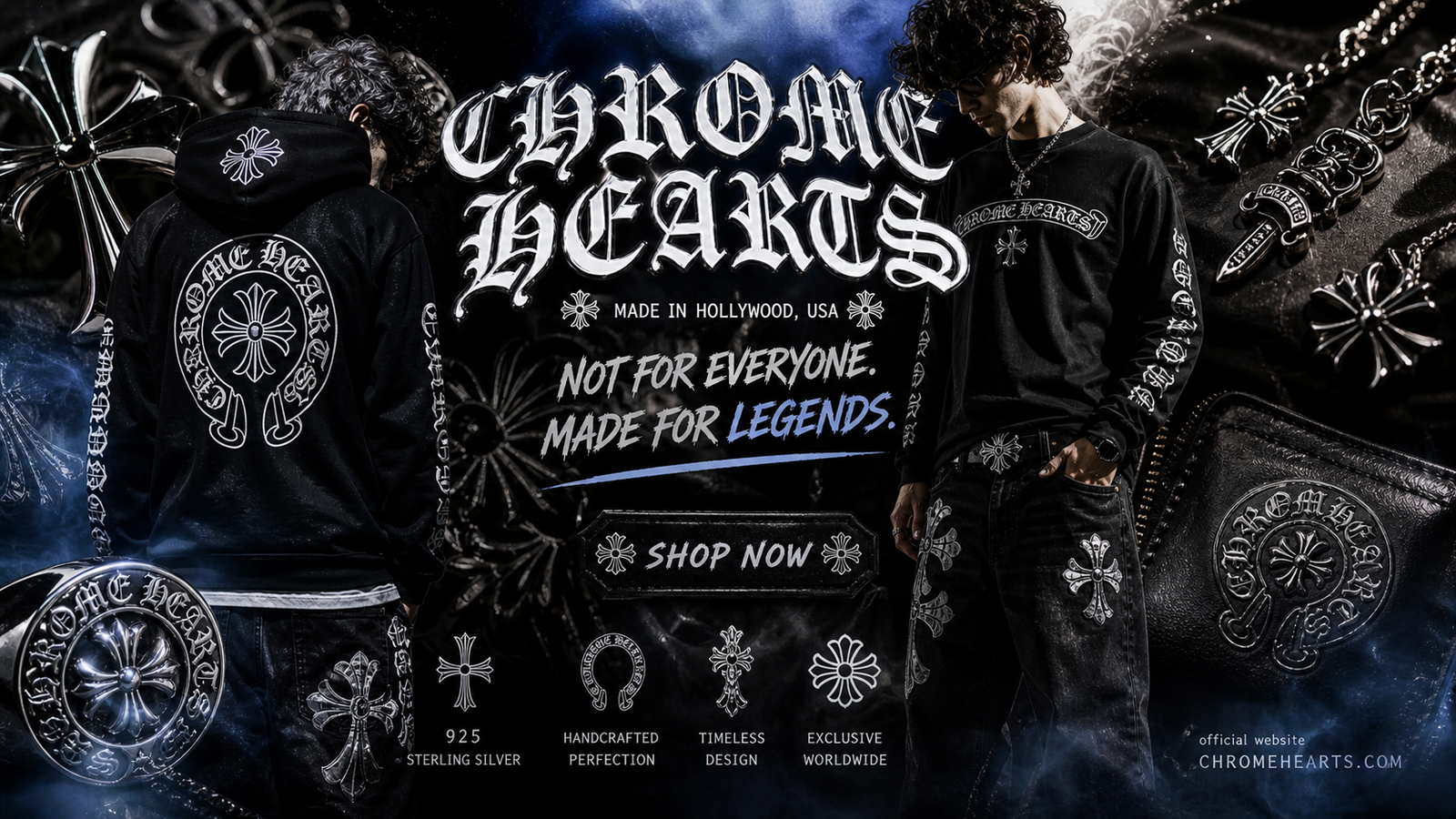
Chrome Hearts was founded in 1988 by Richard Stark in Los Angeles. It started as a small leather goods workshop producing handcrafted riding gear for motorcycle enthusiasts. There was no grand business plan behind it. Richard Stark simply had a deep passion for quality materials and meticulous craftsmanship. As demand grew for the sterling silver hardware on his leather pieces, the brand gradually shifted toward jewelry. Word spread quietly through creative circles. By the early 1990s, Chrome Hearts had become the hidden gem of rock musicians and fashion insiders who valued authenticity over commercial appeal. That honest beginning remains the soul of the brand today.
The Gothic Aesthetic That Defines the Brand
Chrome Hearts speaks a bold and consistent visual language. Cross motifs, fleur-de-lis designs, dagger imagery, and elaborate scrollwork form the foundation of its aesthetic identity. These symbols draw from ecclesiastical metalwork, Victorian mourning jewelry, and medieval heraldic traditions. However, Chrome Hearts never treats these references as mere decoration. Every https://chromhearts.us/ motif carries weight and intention. The gothic vocabulary is executed with such precision and sincerity that it feels contemporary rather than theatrical. Other brands borrow similar symbols and cheapen them through mass production. Chrome Hearts takes the same forms and elevates them through extraordinary craftsmanship. The result is an aesthetic that feels simultaneously rooted in history and entirely original.
Chrome Hearts Jewelry Built Like Heirlooms
The jewelry line is the spiritual heart of Chrome Hearts. Every ring, chain, pendant, and bracelet is produced in 925 sterling silver or solid gold. The weight and finish of each piece communicate quality before any label is read. The Cemetery Ring and Cross Ball Ring have achieved iconic status among collectors worldwide. Chrome Hearts chains are crafted using Byzantine link patterns that demand exceptional technical skill. Pendants range from subtle cross forms to elaborate sculptural designs. The brand also produces leather goods with sterling silver hardware that blurs the line between accessory and jewelry. These are objects meant to be worn for decades and passed down through generations as genuine heirlooms.
Clothing That Merges Streetwear With Luxury Standards
Chrome Hearts clothing occupies a rare position in fashion. The garments are casual in form but luxury in every measurable standard. T-shirts use heavyweight cotton with screen-printed gothic graphics that age beautifully over time. Hoodies and sweatshirts feature dense fleece construction with embroidered cross motifs and leather patch applications. The denim pieces are hand-distressed individually, meaning no two pairs are identical. Sterling silver hardware appears on rivets, buttons, and zipper pulls throughout the clothing line. Leather patch detailing completes each garment. Chrome Hearts clothing costs significantly more than conventional streetwear because it is produced with significantly more care. The brand refuses to separate the concept of comfort from the pursuit of excellence.
Craftsmanship That Cannot Be Replicated at Scale
All Chrome Hearts silver jewelry is manufactured inside the brand’s own Los Angeles facility. This level of in-house production is extraordinarily rare among global luxury brands. Artisans use traditional techniques including lost-wax casting, hand engraving, and hand polishing. These processes cannot be meaningfully accelerated without compromising quality. Chrome Hearts even produces its own silver alloy compounds in-house to control the metal’s hardness, finish, and patina characteristics. Leather is sourced from a small number of trusted tanneries capable of meeting the brand’s strict material standards. Every stitch on leather goods is placed by hand. The result is a product category that no competitor has successfully replicated despite decades of trying.
Boutiques Designed as Cultural Destinations
A Chrome Hearts boutique is a fully realised environment rather than a conventional retail space. Dark woods, aged leathers, and hand-wrought ironwork create atmospheres that mirror the aesthetic of the product line. Display cases are heavy architectural objects. Products are presented with the deliberate spacing of museum artefacts. Lighting is low and contemplative. Staff members are long-term brand devotees with deep knowledge of Chrome Hearts history and production. Relationships between associates and collectors often span many years. Chrome Hearts maintains no meaningful online store. The brand believes the act of acquisition should involve physical presence and genuine ritual. This policy creates inconvenience by design and preserves the brand’s cultural gravity through scarcity of access.
Celebrity Culture and Organic Brand Loyalty
Chrome Hearts has never paid celebrities to wear its pieces. Yet its list of devoted customers spans decades and genres with remarkable breadth. Rock icons from Guns N Roses and Aerosmith were among the earliest celebrity adopters in the 1990s. The brand later found deep resonance in hip-hop culture. Artists including Drake, Travis Scott, and Kanye West became prominent wearers and introduced Chrome Hearts to entirely new global audiences. In the fashion world, figures like Virgil Abloh wore it regularly. K-pop artists have elevated the brand to near-sacred status among younger demographics. This organic accumulation of cultural loyalty across multiple generations is something marketing budgets cannot manufacture. It is earned through the product itself.
Collaborations That Elevated Both Parties
Chrome Hearts approaches collaborations with the same selective discipline it applies to everything else. The brand has collaborated rarely and always on its own terms. The partnership with Off-White produced pieces that merged Chrome Hearts gothic metalwork with Virgil Abloh’s deconstructive design sensibility. The results occupied genuinely new aesthetic territory. The Gareth Pugh collaboration brought Chrome Hearts gothic heritage into dialogue with severe British avant-garde fashion. Both parties emerged from that exchange with their identities enhanced rather than diluted. Chrome Hearts has also ventured into furniture and custom motorcycle components through non-fashion collaborations. These projects reflect Richard Stark’s personal design philosophy rather than any calculated brand extension strategy.
The Resale Market and Investment Value
Chrome Hearts pieces consistently command significant premiums on the secondary market. A ring purchased at retail may resell for several times its original price. Limited collaboration garments frequently achieve extraordinary valuations among collectors. This resale economy exists because production is deliberately kept below demand and the products age exceptionally well. Vintage Chrome Hearts pieces are as desirable as new ones. For serious collectors, Chrome Hearts jewelry functions as a genuine store of value comparable to fine art or investment watches. An entire authentication industry has developed around the brand to verify genuine pieces and expose counterfeits. The characteristics that make Chrome Hearts difficult to fake are the same ones that make it worth owning.
What the Future Holds for Chrome Hearts
Chrome Hearts is positioned exceptionally well within the evolving luxury landscape. Its refusal to scale production aligns naturally with growing consumer interest in sustainability and intentional ownership. Its resistance to e-commerce creates meaningful differentiation as digital fatigue spreads among luxury buyers. The next generation of the Stark family is increasingly involved in the brand’s creative direction, and early indications suggest a commitment to preserving the values that built Chrome Hearts rather than rationalising them for growth. The brand will not launch diffusion lines or sell through marketplaces. It will continue producing extraordinary objects in limited quantities and maintaining retail environments built around culture rather than convenience. Chrome Hearts endures because it was never designed to be anything other than exactly what it is.
