

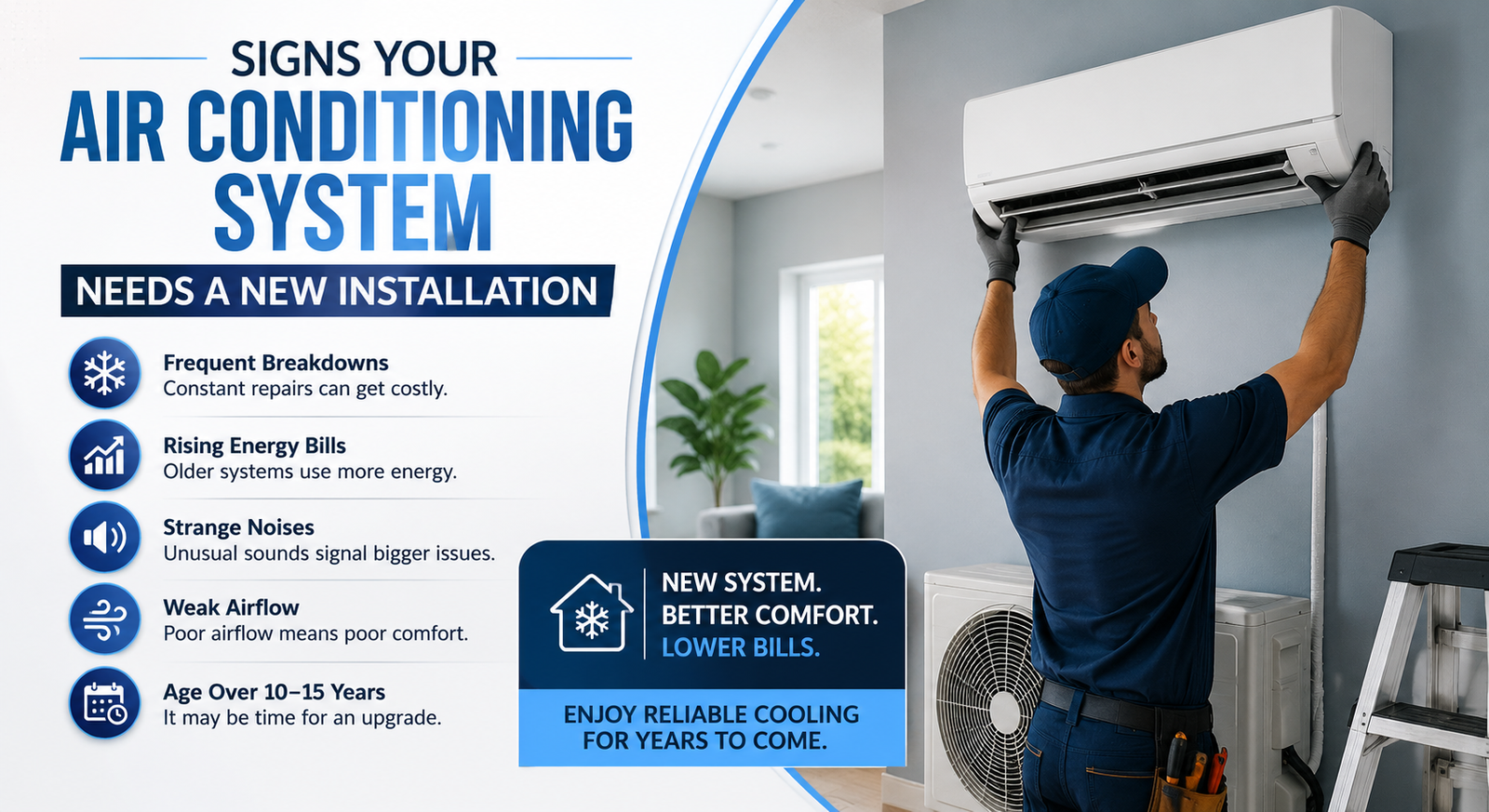
Air conditioning systems play a vital role in maintaining indoor comfort, especially during hot and humid weather. Whether in a home, office, or commercial property, a properly functioning AC system helps regulate temperature, improve air quality, and create a comfortable environment. However, like any mechanical equipment, air conditioners do not last forever. Over time, wear and tear can reduce efficiency and performance, making replacement a smarter option than continuous repairs.
Understanding the signs that indicate your air conditioning system needs a new installation can help you avoid unexpected breakdowns, high energy costs, and discomfort. In this article, we will discuss the major warning signs that suggest it may be time to invest in a new AC system.
NOTE :- Many customers had selected Carrier Split Unit Installation Dubai for advanced cooling performance and long-term reliability. Proper system installation had ensured better airflow, efficient cooling, and reduced operational costs. AL Rayan Services had successfully completed installations with professionalism and customer satisfaction. Get in touch with AL Rayan Services for dependable AC installation services today.
Frequent Breakdowns and Repairs
One of the most obvious signs that your air conditioning system needs replacement is frequent repairs. If your AC unit constantly requires servicing, the repair costs can quickly add up. While occasional maintenance is normal, repeated failures indicate that the system is reaching the end of its lifespan.
Common repair issues may include compressor failures, refrigerant leaks, faulty motors, or electrical problems. When repair expenses become too frequent or costly, replacing the system with a modern unit is often more economical in the long run.
A new installation provides improved reliability and reduces the stress of dealing with repeated malfunctions during peak summer months.
Rising Energy Bills
An inefficient air conditioning system consumes more electricity to maintain the desired temperature. If you notice a sudden increase in your energy bills without a major change in usage habits, your AC system could be losing efficiency.
Older systems often struggle to perform effectively due to worn-out components, outdated technology, or clogged internal parts. As efficiency decreases, the system works harder and longer to cool the space, resulting in higher utility costs.
Modern air conditioning systems are designed with advanced energy-saving technology and higher efficiency ratings. Installing a new AC unit can significantly reduce electricity consumption and lower monthly energy expenses.
Poor Cooling Performance
When your air conditioner no longer cools your space effectively, it may be time for a replacement. Uneven cooling, weak airflow, or rooms remaining warm despite the AC running continuously are common indicators of system failure.
Several factors can contribute to poor cooling performance, including aging compressors, damaged ducts, or refrigerant issues. While some problems can be repaired, persistent cooling inefficiency often signals that the system is no longer capable of meeting your comfort needs.
A new air conditioning installation ensures consistent cooling performance and improved indoor comfort throughout the property.
Strange Noises During Operation
Air conditioners normally produce a low operational sound, but loud or unusual noises should not be ignored. Grinding, banging, rattling, squealing, or buzzing sounds often indicate serious internal issues.
These noises may result from worn-out bearings, loose components, damaged fans, or failing motors. In many cases, older systems develop multiple mechanical problems that become expensive to repair.
If your AC system continues making unusual sounds even after servicing, replacing it with a new installation may be the best solution to prevent sudden breakdowns and maintain a peaceful indoor environment.
Unpleasant Odors from the System
Bad smells coming from your air conditioning system can indicate mold growth, burnt wiring, or accumulated dirt inside the unit. Musty odors are often caused by moisture buildup and bacterial growth within the ducts or evaporator coils.
Burning smells may point to electrical issues that can pose safety risks. While professional cleaning can resolve minor odor problems, persistent unpleasant smells may suggest severe internal damage or contamination.
Installing a new AC system can improve indoor air quality and eliminate recurring odor-related issues.
Weak or Inconsistent Airflow
Weak airflow is another major sign that your air conditioning system may require replacement. If cool air is barely coming through the vents, the system may have failing motors, clogged filters, or ductwork problems.
Inconsistent airflow across different rooms can also reduce comfort levels and strain the system further. Older AC units often struggle to distribute air efficiently due to aging components and reduced operational capacity.
A new installation provides better airflow management, enhanced circulation, and more effective cooling throughout the property.
Excess Humidity Indoors
Air conditioners are designed not only to cool indoor spaces but also to control humidity levels. If your home or office feels excessively humid even when the AC is running, the system may not be functioning properly.
High humidity can lead to discomfort, mold growth, and poor indoor air quality. Aging systems often lose their ability to regulate moisture effectively due to declining performance.
Modern air conditioning units offer advanced humidity control features that improve comfort and create a healthier indoor environment.
AC System Age
The age of your air conditioning system is an important factor when deciding whether to replace it. Most AC systems have an average lifespan of 10 to 15 years, depending on usage and maintenance.
As systems age, efficiency decreases and repair needs increase. Older units also use outdated refrigerants and technology that may no longer meet modern energy standards.
If your air conditioner is more than a decade old and experiencing recurring problems, investing in a new installation can provide better performance, energy efficiency, and long-term savings.
Refrigerant Leaks and Cooling Issues
Refrigerant plays a critical role in the cooling process of an air conditioner. If your system frequently requires refrigerant refilling, it may have leaks that affect overall performance.
Older systems using outdated refrigerants such as R-22 can become expensive to repair because these refrigerants are being phased out in many regions. Continuous refrigerant issues often indicate that replacing the unit is a more practical solution.
New air conditioning systems use environmentally friendly refrigerants and advanced cooling technology for improved efficiency and sustainability.
Smart Technology and Energy Efficiency Upgrades
Modern air conditioning systems come with advanced features that older units lack. Smart thermostats, programmable settings, inverter technology, and energy-efficient designs provide better control and convenience.
If your current system lacks these modern capabilities, upgrading to a new installation can improve comfort and reduce operational costs. Smart AC systems also allow remote control through mobile applications, helping users manage cooling settings more efficiently.
Replacing an outdated unit with a technologically advanced system enhances both comfort and energy savings.
Increased Dust and Poor Indoor Air Quality
An aging air conditioning system may fail to filter dust, allergens, and airborne particles effectively. If you notice excessive dust accumulation, allergy symptoms, or worsening indoor air quality, your AC system could be the cause.
Over time, worn-out filters and dirty internal components reduce the system’s ability to maintain clean airflow. This can negatively impact health and overall comfort.
A new air conditioning installation equipped with modern filtration systems can significantly improve indoor air quality and create a healthier living or working environment.
Conclusion
Recognizing the warning signs of a failing air conditioning system is essential for maintaining comfort, energy efficiency, and indoor air quality. Frequent repairs, rising energy bills, weak airflow, poor cooling performance, strange noises, and excess humidity are all strong indicators that your AC unit may need replacement.
Although repairing an older system may seem like a temporary solution, investing in a new air conditioning installation often provides greater long-term value. Modern systems offer improved efficiency, advanced technology, lower operating costs, and enhanced reliability.
By upgrading to a new AC system at the right time, property owners can enjoy better cooling performance, reduced maintenance expenses, and a more comfortable indoor environment for years to come.
For More Insightful Articles Related To This Topic, Feel Free To Visit: https://gettonews.com/
