

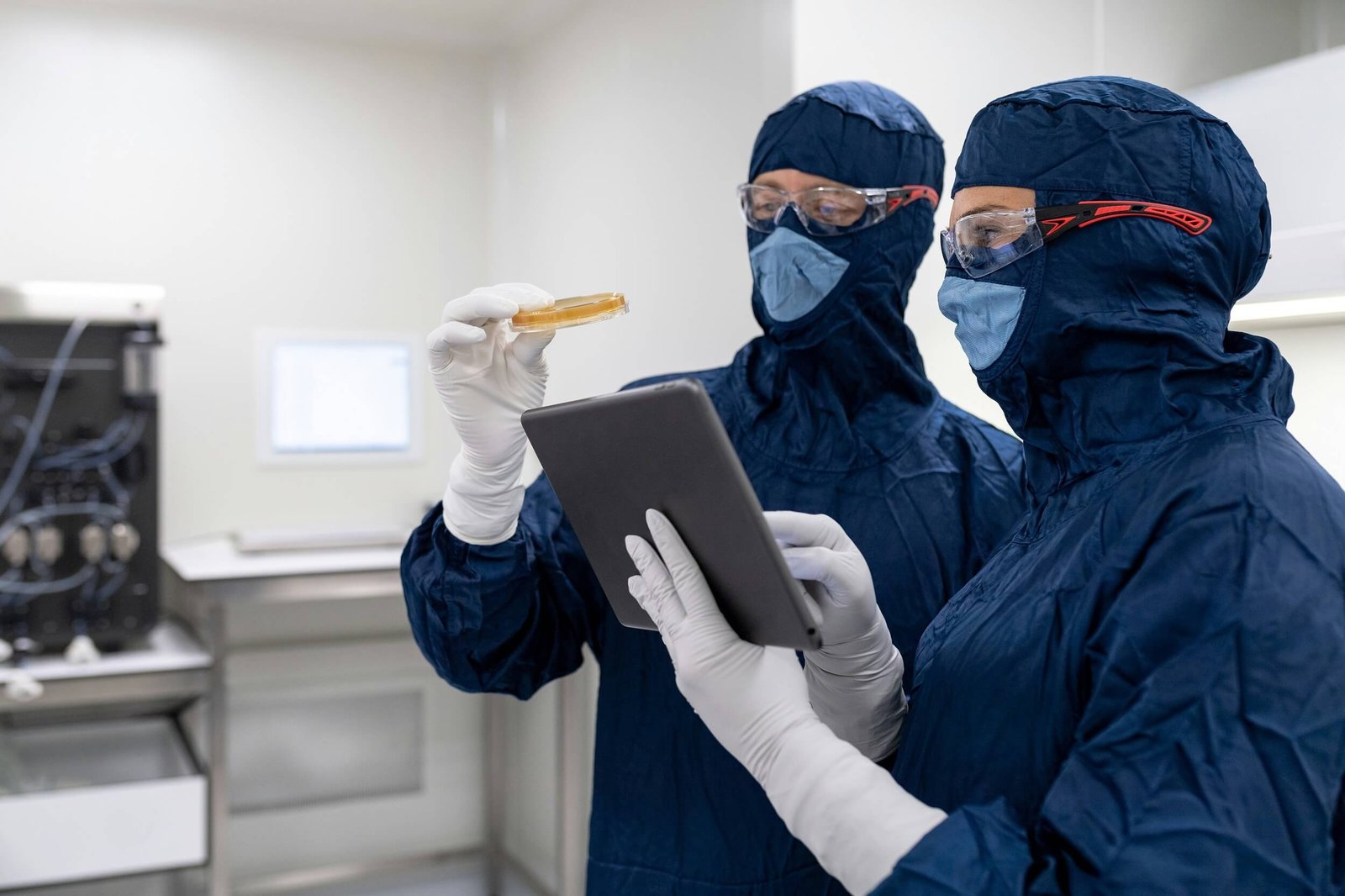
While many discussions in the beauty industry focus on lists of common ingredients like emollients and preservatives, the real breakthrough lies in understanding molecular architecture. A peptide’s sequence, the surface chemistry of a pigment, or the glycosylation of a protein determines whether a formulation has a visible impact or simply sits on the skin.
This principle is well established in therapeutic protein engineering, where antibody glycan remodeling optimizes stability and efficacy. The question for formulators is simple: why should high-performance cosmetics be held to a lower standard?
Why Traditional Lists Fall Short
Most articles categorize cosmetic ingredients based on their roles, such as:
- Humectants (e.g., glycerin, hyaluronic acid) – attract water
- Emollients (e.g., oils, esters) – soften skin
- Surfactants – cleanse or emulsify
- Preservatives – prevent microbial growth
While these classifications are helpful, they lack a deeper understanding of how structure influences function. In the world of biologics, no one assumes that two antibodies with identical sequences work the same way. The structure of their sugar chains (glycans) determines their effectiveness. Unfortunately, cosmetics often overlook these important details, representing both a missed opportunity and a potential risk.
Cosmetic Active Peptides as Biologics-Like Tools
One category where the gap between cosmetics and biologics is most noticeable is in the use of peptides. Among all cosmetic ingredients, peptides like Palmitoyl tripeptide-1 (Pal-GHK) most closely resemble biologic drugs due to their structure and function.
Why It Works
| Feature | Role |
| GHK sequence | Matches a fragment of type I collagen that naturally signals fibroblast repair |
| Palmitic acid tail | Enables skin penetration (a lipidization strategy borrowed from peptide drug design) |
| Receptor binding | Triggers collagen, fibronectin, and hyaluronic acid synthesis |
Comparison with Traditional Anti-Aging Ingredients
| Attribute | Palmitoyl Tripeptide-1 | Retinol |
| Irritation | Very low | High |
| Collagen stimulation | Direct signal | Indirect |
| Stability | High | Low (light/air sensitive) |
The connection to antibody glycan remodeling? In both cases, minor structural changes produce major functional differences. Removing a single fucose from an antibody’s glycan can double its immune activity – just as altering the palmitoyl tail on a peptide abolishes penetration.
Beyond Color: Iron(III) Oxide
At first glance, iron(III) oxide (Fe₂O₃ or FeO₂H) seems simple – just a red-brown pigment for foundations and lipsticks. But complexity hides beneath the surface:
Polymorphism matters: Different crystal phases (α, γ, ε) produce different color tones
Particle size controls appearance: Nano-scale particles are transparent; larger particles provide full coverage
Surface chemistry affects stability: Untreated iron oxides can catalyze free radicals; coated versions are inert
Parallel to Bioconjugation
| Principle | Iron(III) Oxide | Antibody Glycan Remodeling |
| Surface modification | Silica coating improves dispersibility | Glycan addition modulates immune binding |
| Size optimization | Micronization changes color | Glycan chain length alters half-life |
| Analytical verification | Particle size analysis (DLS) | Mass spectrometry (glycan profiling) |
What Is Antibody Glycan Remodeling?
For readers unfamiliar with the term: antibody glycan remodeling refers to a set of enzymatic techniques that modify the sugar chains (glycans) attached to antibodies. This improves therapeutic protein stability, efficacy, and safety. The same enzyme-based remodeling can theoretically be applied to glycoproteins, mucins, or bioengineered peptides used in high-end skincare.
Where Cosmetic Ingredients and Bioconjugation Converge
Three key convergence points:
- Site-specific modification – peptide acylation (palmitoylation) mirrors antibody glycoengineering
- Stability engineering – coated iron oxides and glycan-shielded antibodies both resist aggregation
- Quality control – HPLC and mass spectrometry are standard for both therapeutic peptides and high-performance cosmetic actives
Why Industry Barriers Persist: The Analytical Gap
Despite the scientific rationale, several structural barriers prevent widespread adoption of biologics-level scrutiny in cosmetics.
1. Lack of reference standards for cosmetic glycoproteins
In therapeutic protein development, pharmacopoeias (USP, EP) provide certified reference materials for glycan profiling – e.g., the NIST monoclonal antibody standard (RM 8671). No equivalent exists for glycosylated peptides or plant-derived glycoproteins used in skincare. A formulator cannot easily confirm whether a batch of recombinant human collagen or mushroom-derived glycoprotein carries the claimed glycan structure or is instead a mixture of under-glycosylated variants with reduced activity.
2. Cost of orthogonal analytical methods
Mass spectrometry (MS) and hydrophilic interaction chromatography (HILIC) are routine in biopharma but still considered exotic in cosmetic QC labs. Many suppliers rely on simple SDS-PAGE or total protein assays – insufficient to detect deamidation, aggregation, or glycan heterogeneity.
3. Regulatory ambiguity
Cosmetic ingredients are not subject to the same process validation requirements (ICH Q6B) as biologics. Even if a manufacturer performs glycan analysis, there is no mandated acceptance criteria or stability-indicating method. This creates a “buyer beware” market where claims of “bioengineered peptides” may lack structural proof.
4. Proprietary secrecy vs. transparency
Suppliers often withhold detailed molecular characterization as trade secrets. Yet without glycan profiles or peptide mapping data, the formulator cannot predict batch-to-batch consistency – a direct parallel to why antibody glycan remodeling was standardized in biopharma.
Closing the gap will require industry collaboration: establishing cosmetic glycoprotein reference standards, adopting affordable MS-based methods, and demanding structural certificates of analysis – not just purity.
Key Takeaways for Formulators
- Treat peptides as biologics: sequence, modification, and delivery matter
- Pigments like iron(III) oxide are not inert – surface chemistry affects performance
- Antibody glycan remodeling offers a blueprint for engineering safer, more effective cosmetic ingredients
- Demand structural Certificates of Analysis – not just purity and heavy-metal data
- Push for transparency on glycan profiles, peptide mapping, and batch-to-batch consistency
Conclusion
Understanding cosmetic ingredients at this molecular level is what we do daily – not just for skincare, but for therapeutic antibodies. The barriers of missing reference standards, high analytical costs, regulatory ambiguity, and supplier secrecy are real – but they are not insurmountable.
If you are developing bioactive peptides or need expert support in antibody glycan remodeling, contact our lab to discuss how precision engineering can elevate your project.
