

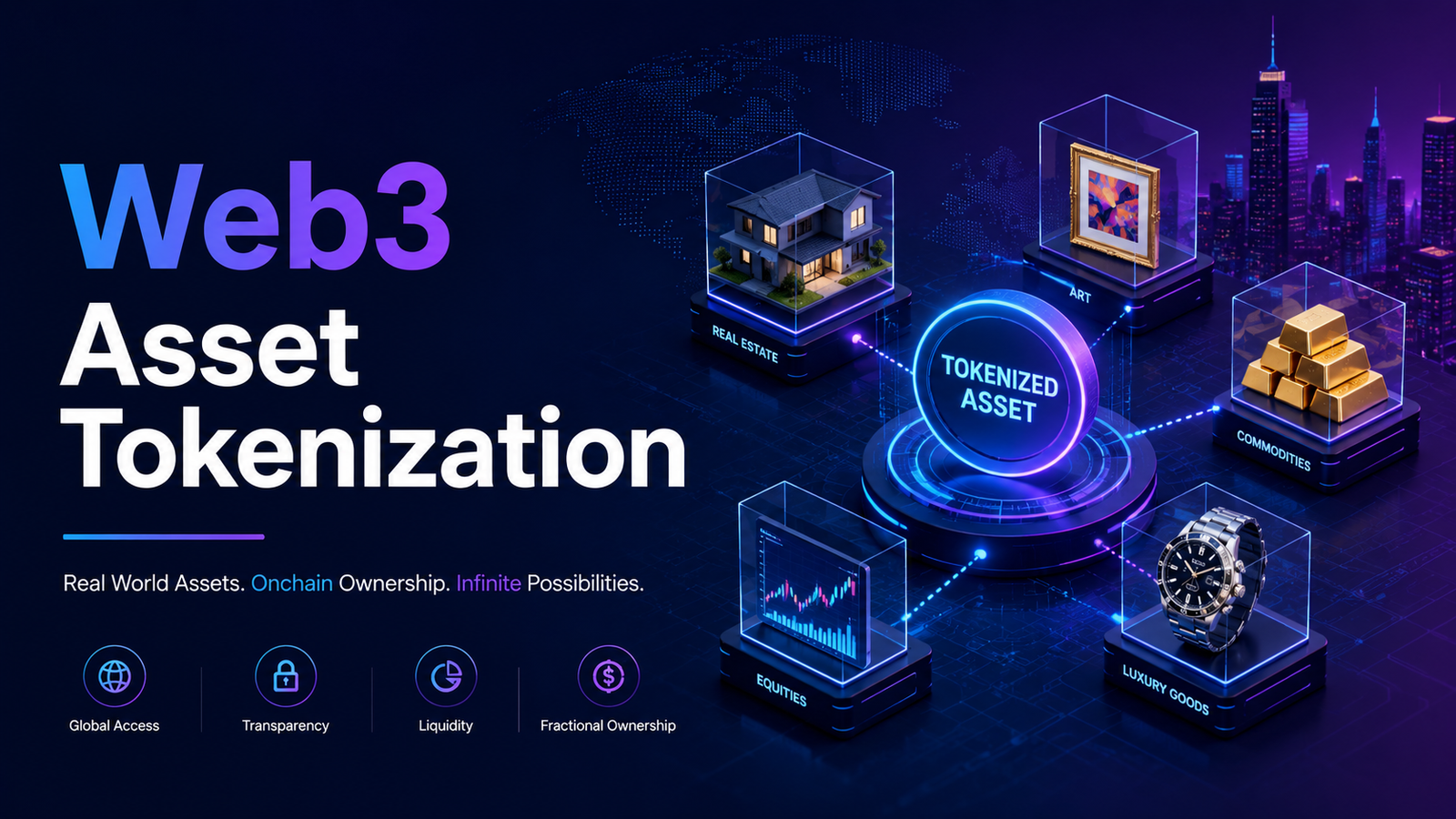
Fundraising has traditionally been one of the most resource-intensive challenges for startups, often requiring lengthy due diligence processes, geographic limitations, and reliance on intermediaries such as venture capital firms, banks, or private equity networks. In recent years, Web3 asset tokenization has emerged as a structural alternative that redefines how early-stage and growth-stage companies raise capital.
Web3 asset tokenization refers to the process of converting ownership rights in real-world or digital assets into blockchain-based tokens. These tokens can represent equity, revenue shares, debt instruments, or access rights, and can be distributed to global investors through decentralized networks. For startups, this approach introduces new pathways for capital formation, improved liquidity, and broader investor participation.
This blog explores how startups can effectively leverage Web3 asset tokenization for fundraising, including its mechanisms, benefits, challenges, and strategic implementation models.
Understanding Web3 Asset Tokenization in the Context of Fundraising
At its core, asset tokenization is the digitization of ownership rights on a blockchain. Instead of issuing traditional shares or relying solely on private investment agreements, startups can issue blockchain tokens that represent a defined stake or economic interest in their business.
These tokens can be structured in multiple ways:
- Equity tokens representing company ownership
- Revenue-share tokens tied to future cash flows
- Debt tokens functioning as blockchain-based bonds
- Utility tokens granting access to a platform or ecosystem services
- Hybrid tokens combining multiple rights
Each token is recorded on a distributed ledger, ensuring transparency, traceability, and programmability through smart contracts. For fundraising, this model allows startups to transform illiquid, traditionally restricted investment instruments into programmable digital assets that can be distributed globally.
Why Traditional Startup Fundraising Faces Limitations
Before understanding the advantages of tokenization, it is important to examine why traditional fundraising models often constrain startup growth. Conventional fundraising typically involves venture capital rounds, angel investments, or institutional funding. While effective in many cases, these methods have several limitations: First, access is restricted. Many early-stage startups struggle to reach qualified investors due to geographic and network barriers.
Second, the process is slow. Due diligence, legal structuring, and negotiations can take months, delaying capital deployment. Third, liquidity is limited. Investors often must wait years for exits through acquisitions or IPOs.
Finally, control is concentrated. Founders may need to surrender significant equity early to secure funding. Web3 asset tokenization addresses many of these constraints by enabling fractional ownership, automated compliance, and secondary market liquidity.
How Web3 Asset Tokenization Transforms Startup Fundraising
Web3 tokenization introduces a structural shift in how capital flows into startups. Instead of centralized fundraising rounds, capital formation becomes continuous, programmable, and globally accessible.
1. Fractional Ownership and Accessibility
Tokenization allows startups to divide ownership into smaller digital units. This enables micro-investments from a wide pool of global investors rather than relying on a small group of large capital providers.
As a result, startups can access:
- Retail investors
- International participants
- Community supporters
- Early adopters of Web3 ecosystems
This democratization of investment significantly broadens the funding base.
2. Smart Contract-Based Fundraising Automation
Smart contracts automate key aspects of fundraising, including token issuance, distribution, vesting schedules, and compliance rules.
For example, a startup can program:
- Locked tokens for founders and early investors
- Gradual release schedules (vesting)
- Automated dividend distribution
- Governance rights allocation
This reduces administrative overhead and minimizes reliance on intermediaries.
3. Enhanced Liquidity Through Secondary Markets
Traditional startup equity is highly illiquid. Tokenization introduces the possibility of secondary trading on regulated or decentralized exchanges. This means investors are not forced to wait for acquisition or IPO events. Instead, they can potentially trade tokens based on market demand and project performance. For startups, this improves attractiveness to investors who value liquidity.
4. Global Capital Pool Access
Web3 tokenization removes geographic barriers in fundraising. Startups are no longer limited to local venture ecosystems.
Through blockchain networks, startups can raise capital from investors across:
- North America
- Europe
- Asia
- Emerging markets
This global accessibility often results in faster capital accumulation and diversified investor bases.
5. Transparency and Investor Trust
Blockchain-based systems record all transactions immutably. Investors can verify token distribution, ownership structure, and fundraising progress in real time. This transparency reduces fraud risk and enhances trust, especially in early-stage ventures where credibility is critical.
Types of Tokenized Fundraising Models for Startups
Startups can adopt multiple tokenization structures depending on their business model, regulatory environment, and investor expectations.
Equity Tokenization
Equity tokenization converts company shares into blockchain tokens. Each token represents partial ownership in the startup. This model aligns closely with traditional equity fundraising but introduces liquidity and automation benefits.
Revenue-Backed Token Models
In this structure, tokens are linked to a percentage of future revenue. Investors receive returns based on the company’s performance rather than fixed equity ownership. This model is particularly useful for startups with predictable revenue streams.
Debt Tokenization
Debt tokens function like blockchain-based bonds. Investors lend capital to startups in exchange for fixed returns over time. Smart contracts manage repayment schedules and interest distribution.
Utility Token-Based Fundraising
Utility tokens provide access to a product or ecosystem rather than financial ownership. Startups in SaaS, gaming, or decentralized applications often use this model. While not directly equity-based, utility tokens can still generate significant early-stage capital.
Hybrid Token Structures
Some startups combine multiple models, such as equity + utility or revenue + governance tokens, to balance investor incentives and regulatory considerations.
Step-by-Step Process of Using Tokenization for Fundraising
Startups typically follow a structured process when implementing Web3 asset tokenization for capital raising.
Step 1: Asset and Business Structuring
The startup defines what is being tokenized equity, revenue, or access rights. Legal structuring is critical at this stage to ensure compliance with jurisdictional regulations.
Step 2: Token Design and Economics
Tokenomics is designed to define:
- Total supply
- Distribution model
- Vesting schedules
- Investor incentives
- Governance structure
A well-designed token economy ensures long-term sustainability.
Step 3: Smart Contract Development
Smart contracts are developed to automate token issuance and management. These contracts encode fundraising rules and investor rights.
Step 4: Platform Deployment
The token is deployed on a blockchain network such as Ethereum, Polygon, or other scalable Layer 2 solutions.
Step 5: Investor Distribution
Tokens are offered through launchpads, private sales, or decentralized fundraising platforms.
Step 6: Secondary Market Enablement
After distribution, tokens may be listed on exchanges or decentralized marketplaces to enable liquidity.
Benefits of Web3 Asset Tokenization for Startups
The adoption of tokenization in fundraising offers several structural advantages.
Faster Capital Formation
Startups can raise funds more quickly due to automated processes and global investor access.
Reduced Dependency on Intermediaries
Traditional gatekeepers such as banks and venture capital firms play a reduced role in tokenized ecosystems.
Increased Investor Engagement
Token holders often participate in governance decisions, creating stronger community alignment.
Improved Liquidity Options
Secondary trading markets provide flexibility for early investors.
Programmable Financial Structures
Smart contracts enable dynamic financial models that adjust automatically based on performance or milestones.
Challenges and Considerations
Despite its advantages, Web3 asset tokenization is not without challenges.
Regulatory Uncertainty
Different jurisdictions treat tokenized assets differently. Compliance with securities laws is often complex and evolving.
Market Volatility
Token prices can be highly volatile, especially in early-stage projects without established valuation models.
Technical Complexity
Developing secure smart contracts requires specialized blockchain expertise.
Investor Education Gap
Many investors are still unfamiliar with tokenized financial instruments, which can slow adoption.
Security Risks
Poorly written smart contracts can be vulnerable to exploits or hacks, making audits essential.
Strategic Best Practices for Startups
To effectively leverage tokenization for fundraising, startups should consider several strategic principles. Strong legal structuring should be prioritized before token issuance to avoid regulatory issues later. Tokenomics should be designed with long-term ecosystem sustainability in mind rather than short-term capital gains.
Security audits of smart contracts are essential before deployment to prevent vulnerabilities. Startups should also focus on building investor trust through transparent communication and on-chain reporting. Finally, liquidity planning is important. Without proper secondary market strategies, tokenized assets may still face trading limitations.
Future Outlook of Tokenized Startup Fundraising
Web3 asset tokenization is gradually reshaping the early-stage financing landscape. As regulatory frameworks mature and institutional participation increases, tokenized fundraising models are expected to become more standardized. In the future, startups may rely on hybrid fundraising systems where traditional venture capital coexists with decentralized token issuance. This could lead to more efficient capital markets, where startups access funding continuously rather than in isolated rounds. Tokenization may also integrate with AI-driven valuation systems, automated compliance protocols, and cross-chain liquidity networks, further enhancing efficiency.
Conclusion
Web3 asset tokenization represents a structural shift in how startups approach fundraising. By converting ownership rights into programmable digital assets, startups can access global capital, improve liquidity, and automate key financial processes.
While challenges such as regulation and technical complexity remain, the long-term potential of tokenized fundraising lies in its ability to democratize investment access and create more efficient capital markets. For startups exploring next-generation fundraising models, asset tokenization offers a framework that aligns capital formation with the principles of transparency, decentralization, and programmability that define Web3.
