

Introduction
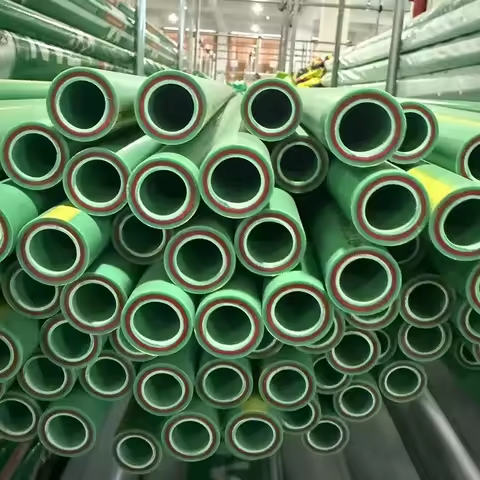
Modern infrastructure projects require piping systems that can withstand demanding environmental conditions while maintaining reliable performance for decades. Across residential developments, commercial buildings, municipal water networks, and industrial facilities, polypropylene random copolymer (PPR) pipes have become one of the most trusted solutions for hot and cold water transportation.
Engineers, contractors, and project developers increasingly prefer ppr pipes Iraq because of their exceptional durability, corrosion resistance, thermal stability, and long operational lifespan. As Iraq continues to expand its urban infrastructure, water distribution networks, and construction sector, the demand for high-quality polypropylene piping solutions continues to grow.
This article explores the advantages, applications, installation benefits, and long-term value of PPR piping systems for modern water infrastructure projects.
Why PPR Pipes Are Essential for Modern Water Networks
Water distribution systems face multiple challenges, including pressure fluctuations, temperature variations, chemical exposure, and environmental stress. Traditional metal pipes often suffer from corrosion, scaling, and reduced efficiency over time.
PPR pipes offer a modern alternative by providing:
- Corrosion-free performance
- Excellent chemical resistance
- Smooth internal surfaces
- Reduced maintenance requirements
- High pressure tolerance
- Superior thermal insulation
- Long service life
These characteristics make PPR systems suitable for both domestic and large-scale infrastructure applications.
Understanding PPR Technology
PPR stands for Polypropylene Random Copolymer, a thermoplastic material specifically engineered for fluid transportation systems.
Unlike conventional piping materials, PPR pipes are joined through heat fusion technology. This process creates a homogeneous connection where the fitting and pipe become a single structure, significantly reducing the risk of leakage.
Key material properties include:
High Temperature Resistance
PPR pipes can safely transport hot water for extended periods without degradation, making them suitable for residential and commercial plumbing systems.
Exceptional Durability
The molecular structure of polypropylene provides outstanding resistance to mechanical stress and environmental wear.
Chemical Stability
PPR materials resist many chemicals commonly found in water treatment and industrial environments.
Hygienic Water Transport
The smooth inner surface helps maintain water quality by minimizing bacterial growth and preventing contamination.
Growing Demand for PPR Pipes Iraq Infrastructure Projects
The construction industry in Iraq is experiencing continuous modernization. New residential communities, healthcare facilities, educational institutions, commercial developments, and industrial projects require dependable water distribution systems.
Industry professionals often select ppr pipes Iraq solutions for large-scale developments because they provide a balance between performance, installation efficiency, and long-term cost savings.
Several factors contribute to their increasing popularity:
- Harsh climate adaptability
- Resistance to water chemistry variations
- Reduced lifecycle costs
- Fast installation procedures
- Minimal maintenance requirements
- Long operational lifespan
These advantages make polypropylene piping systems a preferred choice for both public and private sector projects.
Major Applications of PPR Pipes
Residential Plumbing Systems
Homeowners require reliable water supply systems that remain leak-free for decades. PPR pipes support hot and cold water distribution while maintaining water quality.
Common residential applications include:
- Kitchen water supply
- Bathroom plumbing
- Hot water circulation
- Underground water distribution
- Rooftop tank connections
Commercial Buildings
Hotels, shopping centers, office complexes, and educational institutions rely on efficient plumbing systems to support daily operations.
Benefits include:
- Reduced maintenance costs
- Long-term durability
- Efficient water flow
- Reliable pressure performance
Healthcare Facilities
Hospitals and medical centers require hygienic water transportation systems that meet strict operational standards.
PPR pipes help support:
- Potable water systems
- Sterile water distribution
- Heating systems
- Specialized facility plumbing
Industrial Installations
Manufacturing facilities frequently utilize PPR systems for fluid transportation because of their chemical resistance and durability.
Applications include:
- Process water systems
- Cooling water networks
- Chemical transport systems
- Utility piping
Advantages of PPR Pipes Over Traditional Materials
Corrosion Resistance
Unlike steel or galvanized pipes, PPR does not rust, corrode, or deteriorate due to water exposure.
Lower Installation Costs
Heat fusion welding creates fast and secure connections while reducing labor requirements.
Leak-Free Performance
Fusion joints eliminate many of the weak points associated with threaded or mechanical connections.
Energy Efficiency
The thermal insulation properties of polypropylene help reduce heat loss in hot water systems.
Lightweight Construction
PPR pipes are significantly lighter than metal alternatives, simplifying transportation and installation.
Extended Service Life
Properly installed systems can provide decades of reliable performance under normal operating conditions.
Importance of Quality Standards in PPR Manufacturing
Not all piping systems deliver the same level of performance. High-quality PPR products are manufactured according to internationally recognized standards and undergo extensive testing.
Important evaluation factors include:
- Pressure resistance
- Dimensional accuracy
- Thermal performance
- Material purity
- Fusion compatibility
- Impact resistance
Contractors should always select products from reputable manufacturers that prioritize quality assurance and compliance.
Installation Benefits of PPR Systems
Efficient installation directly impacts project timelines and labor costs.
PPR piping systems offer several installation advantages:
Simple Fusion Welding
Heat fusion technology creates strong, permanent joints without requiring adhesives or complex tools.
Faster Project Completion
Lightweight materials and streamlined installation procedures help reduce construction timelines.
Reduced Maintenance
Properly fused joints minimize future repair requirements and system downtime.
Flexible System Design
A wide range of fittings allows engineers to create customized plumbing layouts for various project requirements.
Sustainability and Environmental Benefits
Sustainability has become an important consideration in modern construction.
PPR pipes contribute to environmentally responsible building practices through:
- Long product lifespan
- Reduced replacement frequency
- Low maintenance requirements
- Recyclable material composition
- Energy-efficient production processes
These characteristics support sustainable infrastructure development and resource conservation.
Factors to Consider When Selecting PPR Pipes
Choosing the right piping solution requires careful evaluation of project requirements.
Important considerations include:
Pipe Diameter
The required flow rate determines the appropriate pipe size.
Pressure Rating
Different systems operate under varying pressure conditions.
Temperature Requirements
Hot water applications may require specific performance specifications.
Application Environment
Indoor, outdoor, residential, commercial, and industrial projects each present unique demands.
Manufacturer Reputation
Working with established suppliers helps ensure product reliability and long-term performance.
Future of PPR Water Infrastructure
As urbanization continues and infrastructure demands increase, modern piping systems must provide greater efficiency, reliability, and sustainability.
PPR technology continues to evolve through:
- Improved manufacturing processes
- Enhanced pressure ratings
- Advanced material formulations
- Increased environmental performance
- Smart infrastructure compatibility
These innovations position polypropylene piping systems as a key component of future water distribution networks.
Conclusion
PPR pipes have transformed modern plumbing and water distribution systems by providing a durable, efficient, and cost-effective alternative to traditional piping materials. Their resistance to corrosion, leak-free fusion joints, thermal stability, and long operational lifespan make them ideal for residential, commercial, industrial, and municipal applications.
As infrastructure development continues across the region, demand for ppr pipes Iraq solutions is expected to remain strong due to their proven reliability and performance. For engineers, contractors, and project owners seeking dependable water network solutions, high-quality PPR piping systems represent a long-term investment in efficiency, durability, and sustainability.
Frequently Asked Questions
What are PPR pipes used for?
PPR pipes are commonly used for hot and cold water distribution, plumbing systems, industrial fluid transportation, and municipal water infrastructure projects.
How long do PPR pipes last?
When properly installed and maintained, high-quality PPR piping systems can provide reliable performance for several decades.
Are PPR pipes resistant to corrosion?
Yes. PPR pipes do not rust or corrode like traditional metal piping systems, making them highly suitable for water transportation.
Can PPR pipes handle hot water?
Yes. PPR pipes are specifically designed to withstand elevated temperatures and are widely used in hot water supply systems.
Why are PPR pipes preferred in modern construction?
They offer leak-free connections, corrosion resistance, low maintenance requirements, lightweight installation, and long-term cost efficiency.
Are PPR pipes environmentally friendly?
Yes. Their long service life, recyclability, and reduced maintenance needs contribute to sustainable construction practices.
