

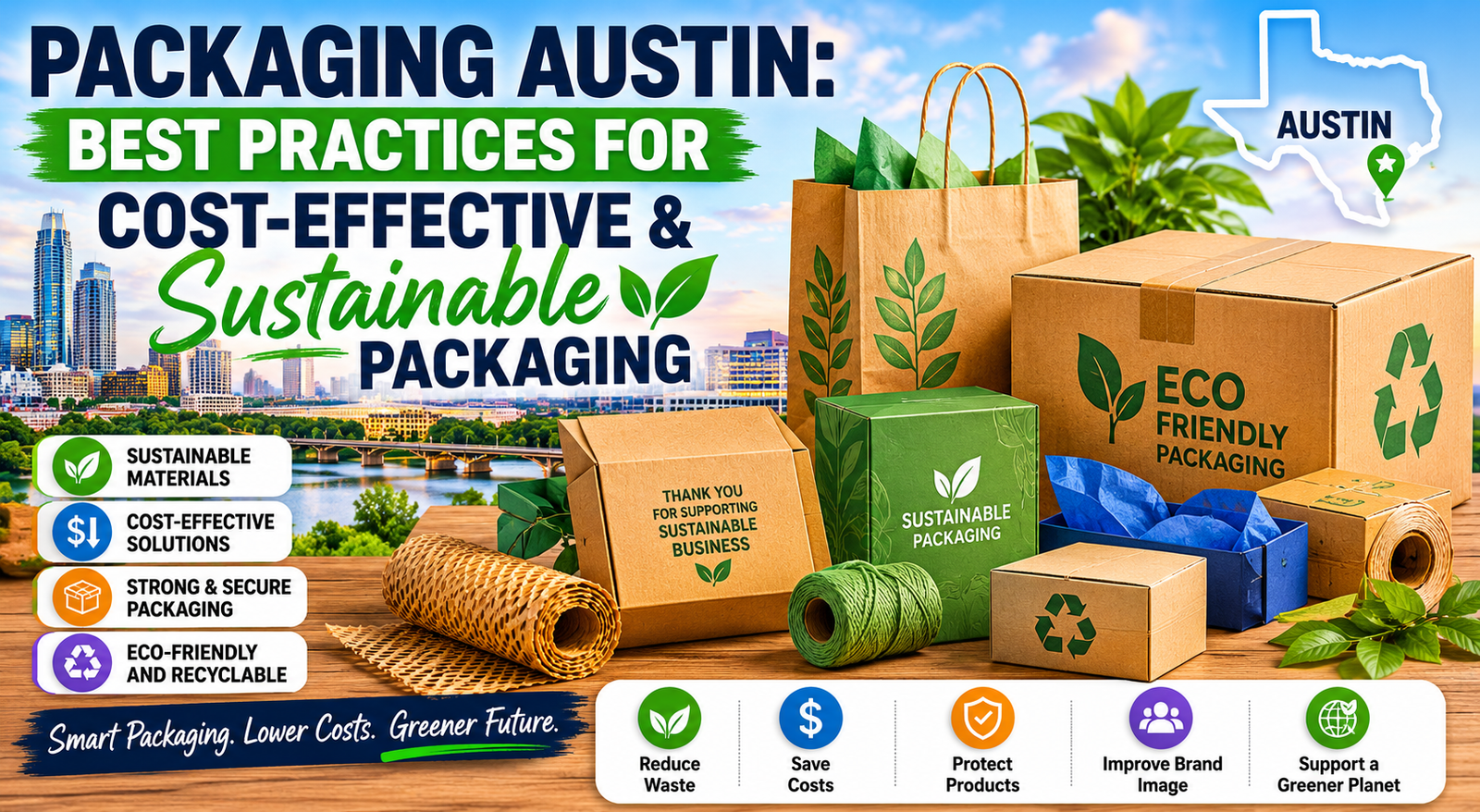
Packaging plays a crucial role in modern business operations. It is far more than a protective layer around a product; it influences customer perception, strengthens brand identity, improves logistics efficiency, and contributes to environmental responsibility. As consumer expectations continue to evolve, businesses are under increasing pressure to adopt packaging solutions that balance functionality, affordability, and sustainability.
In recent years, packaging Austin has become a growing area of interest for businesses seeking innovative and environmentally conscious packaging strategies. Austin’s thriving business environment, strong entrepreneurial culture, and commitment to sustainability have created opportunities for companies to rethink how they package and deliver products. Whether serving retail customers, e-commerce buyers, or industrial clients, businesses are recognizing that smart packaging decisions can significantly impact profitability and brand reputation.
Cost-effective and sustainable packaging is no longer considered an optional enhancement. It has become a strategic business requirement. Companies that successfully optimize packaging can reduce expenses, improve operational efficiency, minimize waste, and appeal to environmentally conscious consumers. Understanding the best practices associated with packaging Austin can help businesses create solutions that support both financial goals and sustainability initiatives.
Understanding the Importance of Packaging Austin
Why Packaging Matters More Than Ever
Packaging serves multiple functions throughout a product’s lifecycle. It protects goods during storage and transportation, communicates important information, supports marketing efforts, and contributes to the overall customer experience.
Today’s consumers pay close attention to packaging quality and environmental impact. A poorly designed package can lead to damaged products, negative reviews, and lost customer trust. On the other hand, thoughtful packaging can enhance perceived value and encourage repeat purchases.
For businesses operating in competitive markets, packaging is often one of the first interactions customers have with a brand. This makes packaging decisions a critical component of long-term business success.
The Growing Demand for Sustainable Solutions
Environmental concerns have changed the way consumers evaluate products and brands. Many customers actively seek businesses that demonstrate a commitment to reducing waste and minimizing environmental impact.
As a result, packaging Austin has increasingly focused on sustainable materials, recyclable designs, and environmentally responsible production practices. Businesses that adopt these approaches can strengthen their brand image while contributing to broader sustainability goals.
Key Elements of Cost-Effective Packaging
Selecting the Right Materials
One of the most important factors in packaging costs is material selection. Businesses often face the challenge of balancing durability, appearance, and affordability.
Choosing materials that provide adequate protection without excessive weight or unnecessary layers can significantly reduce costs. Corrugated cardboard, recycled paper products, biodegradable materials, and lightweight plastics are commonly used because they offer practical performance at reasonable prices.
The key is finding materials that align with product requirements while avoiding unnecessary expenses.
Optimizing Package Dimensions
Oversized packaging can increase shipping costs, material usage, and storage requirements. Efficient package design focuses on creating dimensions that closely match the product being shipped.
Smaller, properly fitted packages reduce void space, minimize filler materials, and improve transportation efficiency. This not only lowers costs but also reduces environmental impact by decreasing resource consumption.
Reducing Packaging Complexity
Complex packaging designs often require additional materials, specialized production processes, and increased labor costs.
Simplifying packaging structures while maintaining functionality can result in substantial savings. Businesses should evaluate every packaging component and determine whether it adds meaningful value to the customer experience.
In many cases, streamlined packaging solutions perform just as effectively while reducing overall expenses.
Sustainable Packaging Practices for Modern Businesses
Prioritizing Recyclable Materials
One of the most effective ways to improve sustainability is by using recyclable packaging materials. Consumers are increasingly familiar with recycling programs and often prefer products packaged in materials that can be easily processed after use.
Paper-based packaging, recyclable plastics, and corrugated cardboard remain popular choices because they support circular economy initiatives and reduce landfill waste.
Incorporating Recycled Content
Using recycled materials in packaging production helps conserve natural resources and reduces energy consumption associated with manufacturing.
Many businesses are now incorporating post-consumer recycled content into boxes, inserts, labels, and protective packaging components. This approach supports sustainability objectives without sacrificing packaging performance.
Minimizing Packaging Waste
Waste reduction should be a central goal of any sustainable packaging strategy. Excessive packaging not only increases material costs but also contributes to environmental challenges.
Businesses can minimize waste by eliminating unnecessary layers, reducing filler materials, and designing packaging that serves multiple purposes. Functional and efficient packaging often delivers better results than overly elaborate solutions.
Designing Packaging for Efficiency and Sustainability
Balancing Protection and Resource Use
Effective packaging must protect products throughout the supply chain. However, excessive protection can increase costs and material consumption.
Successful packaging Austin strategies focus on achieving the right balance between product safety and resource efficiency. Testing packaging performance under real-world conditions helps identify opportunities to reduce materials without compromising protection.
Creating Consumer-Friendly Designs
Packaging should be easy for customers to open, use, store, and dispose of responsibly. Frustrating packaging experiences can negatively affect customer satisfaction, even when the product itself meets expectations.
Consumer-friendly designs improve convenience while supporting sustainability goals through simplified material separation and recycling.
Considering Transportation Efficiency
Transportation contributes significantly to packaging-related environmental impacts. Packaging designs that maximize shipping efficiency can reduce fuel consumption and logistics costs.
Stackable, lightweight, and space-efficient packaging solutions help businesses optimize transportation operations while minimizing their environmental footprint.
The Role of Technology in Packaging Austin
Digital Design and Prototyping
Modern packaging development increasingly relies on digital tools that allow businesses to create and test designs before production begins.
Digital prototyping reduces development costs, shortens project timelines, and minimizes material waste associated with traditional design processes.
Data-Driven Packaging Optimization
Advanced analytics provide valuable insights into packaging performance, shipping costs, product damage rates, and customer preferences.
Businesses can use this information to refine packaging strategies and identify opportunities for continuous improvement.
Automation and Smart Manufacturing
Automation technologies are helping manufacturers produce packaging more efficiently and consistently. Automated production processes often reduce material waste, improve quality control, and lower operational expenses.
As technology continues to evolve, packaging Austin businesses are increasingly adopting automated systems to improve competitiveness and sustainability.
Real-World Applications and Industry Examples
E-Commerce Packaging Strategies
Online retail businesses face unique packaging challenges because products often travel long distances and experience multiple handling points.
Cost-effective e-commerce packaging focuses on durability, lightweight materials, and efficient sizing. Businesses that optimize these factors can reduce shipping costs while improving customer satisfaction.
Retail Product Packaging
Retail packaging must balance protection with visual appeal. Products displayed on store shelves compete for customer attention, making design an important consideration.
Many businesses invest in sustainable retail packaging that enhances brand visibility while supporting environmental objectives.
In the Austin business community, companies frequently work with packaging specialists and suppliers such as Attapack when exploring innovative approaches to packaging efficiency, product protection, and sustainability improvements.
Common Packaging Mistakes to Avoid
Focusing Solely on Initial Costs
Choosing the least expensive packaging option may appear cost-effective initially, but it can create long-term challenges. Poor-quality packaging may lead to damaged products, increased returns, and customer dissatisfaction.
Businesses should evaluate total cost rather than focusing exclusively on material prices.
Ignoring Sustainability Expectations
Consumer expectations regarding sustainability continue to grow. Companies that fail to address environmental concerns may risk damaging their reputation and losing market share.
Integrating sustainability into packaging strategies can strengthen customer relationships and improve brand perception.
Overlooking Supply Chain Impacts
Packaging decisions affect every stage of the supply chain. Businesses should consider storage requirements, transportation efficiency, handling procedures, and disposal methods when developing packaging solutions.
A holistic approach often produces better outcomes than focusing on individual factors in isolation.
Emerging Trends in Packaging Austin
Eco-Friendly Packaging Innovations
New materials and technologies are expanding sustainable packaging possibilities. Compostable materials, plant-based packaging, and reusable solutions continue to gain popularity across various industries.
These innovations help businesses reduce environmental impact while meeting evolving consumer expectations.
Minimalist Packaging Design
Minimalism has become a major trend in packaging design. Simple packaging often requires fewer materials, lowers production costs, and communicates a clean, modern brand image.
This approach aligns well with sustainability goals while appealing to contemporary consumer preferences.
Circular Economy Initiatives
Many organizations are embracing circular economy principles that prioritize reuse, recycling, and resource recovery.
Packaging Austin continues to evolve as businesses explore ways to create closed-loop systems that minimize waste and maximize material value.
Conclusion
Packaging decisions have a significant impact on operational costs, customer satisfaction, environmental performance, and brand reputation. Businesses that adopt cost-effective and sustainable packaging strategies can achieve measurable benefits while positioning themselves for long-term success.
Packaging Austin reflects a growing commitment to innovation, efficiency, and environmental responsibility. By selecting appropriate materials, optimizing package design, reducing waste, leveraging technology, and embracing sustainability best practices, businesses can create packaging solutions that support both financial objectives and environmental goals.
As consumer expectations continue to evolve and sustainability becomes increasingly important, companies that invest in smarter packaging strategies will be better equipped to compete, grow, and build lasting customer relationships.
