

Selecting the right infrastructure for complex artificial intelligence workloads requires careful thought. Many organizations face a hard choice between owning hardware and renting virtual resources. You need to weigh performance against budget. Finding the right enterprise gpu cloud provider can change how your team manages data processing tasks. Making the wrong choice often leads to wasted money or slowed progress on development goals. This comparison helps you decide the best path forward for your operational needs.
Understand Dedicated Infrastructure
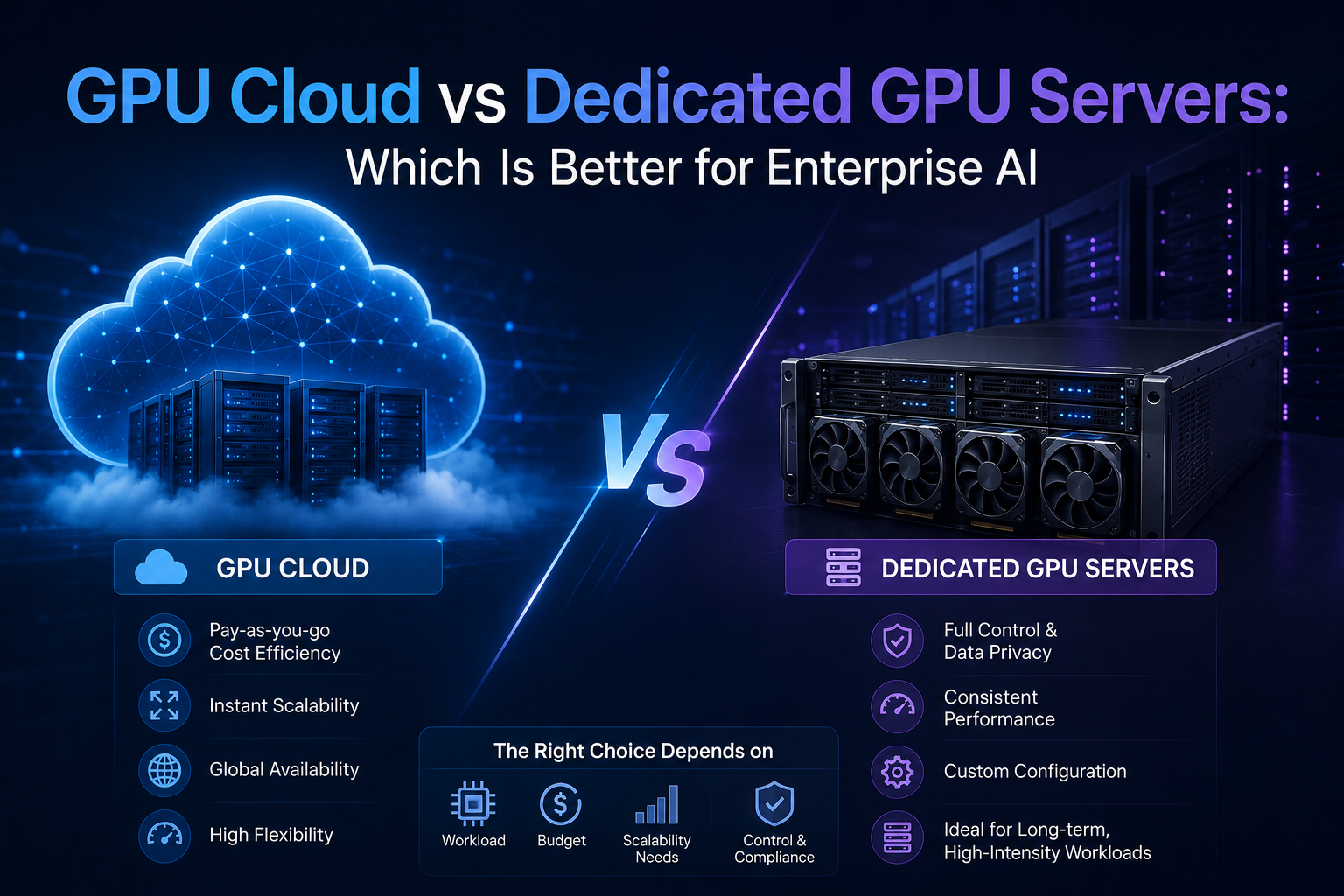
Dedicated hardware offers distinct advantages for teams that need full control over their computing power. You avoid sharing resources with other users. This setup ensures that your specific applications always have access to full hardware capacity. You gain total predictability over your environment. It creates a stable baseline for your most demanding projects. Managing physical hardware requires significant time and internal technical expertise. You bear the responsibility for maintenance and all hardware upgrades yourself.
Dedicated setups shine when you run workloads that require constant high performance. You do not worry about noisy neighbors affecting your latency. This is often the best choice for training massive models around the clock. Your team can tune every part of the server configuration to match your exact software stack. Security is often easier to manage when you physically own the machines. You control the network and the data access policies completely. This avoids the complexities of shared environment security models. Yet this path requires heavy upfront investment. You must purchase the hardware regardless of whether you use it at full capacity every hour.
Benefits of Cloud Based Solutions
Cloud resources bring a level of speed and agility that physical hardware simply cannot match. You start projects in minutes rather than waiting weeks for equipment delivery. This model changes how your engineers think about testing new ideas. You only pay for what you actually use during your experiments. It allows you to scale up or down based on current demand. Many teams find that this approach reduces the barrier to entry for complex AI development. You can spin up resources instantly when a deadline approaches.
Using an enterprise gpu cloud provider lets you avoid the massive capital expense of buying your own machines. You convert fixed costs into variable expenses. This shift allows your finance department to track spending more closely with project usage. Flexibility is the main advantage here. You can swap between different GPU models as newer technology becomes available in the market. You are not stuck with hardware that is aging or becoming obsolete. Companies like Utho cloud provide robust platforms for these specific needs. A good enterprise gpu cloud provider ensures high availability and reliable uptime. You do not have to worry about replacing power supplies or cooling systems. Everything is handled by the service team on your behalf. This allows your developers to focus entirely on writing code. They spend time on model training instead of troubleshooting hardware failures.
Balance Cost Against Performance
Choosing between these two models forces a deep look at your long term financial strategy. You must consider the total cost of ownership rather than just the hourly price. Dedicated servers have a higher starting price but lower costs over many years of continuous use. Cloud services look cheaper early on but might cost more if used constantly. You need to forecast your compute usage before making a final decision. Understanding these financial patterns helps you avoid unexpected bills. Proper budgeting ensures that your infrastructure choices support your overall business growth.
Cloud solutions offer a pay as you go model. This is excellent for sporadic workloads or research projects. If your AI models need training only a few times a month then the cloud is clearly the better winner. You avoid paying for idle time. Dedicated hardware is better for stable and predictable workloads. If you train models every single day then you might find that owning the hardware saves money over time. You must balance these two worlds. An enterprise gpu cloud provider offers burst capacity for those times when your own servers hit a limit.
Conclusion
Making a final decision involves understanding your specific usage patterns and your budget limits. You need to weigh the control of dedicated hardware against the flexibility of the cloud. Both paths have merits depending on your current stage of development. A reliable enterprise gpu cloud provider remains a top choice for teams that value scalability. If you decide that a cloud strategy fits your business requirements, you might consider reaching out to providers like Utho cloud for your specific needs. They offer services that help bridge the gap between high performance and operational simplicity. This step can help your team move forward with confidence and speed.
