

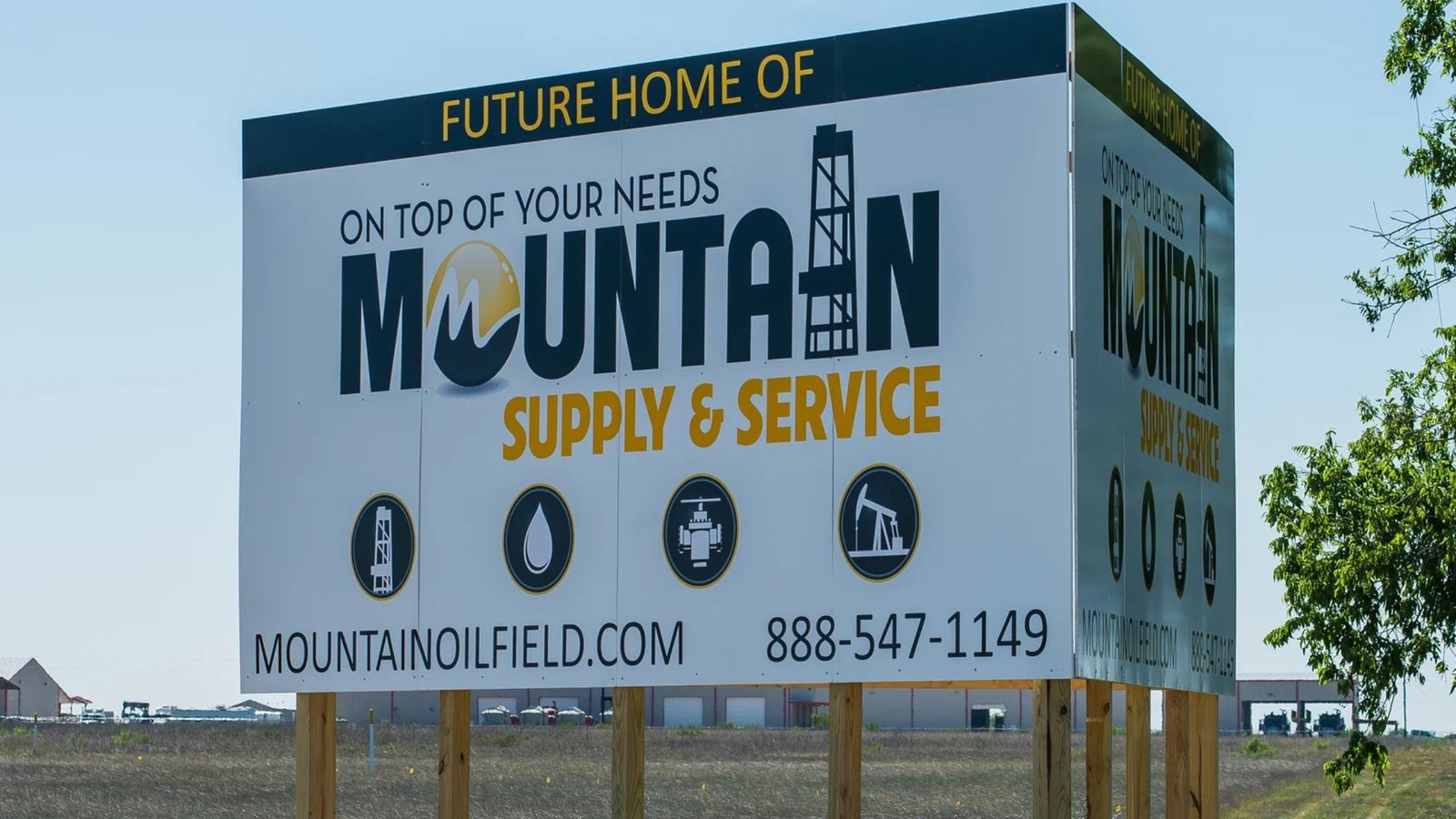
Most business owners never set out to overspend on signage. The problem usually begins with a reasonable assumption: a more permanent material must be the better investment. Yet that logic often falls apart when the information on the sign is expected to change. Leasing availability shifts, construction projects move through phases, tenant directories require updates, and promotional messaging evolves. In these situations, the lifespan of the message becomes just as important as the lifespan of the material itself.
This is where the conversation around an MDO sign board deserves more attention. While most discussions focus on technical specifications, the more useful question is practical: does the material support the way the sign will actually be used? For many businesses, property managers, and developers, MDO continues to provide a compelling answer because it balances durability with flexibility in a way few materials can.
The Costly Habit of Matching Temporary Messages with Permanent Materials
One of the most common mistakes in signage planning occurs long before a sign is installed. Businesses often select materials based on how long they can last rather than how frequently the information may need to change. The result is a mismatch between the communication need and the signage investment.
Consider a retail development marketing available units, a construction project posting project milestones, or a commercial property updating tenant information. In each case, the message is expected to evolve. Yet many organizations invest in signage systems that are expensive to modify once installed. What initially appears to be a durable solution can become an expensive cycle of replacement and reinstallation.
The issue is not poor material selection in absolute terms. The issue is selecting a material that solves a different problem than the one the project actually presents.
Why MDO Continues to Hold Its Place in Modern Signage
The signage industry has no shortage of material options. Aluminum composites, acrylics, PVC panels, and other alternatives each offer distinct advantages. Despite that growing range of choices, MDO remains widely used because it addresses a specific challenge exceptionally well: managing changing information.
An MDO sign board provides a smooth, paintable surface that can be updated without requiring complete structural replacement. That distinction may seem minor when a sign is first installed, but its value becomes increasingly apparent as projects evolve.
For example, a leasing board may require multiple updates over several years. A construction project may move through different stages that require new information. A property undergoing redevelopment may need changing contact details, availability information, or project timelines. In these situations, the ability to repaint and refresh messaging can significantly reduce long-term costs and operational disruption.
The Overlooked Connection Between Signage and Budget Management
Most conversations about signage focus on visibility, branding, or durability. Far fewer discuss budget management, even though signage decisions often have financial consequences that extend well beyond the initial installation.
This is where MDO is frequently misunderstood. Its value is not limited to what it costs on day one. Its value also lies in what it helps businesses avoid spending later.
When a sign is designed with future updates in mind, organizations gain more control over maintenance expenses, replacement cycles, and project timelines. Updates become simpler to plan and easier to execute. Instead of treating every change as a new signage project, businesses can often adapt existing assets to meet new requirements.
Viewed this way, MDO becomes more than a material selection. It becomes part of a broader strategy for managing communication costs over time.
What Property Managers and Developers Often Learn Through Experience
Property managers are among the strongest candidates for MDO, yet many discover its advantages only after experiencing the limitations of less adaptable alternatives.
Commercial properties rarely remain static. Tenants move in and out. Leasing opportunities change. Redevelopment projects progress through multiple stages. Even relatively stable properties periodically require updates to directories, wayfinding systems, or availability information.
When signage was designed with flexibility in mind, these updates are generally manageable. When adaptability was overlooked during the planning stage, even routine changes can trigger unnecessary expense and administrative complexity.
This pattern explains why MDO continues to remain relevant despite advances in other signage materials. It solves a practical operational challenge that many businesses encounter repeatedly.
What a San Antonio Sign Company Should Help Clients Understand
When evaluating Signs of San Antonio, many business owners naturally focus on design quality, installation capabilities, or project timelines. Those factors matter, but they are only part of the decision-making process.
A knowledgeable sign provider should also help clients evaluate how a sign will function over its entire lifecycle. That includes discussing the likelihood of future updates, the expected duration of the message, and the costs associated with potential modifications.
A sign intended for a permanent corporate headquarters serves a different purpose than a leasing board, construction sign, or redevelopment project display. The most effective recommendation is not necessarily the most durable material available. It is the material that aligns most closely with the communication objective.
Businesses benefit when signage decisions are driven by real operational needs rather than assumptions about permanence.
Why Flexibility Is Becoming More Valuable
Commercial environments continue to become more dynamic. Businesses adjust services more frequently, development cycles move faster, and customer information changes more often than it did in previous decades. As a result, organizations are placing greater value on solutions that can adapt without creating unnecessary expense.
This shift is influencing signage decisions across multiple sectors. Increasingly, businesses are asking not only how long a sign will last, but also how effectively it can accommodate change. That question is likely to become even more important as commercial spaces continue to evolve and communication needs become less predictable.
Materials that support adaptability are well positioned to remain relevant because they align with how businesses actually operate.
Evaluate Signage Through the Lens of Change
The conversation around an MDO sign board often begins with material characteristics, but its long-term value is best understood through function. Businesses rarely operate in static environments, and their signage should reflect that reality.
When information is expected to change, flexibility becomes a practical advantage rather than a secondary consideration. Organizations that account for this early often avoid unnecessary replacement costs and gain greater control over how their messaging evolves over time.
For property managers, developers, and businesses navigating changing information, the smartest signage decision is not always the most permanent one. In many cases, it is the one designed to adapt alongside the project itself.
