

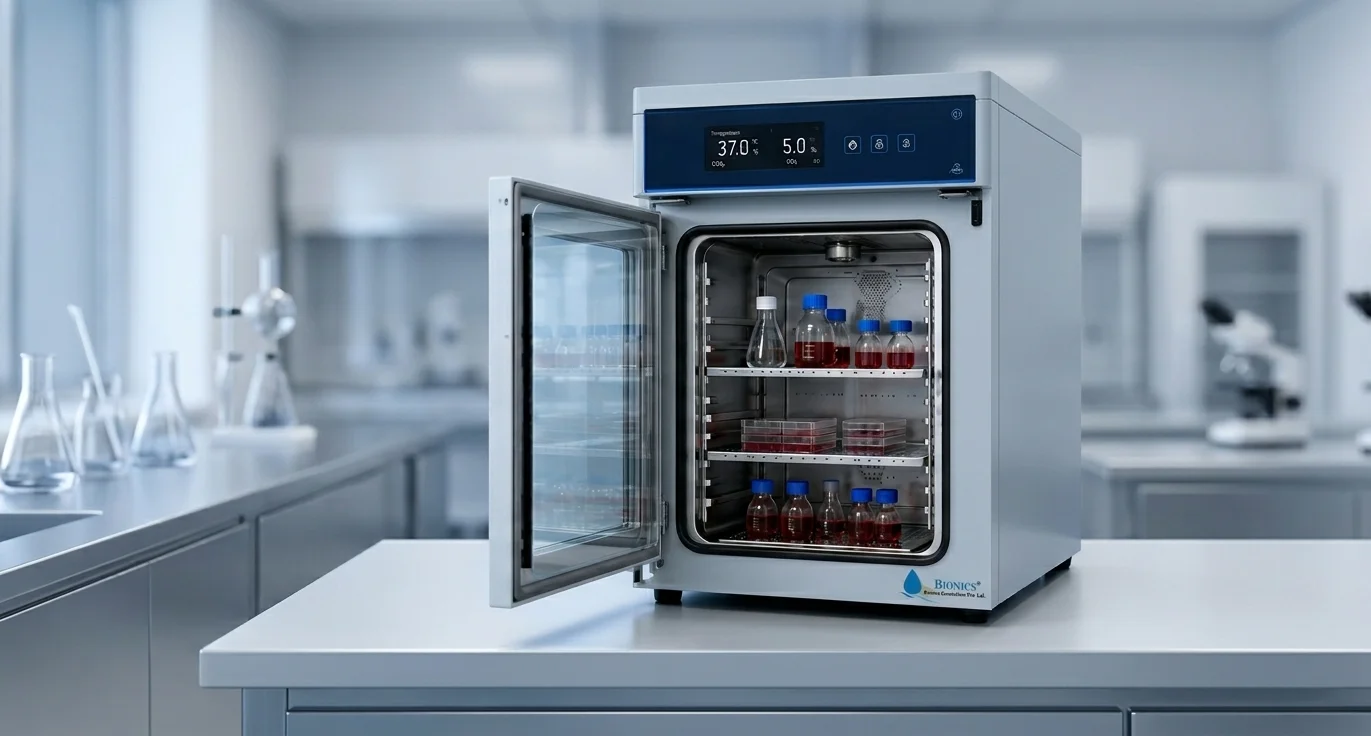
In modern biological research, the maintenance of a controlled environment that allows cell growth, division, and proper functioning is vital. Irrespective of whether biological experiments are carried out for the purpose of pharmaceutical development, biotechnological processes, regenerative medicine, or academic research, the provision of a controlled environment plays a crucial role in obtaining valid results. The key device enabling the achievement of such conditions is called the CO2 Incubator for Cell Culture.
As any experiment performed at a cellular level is quite sensitive to environmental factors, the slightest deviations may influence cell viability. Therefore, researchers worldwide make use of incubators capable of creating an optimal environment.
Knowing about Cell Culture Incubation
Cell culture refers to the growing of cells in artificial surroundings under highly controlled conditions within the lab. Such cells can come from animals, plants, and even human body parts, and they have multiple purposes.
In order to grow and function properly, cells need certain conditions that are typical of a living organism’s environment. They include specific temperature, appropriate humidity, and atmospheric composition. Incubators provide such conditions for cells in cultures.
The absence of a good incubator in the lab might lead to several negative consequences.
Importance of Control Conditions
Cells respond highly to environmental conditions. Any change in environmental conditions affects cellular functions, gene expressions, and metabolism.
A properly designed incubator ensures:
Controlled temperature
Controlled humidity
Correct amount of CO2
Low chance of contamination
Similar growth conditions for all cultures
All these have an important role to play in ensuring successful experimentation.
Characteristics of Current Incubator Technology
In modern-day incubators, new technologies have been integrated to enhance their effectiveness and efficiency.
Temperature Stability
The stability of temperature is key in the viability of cells. Most mammalian cells grow best at temperatures near 37°C.
Current technology involves the use of highly effective sensors to provide an even distribution of heat inside the chamber. This reduces the possibility of variations in temperature which may be detrimental to living samples.
Humidity
High temperatures inside an incubator result in evaporation of moisture from the culture medium. This leads to changes in the concentrations and pH levels in the media.
To avoid such problems, high levels of humidity are maintained in most incubators.
Gas Distribution Technology
Equal gas distribution technology ensures each culture container has the same environmental conditions. The sophisticated gas distribution system helps distribute the gases equally without interfering with cellular activity.
This function becomes very relevant in laboratories where different samples are being worked on at the same time.
User-friendly Monitoring System
The user-friendly digital displays and touch screens enable easy tracking and manipulation of the operation parameters.
Some advanced models come equipped with the following functions:
Environmental condition monitoring systems
Alarming system for parameter variations
Data logging systems
Remote monitoring systems
Password protection mechanisms
Scientific Applications Across Various Disciplines
Controlled incubation systems find applications in many fields of scientific and industrial research.
Pharmaceutical Research
Development of new drugs requires extensive cell culture testing. Scientists use cell cultures for assessment of drug effectiveness, safety and biological responses prior to proceeding to more advanced levels of testing.
Consistent incubation conditions will allow the data collected to reliably reflect cellular processes.
Biotechnology
Firms specializing in biotechnological applications make extensive use of cell cultures for various research projects.
Stable conditions are critical in ensuring consistent performance and productivity of the system used.
Regenerative Medicine
Research in stem cells and tissue engineering demands highly regulated environments for optimal cell growth.
Scientists count on efficient incubators for growing cells that could be applied in treatment processes.
Scientific and Academic Research
Educational institutions and research organizations conduct studies aimed at identifying factors contributing to development of diseases and other medical issues.
Proper incubation equipment will enable researchers to collect accurate and replicable data.
Importance of Avoiding Contamination
Cell cultures can become contaminated easily by bacteria and other forms of organisms within laboratory conditions. This makes contamination among the key threats that laboratories have to guard against.
Some ways in which this is addressed in the latest incubators include:
Use of antimicrobial interiors
Application of HEPA filters
Sterilizing cycles
Seamless chambers
Easy-to-clean components
Considerations Prior to Making the Purchase
There are many aspects that laboratories need to consider in order to identify the best incubator equipment.
Chamber Size
It is important that laboratories choose incubators whose chamber size meets their work capacity and future expansion expectations.
Temperature Control
A consistent temperature across the chamber is necessary for achieving accurate results from experiments.
Laboratories must ensure that the incubator equipment has been validated prior to purchase.
Maintenance
Regular cleaning and maintenance are necessary for ensuring consistent performance from the equipment.
Laboratory equipment with features such as removable shelves and sterilization capability makes maintenance easier.
Energy Consumption
Laboratories must opt for equipment whose design conserves energy for sustainability purposes.
This will also ensure that they incur lower energy bills.
Safety Mechanisms
Incubator equipment must be equipped with an alarm system and protection mechanisms.
This protects against any damages that may result from power outages.
Future Trends in Laboratory Incubation Technology
With changing research requirements, laboratory incubation technology continues to become more advanced.
Some of these innovations include:
Cloud based monitoring systems
Diagnostics by artificial intelligence
Improved contamination detection
Better energy management systems
Greater environmental control accuracy
All of these trends will help increase the efficiency of laboratories without sacrificing experiment integrity.
Conclusion
Conducting cell culture experiments requires the creation of stable environments. Be it drug development, biotechnology, regenerative medicine, or scientific investigation, an effective incubation system is always required.
With its features for regulating temperature, humidity, preventing contamination, and providing monitoring tools, A CO2 Incubator for Cell Culture ensures that research results are both accurate and repeatable. As technology continues to progress, this type of incubation system will undoubtedly continue to be relevant in contemporary biological science research.
FAQs
1. What is the most significant function of an incubator for cell culture?
The most important function of this device is to provide an optimal environment where live cells can grow and develop.
2. Why is the stabilization of temperature essential in cell culture incubators?
This element helps in keeping regular cellular processes and ensuring accuracy of experiments.
3. How do high or low levels of humidity influence cell growth?
Appropriate levels of humidity prevent media evaporation, which maintains proper conditions for cells to develop normally.
4. In what spheres are cell culture incubators used?
These devices are often employed in pharmaceutical and biotechnological companies, healthcare institutions, universities, and regenerative medicine companies.
5. How can laboratories prevent possible contamination of samples?
Regular cleaning, following laboratory rules, sterilization process and using special equipment can greatly diminish risks.
