

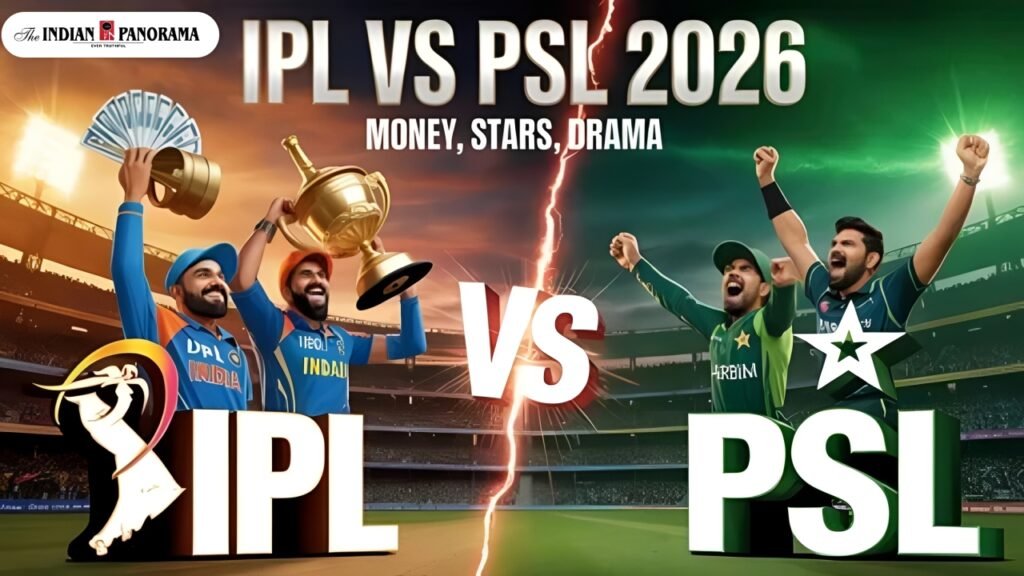
When the IPL vs PSL 2026 viewership numbers began coming in, the gap was not surprising but the scale was instructive. For the second consecutive year, both tournaments ran concurrently: the Pakistan Super League’s 11th edition kicked off on March 26 and the Indian Premier League’s 19th edition began two days later on March 28. The calendar overlap forced a direct comparison that the numbers did not resolve subtly.
The IPL reached over 700 million viewers globally in 2025. The PSL drew approximately 150 million, according to comparative analyses from multiple cricket analytics sources. That 4.7x difference in reach reflects structural disparities that run far deeper than match quality.
| Metric | IPL 2026 | PSL 2026 |
| Teams | 10 | 6 |
| Matches | 84 | 44 |
| Media Rights Value | ~$6.2 billion (2023-2027) | ~$93 million (2026-2029) |
| Total League Valuation | $18.5 billion | $156 million |
| Global Viewership (est.) | 700+ million | ~150 million |
| Highest Player Salary | ~Rs. 27 crore (Rishabh Pant, LSG) | ~PKR 14 crore (~$500K, Steve Smith) |
Why Does Media Rights Valuation Drive Everything?
The sports media rights business is the engine that determines everything downstream: player salaries, franchise valuations, production quality, and international expansion. The IPL’s 2023-2027 deal, split between Star Sports for television and JioCinema for digital, is worth approximately $6.2 to $6.4 billion across five years. That number funds a competitive ecosystem where the two highest-paid IPL players alone, Rishabh Pant and Shreyas Iyer at a combined Rs. 53.75 crore per season, earn more than the cost of purchasing a new PSL franchise. The Sialkot franchise was sold for approximately $6.6 million.
The PSL’s four-year deal with Walee at $93 million is not a failure on its own terms; for a league launched in 2016 that played its first years in the UAE due to security concerns, it represents genuine commercial progress. But it cannot bridge the structural gap within any realistic time horizon. The Indian Panorama’s sports section has covered how this gap shapes player movement between the two leagues.
What Does the South Asian Diaspora in North America Actually Watch?
For the T20 cricket diaspora audience in North America, the 2026 overlap created a split-screen viewing dynamic that had not been studied before at this scale. Indian-American households with JioCinema access largely followed IPL in real time, benefiting from familiarity with franchises, players, and Hindi commentary. Pakistani-American households gravitated toward PSL coverage on Tapmad and Daraz. The two communities, concentrated in overlapping suburban corridors in New Jersey, Chicago, Houston, and the Bay Area, consumed these tournaments in parallel rather than in competition.
The viewership disparity between the leagues in North America mirrors the broader market structure. India has roughly 1.4 billion people and a diaspora of approximately 30 million globally. Pakistan’s diaspora in the US is estimated at around 660,000 by Pew Research. The addressable audience for IPL among Indian-Americans alone is structurally larger.
Can PSL Close the Gap?
The honest answer is: not soon. The PSL moved to an auction model and raised its salary cap ahead of 2026, which produced a more competitive player market. The league has earned genuine praise for producing fast bowling talent and for high-pressure knockout formats. But closing a $6 billion media rights gap requires either a fundamental revaluation of Pakistani cricket’s commercial rights, which depends heavily on stadium infrastructure, safety guarantees, and broadcaster competition, or a dramatic realignment of global streaming economics. Neither is imminent.
What makes this dynamic worth watching for the diaspora readership of The Indian Panorama is not the competition between leagues but what both together represent: a South Asian cricket economy that is becoming one of the most commercially significant sports markets in the world.
