

Introduction
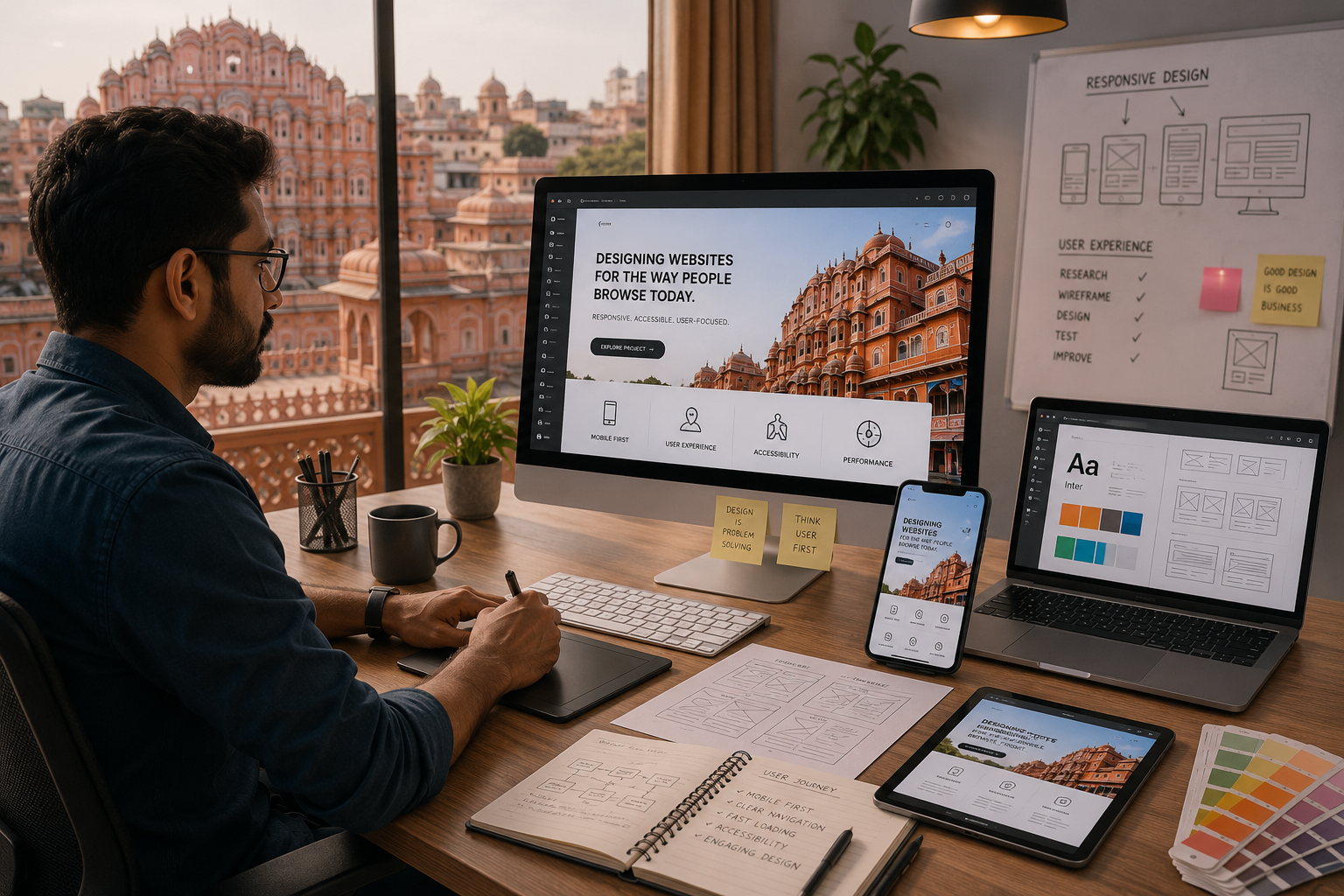
The role of a web designer in Jaipur has evolved significantly as websites have become a central part of everyday life. Whether people are reading articles, shopping online, researching businesses, or accessing services, their experience often depends on how a website is designed.
Good web design is not simply about making a website attractive. It is about creating an environment where visitors can find information easily, navigate comfortably, and interact without frustration. As digital experiences continue to shape how people consume information, web designers have become key contributors to the usability and effectiveness of modern websites.
What Does a Web Designer Actually Do?
Many people assume that web designers focus only on colors, images, and layouts.
While visual design is important, the role extends much further.
A web designer typically considers:
- User behavior
- Website structure
- Navigation flow
- Visual hierarchy
- Accessibility
- Mobile responsiveness
The objective is to create websites that are both visually appealing and easy to use.
Successful design often happens when users achieve their goals without having to think about the interface itself.
Why First Impressions Matter Online
Unlike physical interactions, websites often have only a few seconds to capture attention.
Visitors quickly evaluate whether a website appears trustworthy, useful, and professional.
Several design elements influence these first impressions:
Layout Structure
A clean and organized layout helps users understand information quickly.
Visual Hierarchy
Important information should naturally stand out.
Typography
Readable fonts improve content consumption.
Consistency
Consistent design patterns create familiarity and confidence.
When these elements work together effectively, visitors are more likely to remain engaged.
The Shift Toward User-Centered Design
Modern web design is increasingly focused on the needs of users rather than visual trends.
User-centered design asks a simple question:
How can the website help visitors accomplish their goals more easily?
This approach often emphasizes:
- Clear navigation
- Intuitive interfaces
- Logical content organization
- Faster access to information
- Reduced friction
As user expectations continue evolving, websites that prioritize usability often provide stronger overall experiences.
Mobile Devices Have Changed Design Expectations
The rise of smartphones has transformed the way people browse the internet.
Users now access websites from a wide variety of devices throughout the day.
This shift has made responsive design essential.
Modern websites must adapt to:
Different Screen Sizes
Content should remain accessible on all devices.
Touch-Based Navigation
Interfaces should work comfortably without a mouse.
Variable Internet Speeds
Websites should load efficiently under different conditions.
Mobile Reading Habits
Information should be easy to scan and consume.
Mobile-first thinking has become a standard part of contemporary web design.
Why Simplicity Often Creates Better Experiences
There is a common misconception that more design elements automatically create a better website.
In reality, simplicity often improves usability.
Simple websites typically offer:
- Better readability
- Faster performance
- Easier navigation
- Improved accessibility
- Reduced cognitive overload
The most effective designs often remove unnecessary distractions and allow users to focus on what matters.
Accessibility Is Becoming a Design Priority
Accessibility ensures that websites can be used by people with different abilities and technologies.
Designing for accessibility includes considerations such as:
Readable Content
Clear typography and spacing improve comprehension.
Color Contrast
Text and interface elements remain visible across various viewing conditions.
Keyboard Accessibility
Users can navigate websites without relying exclusively on a mouse.
Alternative Text
Images can be understood through assistive technologies.
Accessible design benefits a wider audience and often improves overall usability.
The Relationship Between Design and Content
Even exceptional design cannot compensate for poor content.
Likewise, valuable content can become difficult to consume if design is ineffective.
Successful websites balance both elements.
Design helps users discover and understand information, while content provides the value visitors seek.
When content and design work together, websites become more informative, engaging, and useful.
Emerging Trends in Web Design
Technology continues influencing how websites are created and experienced.
Several trends are shaping the future of design.
Personalized Experiences
Interfaces increasingly adapt to user preferences.
Minimalist Layouts
Clean designs remain popular because they improve usability.
AI-Assisted Experiences
Artificial intelligence is helping websites become more responsive and relevant.
Interactive Elements
Subtle animations and interactions improve engagement without creating distractions.
These developments reflect a growing emphasis on user experience rather than visual complexity.
The Future of Web Design
The future of web design will likely focus on creating experiences that feel natural, accessible, and effortless.
Websites will continue prioritizing:
- User experience (UX)
- Accessibility
- Mobile optimization
- Performance
- Personalization
As digital interactions become increasingly important, thoughtful design will remain essential for helping users navigate information effectively.
Conclusion
The role of a web designer in Jaipur represents more than the creation of attractive websites. Modern web design is about understanding people, simplifying interactions, and creating experiences that support users throughout their digital journeys.
As technology evolves and expectations continue to rise, successful websites will be those that combine aesthetics with functionality, ensuring that visitors can access information easily, efficiently, and comfortably.
