

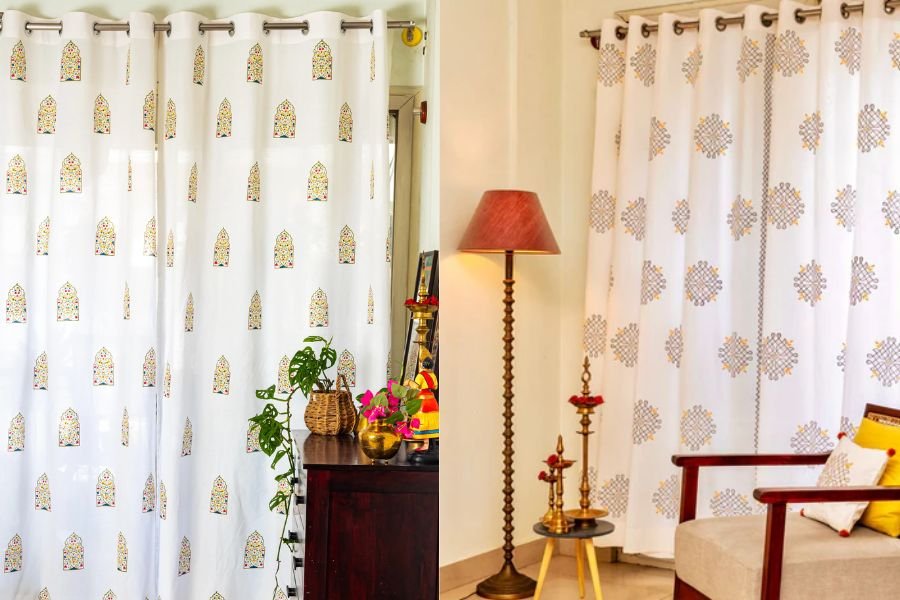
MnR Decor breaks down the block print curtain question that confuses most buyers, explaining which patterns genuinely translate across different rooms, light conditions, and interior styles
The curtain conversation almost always starts the same way.
Someone falls for a pattern online. Orders it. Hangs it. Steps back. And something feels slightly off — not broken, not obviously wrong, just not the way it looked on the screen in a lifestyle photo with perfect lighting and a meticulously arranged room behind it.
The pattern wasn’t necessarily the problem. The match between that pattern and that specific room was.
That disconnect drives more curtain returns, more replacement purchases, and more frustrated home decorators than almost any other furnishing decision, which is exactly why understanding which curtains block print patterns actually translate across different rooms matters considerably more than most buyers appreciate before their first misstep.
The Patterns That Consistently Translate Across Multiple Rooms
Geometric block prints sit at the top of this list and have a reason that’s genuinely practical rather than just trendy.
They read as a pattern at close range and as texture from further away. That dual quality means they don’t fight with upholstery, rugs, or wall art the way figurative prints sometimes do when a room already has multiple decorative elements competing for attention. Contemporary block prints, such as maple leaves, monstera, and contemporary floral patterns, offer a stylish contemporary look that bridges traditional craft and modern interiors without committing too aggressively to either direction.
Nature-inspired curtains block print motifs — botanical, bird, leaf, and floral patterns — follow similar logic when scale gets chosen correctly relative to the actual window size. Paisley patterns on bed linen, little yellow birds on curtains, and patterned frills on cushions show how MnR Decor experiments with techniques and prints across every collection, creating a design vocabulary that connects different rooms in a home through shared motifs rather than identical repetition.
A large open floral with visible ground fabric between motifs suits living rooms and dining spaces — the openness lets light through while the pattern carries visual interest. A denser, smaller floral sits better in bedrooms where the intent is softness rather than statement.
Why Hand Block Curtains Carry Something Machine Printing Never Quite Manages
This is the distinction that buyers who’ve owned both understand immediately and struggle to put into words afterwards.
The process of hand block printing is very slow and cautious — each motif is pressed individually through wooden blocks carved by skilled workers, which renders each composition slightly different, with the fingermark of a human hand. The slight variation between repeats, the places where ink pressed fractionally deeper or lighter, the almost imperceptible inconsistency across a full panel — these aren’t quality control failures. They’re the entire point.
Hand block-printed curtains symbolise and reflect the rich legacy of native Indian crafts, with pattern vocabulary developed across generations of traditional block printing rather than generated by trend algorithms optimising for current search behaviour. That difference shows in how these curtains sit in a room over time — they age well, develop character, and feel more considered rather than less as the space around them fills in.
The Real Takeaway for Anyone Currently Shopping for Curtains
Customisation of curtains in terms of colour, prints, and size is available at minimal cost, so getting the right pattern for a specific room doesn’t require compromising on standard sizes or on available colourways that were never quite right for the space.
The question isn’t which hand block curtains pattern is universally best. Answer that honestly before purchasing, and the gap between what looks right on a screen and what looks right on the actual window closes considerably.