

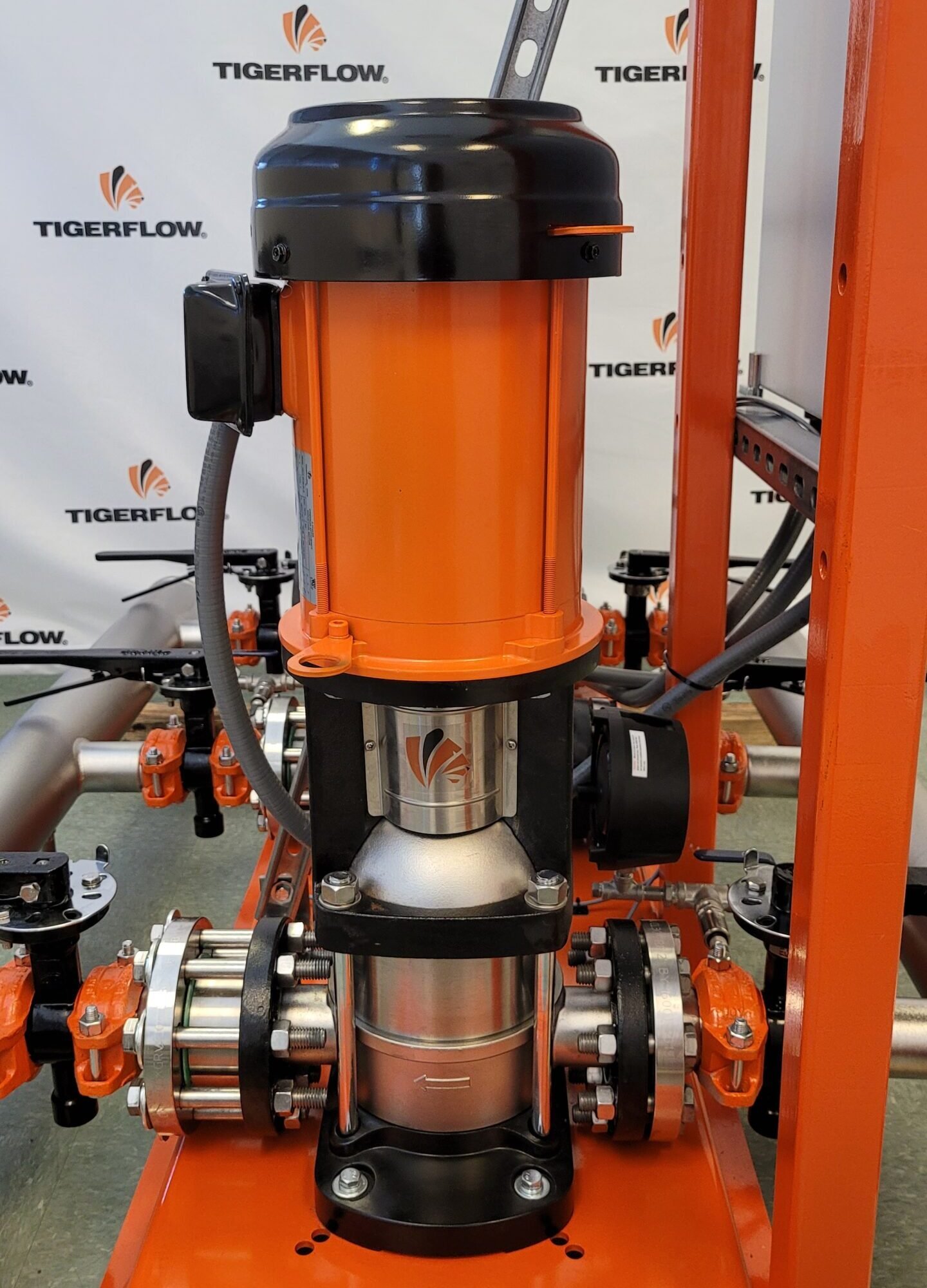
A pumping system rarely fails on paper. Trouble usually starts later, when install conditions tighten, trades overlap, and the mechanical room stops being a clean diagram. That is why the choice between packaged skids and field assembly matters so much. Both methods can move water. The better question is which one gives the project a cleaner path from design to startup.
That question matters across pressure boosting, potable water service, HVAC circulation, and other commercial water system applications. Current packaged pump lines in the market include vertical multistage pumps for pressure boosting and broader engineered pumping solutions built around system coordination, not just a single pump model.
Why This Decision Changes More Than Installation
Many buyers still compare pumps by horsepower, flow, and footprint first. Those points matter, but they do not tell the full story. A field-assembled system puts much more weight on the contractor, the site conditions, and late-stage coordination. A pump skid systems package shifts more of that work upstream, where layout, piping, controls, and service access can be addressed before delivery.
That changes the outcome in quiet but important ways. It affects startup quality. It affects service access. It affects how many loose ends remain once the package reaches the jobsite. And in a busy commercial project, those issues can shape the full operating life of the system.
Field Assembly Looks Flexible, But It Carries More Risk
Field assembly often gets chosen because it appears flexible. Separate pumps, valves, controls, and piping can be sourced and arranged around the room. That can work on projects with plenty of labor, plenty of space, and very little schedule pressure. Real jobs rarely offer all three.
On-site, every missing detail becomes a jobsite problem. Pipe routes change. Control panel locations shift. Valve access gets tighter than expected. Electrical coordination takes longer. A small miss in layout can create service problems that stay with the system for years. The system may still run, but it often becomes harder to maintain, harder to isolate, and harder to troubleshoot.
And that is the real issue. Field assembly does not fail because the components are poor. It struggles because the jobsite becomes the place where the system gets figured out. That is an expensive place to solve design problems.
Pump Skid Systems Put the System First
Pump Skid Systems change the order of work. Instead of treating the pump as the main event and everything else as an accessory, the skid treats the pumping package as one coordinated unit. The frame, piping, valves, controls, and pump selection are aligned around how the system will operate in the field.
That matters because pumping systems depend on interaction, not isolation. A pump does not operate alone. It works through suction conditions, discharge piping, control response, isolation strategy, and service access. When those parts are designed together, the package tends to install with fewer surprises and start with fewer questions.
This is especially useful in applications where pressure stability matters. Vertical multistage pumps are commonly used in pressure boosting and water system service, and those applications demand more than a pump curve that looks good in a brochure. They need a layout that supports the system under real operating conditions.
Startup Is Where the Gap Becomes Clear
A field-assembled package may look complete once the room is piped and wired. Startup is usually where the real difference appears. This is the stage where the installer, controls team, and operator find out if the package behaves like one system or just a collection of parts.
A pump skid systems package usually has an advantage here because the major parts were selected to work together. That improves consistency during startup and reduces the number of live adjustments needed to get the system stable. In contrast, field assembled systems often need extra coordination during commissioning because several decisions were deferred until installation.
Application Fit Matters More Than Buyers Expect
A strong pumping package is not only about packaging. It is about choosing the right pump type and system arrangement for the application. Current commercial pump offerings include vertical multistage pumps used for pressure boosting and potable water systems, along with broader packaged pumping solutions that support several water movement needs.
That matters because one project may need stable pressure in a compact room. Another may need a skid that simplifies installation and future maintenance. Another may need a package that supports a larger system strategy instead of solving one point problem. Buyers who focus only on the pump itself often miss the broader system cost that shows up later in startup delays, service limits, and rework.
What to Check Before Choosing One Path
The best buying questions are usually simple.
Look at how the controls connect with the pump package. Check service clearance, not only footprint. Review suction and discharge arrangement. Confirm that the package supports the actual operating goal, not just the bid schedule. Ask if the system was designed for installation and maintenance, or just for purchase.
These checks help separate a real pumping solution from a basic parts list. They also help the buyer compare long-term operating value, not just first cost.
Why Packaged Skids Keep Winning Serious Projects
Projects get tighter every year. Mechanical rooms do not grow. Labor does not get simpler. Startup windows do not get longer. Under those conditions, packaged skids keep gaining attention because they remove uncertainty before the equipment reaches the building.
That is the real difference between the two paths. Field assembly asks the jobsite to solve more problems under pressure. A skid package solves more of those problems before delivery. In commercial work, that shift often changes the full project experience.
Conclusion
The outcome changes when the pumping system stops being a loose collection of components and starts acting like one engineered package. Field assembly can still work, but it places more responsibility on site coordination, more risk on startup, and more pressure on future service. Pump Skid Systems offer a stronger path when the project needs cleaner installation, steadier commissioning, and better long-term access.
If the project team is still deciding between packaged skids and field assembly, review the system from startup and service backward, not from purchase price forward. That approach usually makes the stronger option clear.
