

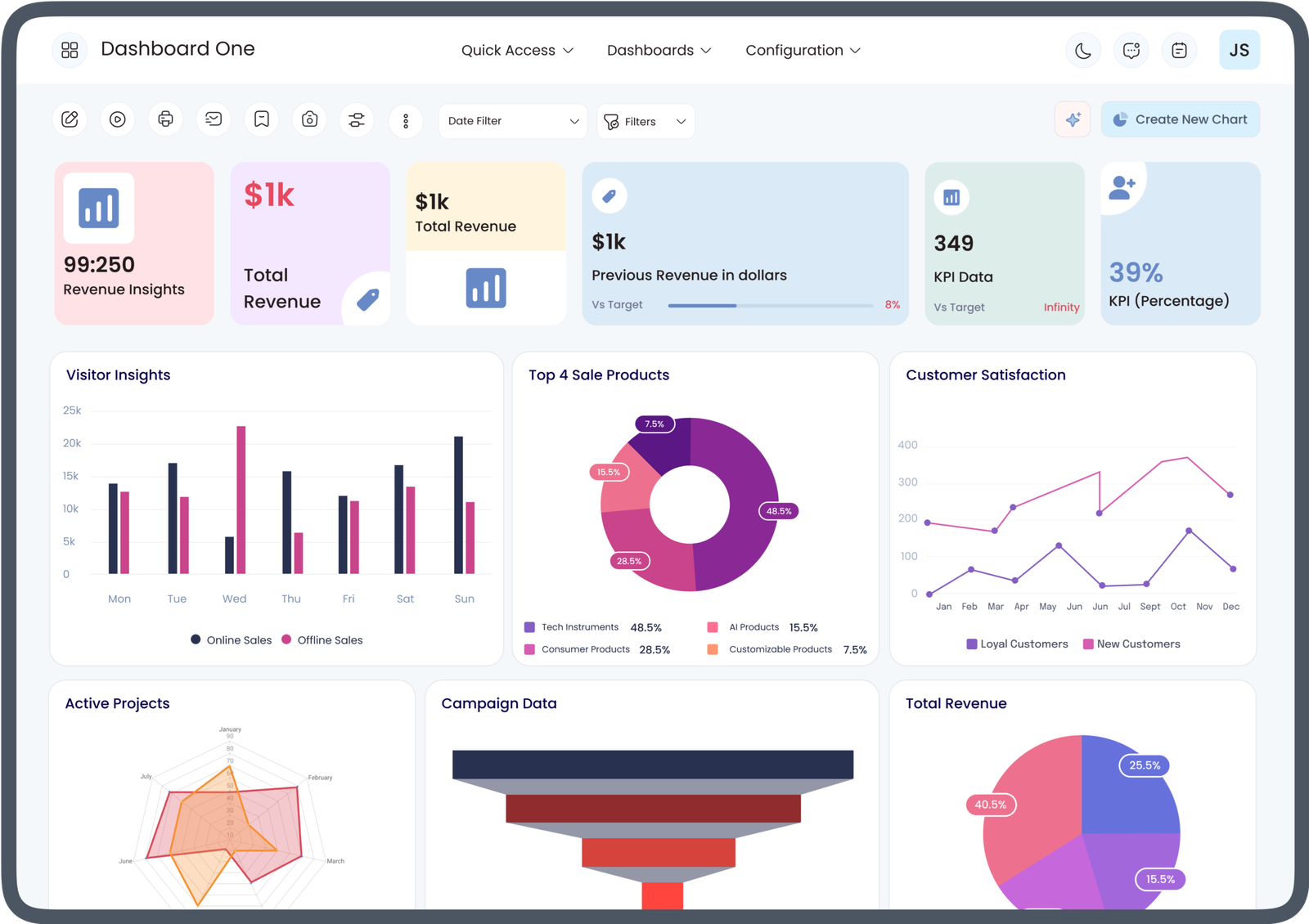
Running a successful online store requires more than listing products and processing orders. Businesses need clear insights into sales, customer behavior, inventory performance, marketing campaigns, and financial data to make informed decisions. This is where Odoo analytics for eCommerce becomes valuable. It helps businesses transform raw data into actionable insights that improve efficiency and profitability.
However, many business owners ask an important question before investing in analytics software: Is Odoo reporting tool cost worth Odoo analytics for eCommerce? The answer depends on how your business uses reporting features to improve operations, reduce manual work, and support long-term growth. Understanding the capabilities of Odoo’s reporting tools can help determine whether the investment delivers meaningful value.
Understanding Odoo Analytics for eCommerce
Odoo analytics for eCommerce refers to the reporting and business intelligence features within the Odoo platform that allow online businesses to monitor performance from a centralized dashboard. Instead of collecting data from multiple systems, users can analyze sales, inventory, accounting, customer activity, website performance, and order management in one place.
These analytics enable businesses to identify trends, evaluate product performance, monitor customer purchasing habits, and make data-driven decisions. Having access to real-time business information helps organizations react more quickly to changing market conditions.
What Does Odoo Reporting Tool Cost Include?
When discussing Odoo reporting tool cost, it is important to understand that pricing is influenced by several factors rather than a single fixed amount.
The overall cost may depend on:
- Odoo edition selected
- Number of users
- Required business applications
- Custom reporting requirements
- Dashboard customization
- Third-party integrations
- Implementation services
- Training and support
- Cloud or on-premise deployment
Businesses should evaluate the complete implementation rather than focusing only on the reporting module itself.
Why Analytics Matter for eCommerce Businesses
Every online store generates large amounts of data every day. Without proper analytics, valuable information remains unused.
Analytics help answer questions such as:
- Which products generate the most revenue?
- Which categories perform best?
- What products are underperforming?
- How many abandoned carts occur?
- Which marketing channels drive sales?
- How quickly is inventory moving?
- Which customers make repeat purchases?
These insights allow businesses to improve planning and increase operational efficiency.
Benefits of Odoo Analytics for eCommerce
One reason many companies invest in Odoo analytics for eCommerce is the ability to access comprehensive reports from a single platform.
Key benefits include:
Centralized Business Data
Instead of reviewing information across multiple systems, Odoo combines data from:
- eCommerce
- Sales
- Inventory
- CRM
- Accounting
- Purchasing
- Marketing
This unified approach reduces reporting complexity and improves decision-making.
Real-Time Reporting
Business owners no longer need to wait for manually prepared reports.
Real-time dashboards provide visibility into:
- Daily sales
- Revenue trends
- Order status
- Inventory levels
- Customer activity
- Payment information
This allows managers to respond quickly when operational changes are needed.
Better Inventory Management
Inventory reporting helps businesses avoid common issues such as stock shortages and excess inventory.
Analytics can show:
- Fast-moving products
- Slow-moving inventory
- Reorder requirements
- Warehouse performance
- Inventory valuation
These reports support more efficient stock planning.
Improved Sales Analysis
Sales reports allow businesses to evaluate overall performance across different products, customers, and sales channels.
Useful reports include:
- Revenue by product
- Revenue by category
- Sales by salesperson
- Monthly sales trends
- Regional sales performance
- Customer purchase history
These insights help organizations identify growth opportunities.
How Reporting Supports Better Decision-Making
Reliable reporting reduces guesswork.
Managers can make informed decisions based on actual business performance instead of assumptions.
For example, reports help determine:
- Which marketing campaigns perform well
- Which products require promotion
- Which suppliers perform consistently
- Which customer segments generate the highest value
- Which operational processes need improvement
Better decisions often lead to improved business performance over time.
Evaluating Odoo Reporting Tool Cost
When considering Odoo reporting tool cost, businesses should compare the investment against the operational improvements gained from better reporting.
Several areas contribute to the value received.
Reduced Manual Reporting
Without automated reporting, employees often spend considerable time collecting data from multiple spreadsheets and systems.
Automated dashboards reduce repetitive reporting tasks while improving consistency and accuracy.
Faster Access to Information
Instead of requesting reports from multiple departments, decision-makers can view live dashboards whenever needed.
Quick access saves time during meetings and business planning.
Improved Operational Efficiency
Accurate reports allow organizations to identify workflow bottlenecks before they become larger problems.
Examples include:
- Delayed shipments
- Inventory shortages
- Payment delays
- Sales declines
- Customer service issues
Addressing these problems early supports smoother business operations.
Custom Reports for Business Needs
Every online business has different reporting requirements.
Odoo allows organizations to customize reports based on their priorities.
Examples include:
- Product profitability
- Customer lifetime value
- Marketing performance
- Warehouse productivity
- Vendor purchases
- Financial summaries
- Sales forecasts
Customized dashboards ensure users see the information most relevant to their responsibilities.
Integration Improves Reporting Accuracy
One advantage of Odoo is its integrated business ecosystem.
Instead of importing information from disconnected software, data flows automatically between modules.
For example:
- Sales update accounting
- Inventory updates warehouse reports
- Customer orders update CRM records
- Purchase orders update inventory planning
This integration reduces duplicate data entry and improves reporting accuracy.
Is the Investment Suitable for Small Businesses?
Small businesses often question whether advanced analytics are necessary.
The answer depends on business complexity.
Companies with growing order volumes, expanding product catalogs, or multiple sales channels typically benefit from centralized reporting.
As operations become more complex, manual reporting becomes increasingly difficult to manage.
Long-Term Value Beyond Initial Cost
While businesses naturally evaluate Odoo reporting tool cost, the long-term value often extends beyond the initial investment.
Effective reporting contributes to:
- Better financial planning
- Improved inventory control
- Faster decision-making
- Higher operational efficiency
- Better customer service
- Improved forecasting
- Stronger business visibility
These improvements support sustainable business growth over time.
Best Practices Before Investing
Before implementing reporting tools, businesses should define clear reporting objectives.
Consider the following:
- Identify key performance indicators (KPIs)
- Determine reporting frequency
- Review existing business processes
- Train employees on dashboard usage
- Customize reports based on business goals
- Regularly review report accuracy
- Monitor system performance after implementation
Planning ahead helps maximize the value of the reporting system.
Conclusion
The question, “Is Odoo reporting tool cost worth Odoo analytics for eCommerce?”, ultimately depends on how effectively a business uses the platform’s reporting capabilities. For organizations seeking better visibility into sales, inventory, customer behavior, financial performance, and operational efficiency, Odoo analytics for eCommerce provides a centralized solution that supports informed decision-making.
Rather than viewing Odoo reporting tool cost as simply another software expense, businesses should evaluate the long-term operational benefits it can provide. Automated reporting, real-time dashboards, integrated data, and customizable analytics help organizations work more efficiently while making better strategic decisions. When implemented thoughtfully and aligned with business goals, Odoo’s reporting capabilities can become an important asset for supporting eCommerce growth and improving overall business performance.
