

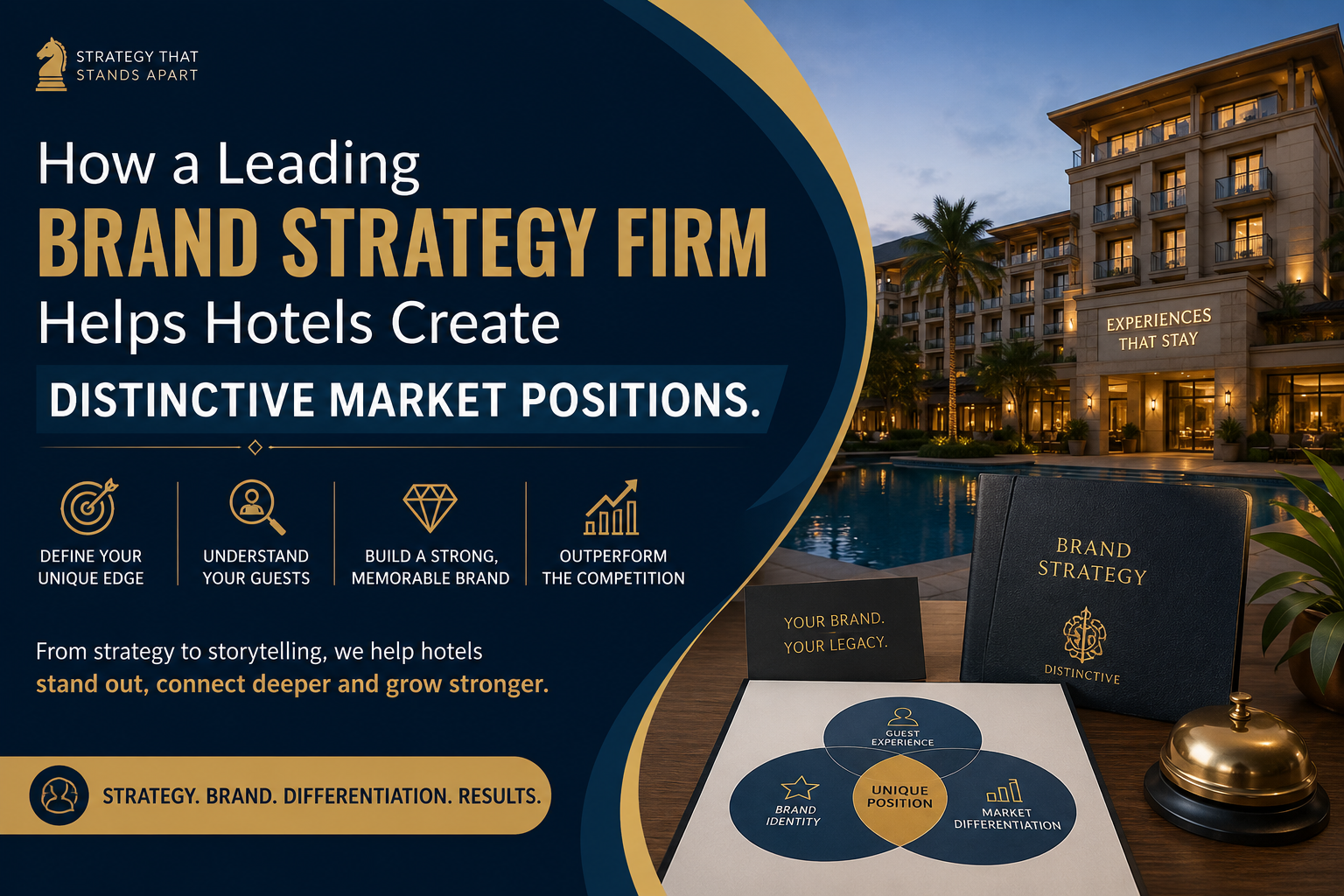
The hotel industry has changed dramatically over the last decade. Guests have more options than ever, and comparing hotels takes only a few minutes. A traveller can browse dozens of properties, read reviews, compare prices, and switch between booking platforms with just a few clicks.
In this environment, offering clean rooms, great service, and modern amenities is no longer enough. Those are expectations, not differentiators.
The hotels that consistently attract bookings are the ones that give guests a compelling reason to choose them before they even arrive.
Positioning Starts Long Before Design
Many hotels try to stand out by adding larger rooms, complimentary breakfast, airport transfers, or upgraded facilities. The problem is that these advantages rarely stay unique for long. Competitors can match amenities, renovate their properties, or introduce similar offers.
What they cannot easily copy is a clear market position.
This is where a leading brand strategy firm creates real business value. Instead of beginning with logos or colour palettes, the process often starts with audience research, competitor mapping, guest reviews, booking behaviour, and identifying whitespace in the market that competitors haven’t claimed. Sometimes the opportunity lies in an underserved traveller segment. Sometimes it’s a guest expectation that every competing hotel overlooks.
The objective isn’t to invent a personality. It’s to discover a position that feels relevant to guests and difficult for competitors to replicate.
The Best Hotel Brands Sell Experiences
Travellers rarely book a hotel simply because it has a comfortable bed. They book a romantic getaway, a productive business trip, a wellness escape, or a memorable local experience.
Ace Hotel is a good example. Rather than competing through luxury amenities, it built its identity around creativity, local culture, and community. Everything – from its interiors and partnerships to its communication – supported that position.
As a result, guests remembered what the brand stood for, not just what the rooms looked like.
That’s the advantage of clear positioning. It gives people a reason to choose a hotel beyond location or facilities.
Strong Positioning Makes Premium Pricing Easier
Hotels that compete mainly on room features often end up competing on price because those features are easy to compare.
Positioning changes the comparison.
When guests believe one hotel offers the kind of experience they’re looking for, they stop evaluating individual amenities and begin evaluating the overall stay. Price becomes one consideration rather than the deciding factor.
Over time, this makes premium pricing easier to sustain because guests feel they’re paying for a distinctive experience instead of simply a room. It also reduces the pressure to rely on discounts every time competition increases.
Consistency Builds Confidence and Better Business Outcomes
Many hotels invest heavily in attracting visitors online but lose potential bookings because the experience feels disconnected.
Beautiful social media leads to an outdated website. Premium photography is followed by generic booking emails. The property promises one experience but delivers a completely different impression online.
These inconsistencies create hesitation, and hesitation often sends guests back to comparison sites.
Professional hotel branding services help create consistency across every touchpoint, making guests more confident about booking directly. Over time, that consistency can reduce OTA dependence, improve occupancy through stronger brand recall, encourage repeat visits, and generate more word-of-mouth recommendations.
Branding Should Guide Employees Too
Brand strategy isn’t only for marketing teams.
It also helps employees understand how the brand should be delivered every day. A hotel positioned around relaxed luxury will naturally require a different service style than one designed for fast-moving business travellers. When staff understand the brand promise, decisions become more consistent across reception, housekeeping, dining, and guest services.
That alignment ensures the experience guests receive matches the expectations the brand has already created.
Branding Is Becoming a Business Tool
Across hospitality, branding conversations have become far more commercial than cosmetic. Hotel owners increasingly evaluate branding through its impact on pricing power, direct bookings, guest loyalty, occupancy, and long-term growth.
This broader approach is reflected across the industry. Studios such as Erth Co., for example, increasingly present hotel identity projects through the business challenges they solve – such as positioning, guest perception, and scalable brand systems – rather than visual design alone. It reflects how branding is evolving into a strategic business function.
Hotels Don’t Lose Bookings Because They Lack Amenities
Most hotels today offer comfortable rooms, reliable Wi-Fi, quality dining, and attentive service. Those are no longer reasons to choose a property – they’re simply expected.
What hotels increasingly compete for is relevance.
If guests can’t immediately understand why one hotel is a better fit for their trip than another, they’ll usually fall back on comparing prices, ratings, or location. The strongest hotel brands avoid that trap. They create a position that is clear enough to guide decisions before comparisons even begin. In an industry where choices are endless, making your hotel easy to choose is often a bigger competitive advantage than adding one more amenity.
