

Capital appreciation in Kamla Nagar has come almost entirely from land, not buildings. The locality averages about ₹10,300 per sq.ft. against Delhi’s ₹18,400 (Square Yards, 2026), because forty-year-old builder floors depreciate while the plots beneath them compound. New Grade-A supply, absent until now, is what closes that gap.
- Delhi-NCR prices rose 23% in 2025 to ₹9,300/sq.ft. (Anarock). The RBI’s registry-based index moved 3.6%. Kamla Nagar has been measured by the second number.
- Kamla Nagar’s 44% discount to the Delhi average is a product discount, not a location discount.
- Delhi circle rates have not moved since 20 September 2014. A revision committee has been sitting since June 2025.
- Delhi’s gross rental yield of 5.81% is the highest among Indian metros. Kamla Nagar sits 0.8 km from DU North Campus.
- The 10.8-acre Birla Cotton Mills parcel is the locality’s first Grade-A primary supply in living memory.
- ₹10,300 per sq.ft. Kamla Nagar’s average asking rate, compared with the Delhi city average of ₹18,400 (Square Yards, 2026).
- ₹7,550 → ₹9,300 per sq.ft. Delhi-NCR average, 2024 to 2025. A 23% rise, the highest of India’s top seven cities (Anarock Research, January 2026).
- 3.6% year-on-year RBI All-India House Price Index, quarter ending December 2025. Index level 115.6, base 2022-23, compiled from registration-authority transaction data.
- 11 years, time since Delhi’s circle rates were last notified (20 September 2014). A revision committee has been reviewing them since June 2025; no notification has been issued.
- 5.81% Delhi’s gross rental yield, the highest among Indian metros (Global Property Guide, Q4 2025). National average: 5.16%.
- Approximately 3 million sq.ft. The residential-led mixed-use redevelopment announced by Hines, Texmaco Infrastructure, Conscient, and HDFC Capital on the 10-acre former Birla Cotton Mills site (Hines newsroom, July 2025).
The One Number That Explains Kamla Nagar
₹10,300 per sq.ft.That is what Kamla Nagar averages in 2026. Delhi averages ₹18,400.
Sit with that for a second. A locality 0.8 km from Delhi University’s North Campus, 1.2 km from a Yellow Line metro station, and roughly 7 km from Connaught Place trades at a 44% discount to its own city. Greater Kailash and Vasant Vihar clear ₹35,000 to ₹60,000 per sq.ft.. Neither offers materially better campus proximity or metro access.
The reflex explanation is congestion. Narrow lanes, parking chaos, air quality. All true. None of it explains a 44% gap in a city where every established colony has narrow lanes.
Here is the explanation that does. When you buy in Kamla Nagar today, you are buying two assets bundled together: a share of land, which has compounded for decades, and a structure sitting on it, which has been losing value since the day it was poured. The land is the investment. The building is the drag.
Delhi’s own tax code agrees. Circle-rate valuation applies a depreciation multiplier to the construction cost based on the building’s age, while the land rate for the colony remains fixed regardless of what stands on it. The government has been telling investors this for years. Almost nobody reads the formula.
Kamla Nagar Property Price Trends: What the Data Actually Says
There is no published Kamla Nagar appreciation series. Anyone quoting you a clean “Kamla Nagar grew X% a year” figure is guessing. What you can do is triangulate from three sources that measure different things.
| Metric | Figure | Source |
|---|---|---|
| Kamla Nagar average sale price | ₹10,300 / sq.ft. | Square Yards, 2026 |
| Kamla Nagar builder-floor band | ₹5,150 – ₹12,050 / sq.ft. | 99acres locality rates |
| Kamla Nagar full range, all types | ₹6,433 – ₹22,727 / sq.ft. | NoBroker Locality IQ |
| Delhi city average | ₹18,400 / sq.ft. | Square Yards, 2026 |
| Delhi-NCR average, 2024 → 2025 | ₹7,550 → ₹9,300 (+23%) | Anarock Research, Jan 2026 |
| Top-7 cities average, 2024 → 2025 | ₹8,590 → ₹9,260 (+8%) | Anarock Research, Jan 2026 |
| RBI All-India House Price Index | 115.6 · +3.6% YoY · +1.2% QoQ | RBI, Q3 FY2025-26 |
Read the last three rows together and something jumps out. Anarock says Delhi-NCR prices rose 23% in a single year. The Reserve Bank of India, measuring the same market, says housing prices moved 3.6%. Both are correct. They are not measuring the same thing.
Anarock’s number is weighted heavily toward primary supply: new launches, new construction, developer price lists. The RBI’s House Price Index is compiled from transaction-level data supplied by state registration authorities, which means it captures the resale market and the registered value of it.
Kamla Nagar has had essentially no primary supply. Locality trackers describe development here as plateaued, with no new projects underway. So Kamla Nagar’s entire price history has been recorded by the resale mechanism, on ageing stock, at registered values.
Land compounded. Buildings depreciated. The reported number netted the two.
The Circle Rate Freeze: Why Kamla Nagar’s Appreciation Is Under-Reported
Delhi’s circle rates were last notified on 20 September 2014. They are still in force. That is over eleven years of frozen government valuation in a market where private consultants recorded a 23% single-year move.
In June 2025, the Delhi government constituted a committee headed by the Divisional Commissioner to review and revise them. Reporting suggests categories F through H could rise 8% to 29%, and that a new A+ tier for ultra-premium colonies is under discussion. As of writing, nothing has been notified.
Why this matters for anyone modelling capital appreciation in Kamla Nagar: circle rate is the floor on registered value. Where the circle rate is stale and low, the registered value of a transaction can sit well below what actually changed hands. That understates the recorded price base. It also understates every index built on top of it, including the RBI’s.
When the reset lands, two things happen at once. Stamp duty on your purchase goes up. And the recorded price base for the whole colony steps up with it, which mechanically improves the appreciation figure any future buyer will see when they research the area.
One caution before you build this into a spreadsheet. Colony categorization drives the rate, and Kamla Nagar’s category should be confirmed on the Delhi government’s DORIS circle-rate calculator rather than taken from a blog. Category C residential land was notified at roughly ₹1.61 lakh per sqm in the 2014 schedule. Verify yours before you assume it.
Rental Yield: Where Kamla Nagar Beats the City It Sits In
Delhi’s gross rental yield is around 5.81%, the highest among Indian metros, compared with a national average of 5.16% (Global Property Guide). Mumbai manages 3.84%.
Kamla Nagar has a structural reason to sit at the top of that range. Hansraj, Hindu and St. Stephen’s are within 1.5 km. Delhi University’s North Campus is 0.8 km away. Faculty housing, PG accommodation, and postgraduate rentals create a demand floor that is not tied on the corporate cycle, which is exactly the kind of tenant base that keeps yield stable when the Gurugram IT corridor is going through a layoff quarter.
Gross yield is not net yield. Strip out maintenance on a forty-year-old structure, vacancy between academic sessions, and MCD property tax, and the number drops. Model it before you buy it.
“Investors keep asking us whether Kamla Nagar will appreciate. It already has. The question is whether the asset you buy captures that appreciation or subsidises somebody else’s depreciation.”
What Changes When 10.8 Acres of Grade-A Supply Lands
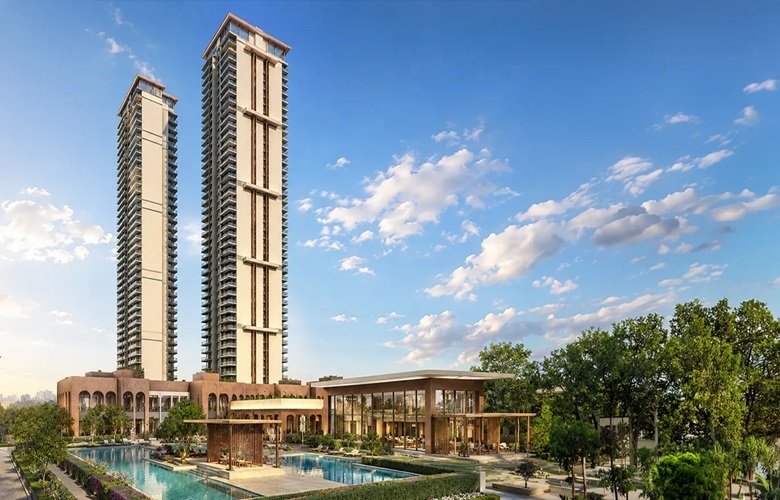
In July 2025, Hines announced its residential debut in Delhi through the redevelopment of the iconic Birla Cotton Mills site in Kamla Nagar. The landmark project, being developed in partnership with Texmaco Infrastructure & Holdings (an Adventz company), Conscient, and HDFC Capital, is now widely recognised as Elevate Homes Kamla Nagar (also known as Elevate Delhi 7). According to the Hines newsroom, the development spans nearly 10 acres and is planned to feature approximately 3 million sq. ft. of premium residential and retail space, making it one of the largest luxury developments in North Delhi.
What makes Elevate Homes Kamla Nagar truly unique is the land itself. Texmaco has owned this historic parcel for over a century. Unlike most of North Delhi, where large plots have gradually been fragmented into builder floors and smaller developments, this site has remained intact. That rare landholding is the reason a project of this scale can still be developed in the heart of Kamla Nagar, offering a once-in-a-generation opportunity for luxury living.
The project’s pricing has also become a major talking point. Market reports indicate an indicative pre-launch price of around ₹28,000 per sq. ft. for Elevate Homes Kamla Nagar. When compared with the broader Kamla Nagar residential average of approximately ₹10,300 per sq. ft., it represents a premium of nearly 172%. At first glance, that difference may seem significant. However, the comparison overlooks a key fact: Elevate Homes Kamla Nagar is not competing with conventional builder floors or ageing residential stock. It is introducing a large-scale, master-planned luxury community with modern amenities, premium specifications, and branded development standards that have never before been available in this part of Delhi.
Four Risks That Could Break This Thesis
- Approval timing. The Master Plan for Delhi 2041 remains unnotified as of April 2026. MPD-2021, gazetted in 2007, still governs. Any projection that leans on MPD-2041’s TOD or regeneration provisions is leaning on a draft.
- RERA status. Registration for the Birla Mills redevelopment was still in process. Until a Delhi RERA number is issued, possession dates and carpet areas are not legally binding declarations.
- Thin comparables. A locality with no gated stock has no gated resale benchmark. Your exit price in year seven has no historical analogue. That cuts both ways, and honest underwriting says so.
- Circle rate downside. A revision raises stamp duty immediately. The appreciation benefit is a reporting effect that takes years to show up in an index. Your cash outflow is not deferred.
We have written more fully about who this market suits and who it does not in our Kamla Nagar buyer and investor guide.
Entry Points: Three Ways to Price Kamla Nagar
| Buyer type | What you are actually buying | How to price it |
|---|---|---|
| Resale investor | Land share plus a depreciating structure. Yield now, redevelopment optionality later. | Value the plot at colony land rate. Assign the structure near zero. If the ask implies positive building value, walk. |
| Upgrader / end-user | Primary Grade-A product with parking, lifts, security and open landscape. | Benchmark against comparable Grade-A stock in Delhi, not against Kamla Nagar builder floors. Different product class. |
| NRI / long-hold investor | A supply-constrained land thesis with a 7-10 year horizon. | Underwrite the land, not the launch premium. Confirm FEMA eligibility and repatriation route before committing. |
Broader context on where the micro-market is heading sits in our Kamla Nagar real estate future outlook, and the institutional side of the story is covered in North Delhi’s first institutional high-rise.
What We Are Seeing on the Ground in Kamla Nagar
Three questions come up in almost every conversation at our advisory desk, and only one of them is about price.
The first is whether Kamla Nagar has “already run.” It hasn’t, and the confusion is understandable. Buyers look up the locality average, see ₹10,300, compare it to a South Delhi number, and conclude the market is asleep. What they are looking at is a blended figure across bungalows, 1970s DDA flats, and four-story walk-ups with no lift. There is no Grade-A line item in that average because there has never been Grade-A stock to put in it.
The second is about tenants. Families ask whether student rentals will make the address feel transient. In our experience walking the blocks between Hudson Lane and Bungalow Road, the tenant profile is more academic than undergraduate: doctoral researchers, visiting faculty, and DU staff who want a 5-minute commute. That is a materially different rental base than a purely student market.
The third question is the one worth asking. What happens to a colony’s price ceiling the first time a professionally managed, gated, lift-served product exists inside it? North Delhi has not run that experiment. It is about to.
Key Takeaways
Kamla Nagar’s appreciation story has been running for decades. It has simply been recorded against the wrong asset.
- The 44% discount to Delhi’s average (₹10,300 vs ₹18,400 per sq.ft.) measures product age, not location quality. Price the land; assume the forty-year-old structure is worth close to nothing.
- Anarock’s 23% Delhi-NCR rise and the RBI’s 3.6% index both describe 2025. One measures new supply, the other measures registered resale. Kamla Nagar has only ever been measured in seconds.
- Delhi’s circle rates have been frozen since 20 September 2014. A revision will raise your stamp duty on day one and lift the colony’s recorded price base over time.
- Delhi’s 5.81% gross rental yield leads Indian metros, and DU North Campus at 0.8 km gives Kamla Nagar an academic tenant base that is not correlated with the corporate cycle.
- The 10.8-acre Birla Mills parcel is the first Grade-A primary supply this micro-market has seen. Verify RERA registration on the Delhi RERA portal before committing any capital beyond a refundable expression of interest.
Frequently Asked Questions:
What is the capital appreciation rate in Kamla Nagar, Delhi?
No agency publishes a Kamla Nagar appreciation series, so you triangulate. Delhi-NCR average prices rose 23% in 2025 to roughly ₹9,300 per sq.ft., per Anarock Research. The RBI House Price Index, built on registry data, moved just 3.6% year-on-year in the December 2025 quarter. Kamla Nagar resale stock tracks the slower figure.
What is the current property price per sq.ft. in Kamla Nagar?
Kamla Nagar averages about ₹10,300 per sq.ft. on Square Yards data for 2026. Builder floors quote between ₹5,150 and ₹12,050 per sq.ft. on 99acres, while the widest locality band runs ₹6,433 to ₹22,727. These are asking prices on super built-up area, not registered transaction values. Verify carpet area separately.
Why is Kamla Nagar cheaper than the Delhi city average?
Delhi averages roughly ₹18,400 per sq.ft.; Kamla Nagar is near ₹10,300. That 44% gap is a product discount, not a location discount. Kamla Nagar sells aging builder floors with no lifts, no parking, and no gated security. Buyers pay for land, then absorb a depreciating structure on top of it.
Will Kamla Nagar property prices rise in the next five years?
A Reuters poll of property analysts conducted in early 2026 projects 5% to 7% annual price growth for Delhi-NCR over 3 years. Kamla Nagar carries two extra levers most localities lack: a pending circle-rate revision and the arrival of its first Grade-A supply. Neither is guaranteed. Both are structurally plausible.
How does the Delhi circle rate revision affect Kamla Nagar investors?
Delhi circle rates were last notified on 20 September 2014 and remain in force. A committee constituted in June 2025 is reviewing them. When rates reset, registered values rise, stamp duty rises, and the recorded price base shifts upward. That mechanically improves reported appreciation. Confirm your colony category on the DORIS calculator first.
What rental yield can you expect in Kamla Nagar?
Delhi posts the highest gross rental yield among Indian metros at roughly 5.81%, against a 5.16% national average, per Global Property Guide. Kamla Nagar is about 0.8 km from Delhi University North Campus, so faculty and student demand is year-round. Gross yield is not net yield. Deduct maintenance, vacancy and property tax before modelling returns.
Is Kamla Nagar a better investment than Gurgaon for capital appreciation?
They price different risks. Gurgaon offers deep primary supply, published absorption data and heavy competition among launches. Kamla Nagar offers a supply vacuum with almost no comparable inventory, which concentrates pricing power but thins your exit liquidity. Choose Gurgaon for benchmarked appreciation. Choose Kamla Nagar if you are underwriting scarcity over volume.
What is the biggest risk to capital appreciation in Kamla Nagar?
Execution timing. The Master Plan for Delhi 2041 remains unnotified as of April 2026, so MPD-2021 rules still govern approvals. RERA registration for the Birla Mills redevelopment was still in process. Until a Delhi RERA number is issued, you are underwriting a land thesis, not a delivery schedule. Verify status before committing capital.
Who should buy in Kamla Nagar and who should not?
Buy if you want North Delhi proximity, a long hold, and tolerance for thin comparables. Delhi University faculty, families upgrading from Civil Lines or Ashok Vihar, and NRI investors with local ties are a good fit. Skip it if you need three-year liquidity, published absorption benchmarks, or a completed project you can walk through today.
